Chronic pain, opioids, addiction and controversy

Whale Watching Cruise - Beautiful

I’m not sure how I should present this. Do you want it kind, sincere, and respectful, or do you need it blunt, open and firm? Do you want it me for you, or you against me, us? Do you want it white or black? Love, care and light or a little profanity to remind you that the world isn’t one way or the other?

You can judge me, you already have. Maybe you need something to judge me for. I refuse to allow you to add me to any negative category. I’m not a little kid anymore and I won’t be silenced because you think your ideals are above someone else’s. I’m heading on 50.

I’ve been on and off opioids since I was 22. Just because my life sucks and I’ve dealt with surgery after surgery, procedure after procedure, diagnosis after diagnosis, and I’ve been intractable for 15 years doesn’t mean I chase the pain to get the medication. I haven’t. There has not been a single time that I went seeking medication I shouldn’t have. My random pee tests are clean and prior to ever being injured my work took my hair, follicles that went back a year for drug testing. And while it’s none of your business in situations like this, where the anti opioid groups are stead fast against that kind of pain relief, I’m compelled to tell my business to justify my reason for taking it and the reason the physician prescribed it.

My pill is my SCS Spinal Cord Stimulator. It has been since 2006. I use a single low dose partial agonist and partial antagonist pain medication. There is no high. I take nothing for break through. I take Zonegran 100, 2x and Cymbalta 30, 1x. Nuvigil (Sleep disorders- Central Sleep Apnea with Cheyne Stokes, + Obstructive. Mixed/Complex/Auto Servo Ventilator (ASV) and maintenance for high blood pressure, Lisinopril, Hydralazine and Lipitor. There you go, now you know it!

If you’re a physician you have to know that blood pressure can be compromised by pain levels. Well.. at least that is what I am always told by physicians unrelated to one another, my blood pressure is too high because of physical pain.

Interesting right? Maybe not.

Dr. Andrew Kolodny replied to my post on Twitter, stating, paraphrasing, not a direct quote, education and personal responsibility doesn’t make opioids more effective or deter abuse.

Really? Then why is there a CDC work group to attempt just that? I’m not going to go into specifics because you can all find it for yourself, and I’m not going to give the run down of the call because it’s public record.  I was on that call. See the Federal Register.

One physician shared that she prescribed not knowing? For real? You didn’t know with your education and training that prescribing opioids were… .um opioids? (Where was your education and common sense on that one and if you weren’t educated as you claimed, why didn’t you seek it for the benefit and well being of YOU and YOUR patients) Okay, so… that was your attempt to show the call how horrible the opioid is and minimize PERSONAL RESPONSIBILITY. Backfire!

Education is crucial. Point made.

Hate me yet?

Dr. Kolodny states that personal responsibility doesn’t matter. Really Doctor? That’s a lie! Because when someone falters you, yours or someone you’re advocating for it absolutely matters.

My nature is to say I’m sorry, I’m sorry for all of you who’ve lost. Lost to addiction, and death. But I cannot be sorry that I’m fair, even, and compassionate for the suffering AND regardless of what they are suffering with or for.  hm, well I don’t want to call persons weak, just unable to hold back heading for another, whether it be a chemical hook or simply choice.

Is it bad word time? For fuck sake be responsible for you and yours! If your child was a minor at the time of receiving medications that turned out to be harmful, you were responsible. You, the parent, or guardian! If the child was an adult of legal age in their jurisdiction, they are then responsible. And.. parents know better than anyone, more than a physician, more than a pharmacist, that something is up or wrong with their offspring. Minor or adult, we know, and if we claim we never did we’re not only lying to others but we’re deceiving ourselves. If you never saw the signs? Ouch, you just didn’t care to look for it. And if you couldn’t see it? Have a little compassion, how could you ever expect the doctor to see it? Because he is a doctor? Not true, we’re parents. 15-30 minutes a doctor visit at best compared to our lifetime with our kids. Minutes upon minutes, hours, days, weeks, months, years.

Hate me yet?

If my child went to the doctor, claimed pain, and I don’t even care at this point in writing this if the kid was in pain or wasn’t, but took the Rx, filled it, took the medication as prescribed, misused it,…and then decided to throw back (you know, toss some alcohol)

My child is to blame. Not the physician! We seek care from doctors, they do not seek us out. We tell them what we tell them and they base the prescription of the truth or shit we give them. We do not have to take that Rx to the pharmacy, we do not have to fill it and we certainly don’t have to put it in our body. It’s not fair to call them pushers. How can they push, when a person went to them? A pusher is someone who seeks another out to push a drug on them.

Does it even matter after all this if the medication was taken as prescribed? Nope! Because the only way to overdose is to misuse. If the doctor prescribed a medication adverse to another medication the patient is already taking I would be advocating for you and the error. Dang, I feel bad for back hands I’m going to get for this, but doesn’t anyone get it?

Maybe no mix, maybe no alcohol, great! Good job! Still the only way to overdose is to misuse unless another adverse complication was present.

I’m disgusted by a world that rather blame someone else than accept the consequences of their own actions. Oh and yes I’ve been hurt. Damaged in fact from other’s irresponsibility and I do advocate for that change but I don’t harm others on behalf of myself.

According to Dr. Kolodny, personal responsibility doesn’t matter. Does this apply then to vehicles, officers, surgeons, pilots? I think I know his answer, of course, but he’s already let them off the hook. And hey that’s okay! After all, why should anyone be responsible for anything they do. Blame it on the traffic, the felon, the patient, or the passengers.

Contrary to what it may seem, I do respect the Doctor. I’m not inclined to agree with his adamant perception of placing all people who use opioid relief as addicts, or heading for addiction. Sorry, don’t care what a few images of the brain or a poll might indicate. There’s billions of people in the world, millions on medications, and a fraction to insinuate possibility or potential from dependency to addiction.

Pain in general causes advocacy. Loss instigates the passion to make a wrong right. So while chronic pain patients are being punished, ridiculed, humiliated, stigmatized, belittled, what about your pain? Your mental pain urged the controversy against opioid managed pain care versus loss of livelihood.. Ours is physical, yours is mental and emotional.

I have a hard time understanding why any of you care what we take when you won’t be there if we overdose or commit suicide. You’re not there to tell someone striving to make it, good job, proud of you. I have a hard time being used to make your point and profits.

I have a hard time with you looking down at us, when you don’t even know us. You don’t even want to walk in our shoes to feel us. But you want us to walk in yours and feel you.

Maybe, instead of saying “people” which implies all (It is the plural form) how about some, many or most (in your opinion) otherwise you are separating us from you. You make it as if everyone is horrible, addicted, heading for addiction, stronger meds, etc. Everyone but you and yours (your groups).

Then we speak out and you become holier than thou against us whiny, complaining, lazy, drug seeking, pain complaining “people”.

Guilt is the hardest human emotion to overcome.

All we had to do was work together, all we had to do was listen to one another. We could have cared for each other. And in the long run, the children might have truly been educated to know better.

When we get a physician as Dr. Kolodny implied stating education is meaningless? I have to disagree. Education educates, I’m trying not to roll my eyes because he kinda dummied himself down on that. No disrespect intended.

You may dislike me, think I’m a b*tch, judgmental, or talking too much (not true, you’ve already judged me/us…  and quite vocally I might add, news, columns, etc )  and I’ve only just begun, but…

I still love all of you and would fight for YOU if no one else did.

That’s the difference between you and I.


I wish you all well,

And enough.

~Twinkle V.


Ohana (For Dr. Earl Bakken)

by Twinkle VanFleet

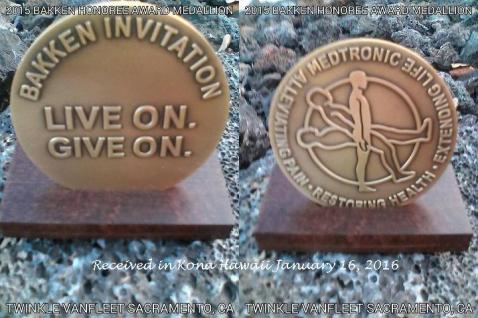
Twinkle VanFleet 2015 Bakken Invitation Award Honoree_1

Front and back

He validated the spirit
And it’s heart
And restored the breath
Of a nearing depart

Acknowledging the path
And it’s hope
Diversity rising
It’s a slippery slope

Catching the reason
Determination and light
In giving to others
The fire and flight

for…

Life, love, and empathy
We have to discuss
Drowning
Counting
On all of us

7, 8, 9
Losing time
Sharing
Your paradigm

Break down,
Nothing on me
Fight and fall,
Nope pain can’t stop she

Crazy, maybe, perception
Not really though
Trinity, affinity
Visions and missions to lead for

She’s rising,
They know she(‘s) flying
As above, so below
The gift of devising

Got you
Got us
Got me
superfluous

Honi; spirit and power
The honoring art
Ha; the breath of life
A spiritual kiss of the hearts

Who could have known
It wasn’t alone
Ohana means family
Family is home.

For Dr. Earl Bakken, Medtronic Philanthropy, #LiveOnGiveOn

With love and admiration on behalf of myself and #iPain  www.powerofpain.org

Mahalo

©2016 Twinkle VanFleet/Golden Rainbow Poetry/All rights reserved. Copyright Laws and Regulations of the United States http://www.copyright.gov/title17/  May be shared. Permission required for any other use.

Ohana means family. Family means no one left behind… or forgotten.

Twinkle Vanfleet | 2015 honoree

Twinkle was diagnosed in 2003 with Complex Regional Pain Syndrome/Reflex Sympathetic Dystrophy Syndrome (CRPS/RSD), a painful, debilitating and often progressive central nervous system disorder. A spinal cord stimulator has helped manage her pain, and she has expanded her advocacy efforts on behalf of those with neuropathic pain disorders from online to in-person events. As advocacy director and executive board member for the Power of Pain Foundation, Twinkle works on policy efforts, patient awareness and many other aspects of chronic pain.

Read more-

Source: Twinkle Vanfleet | 2015 honoree

I learned in September that I was chosen as a 2015 Bakken Honoree. It didn’t seem real. My pill is my Spinal Cord Stimulator. It has been since 2006. So when I’m advocating for pain medication, I’m not advocating for me, I’m advocating for options and for those who need them to be able use them safely. I don’t disagree that there is a problem with abuse or misuse, but I don’t agree that it’s due to the reasons put forth in the mass push that one thing leads to another. It isn’t always so.

When I say, we, or us, I’m including myself to not dismiss someone else from me. I’m no better than the person who needs the pain reliever to survive and I’m no less than the one who doesn’t.

Andrea Volfova

Prague, Czech Republic
Cardiovascular disease

Bhim Mahat

Kathmandu, Nepal
Cardiovascular disease

David Simmonds

Prince Edward (Wellington), Canada
Parkinson’s disease

Juan Carlos Hernández Corredera

Salamanca, Spain
Barrett’s esophagus

Kerry Kalweit

Pretoria, South Africa
Type 1 Diabetes

Lisa Visser

Orono, Minnesota, United States
Sudden Cardiac Arrest due to a heart defect

Qi Zhang

Beijing, China
Type 1 Diabetes

Sheila Vasconcellos

Rio de Janeiro, Brazil
Type 1 Diabetes

Dr. Thomas Okello

Kamapala, Uganda
Damaged heart valves due to Rheumatic Heart Disease

Twinkle VanFleet

Sacramento, California, United States
Complex Regional Pain Syndrome, Type 2

Vincent Browne

Galway, Ireland
Cardiovascular Disease

Tanya Hall

Melbourne, Australia
Cardiac Arrhythmias, including atrial fibrillation

http://bakkeninvitation.medtronic.com/honorees-winners/

Only 2 of the 12 Honorees are from the United States. I’m one of those 2. Each honoree has an amazing story to share and is living with a form of medical technology. I advocate for these options as well. Without force or mislead intentions, options are what allow us hope and survival. It isn’t about Pharmaceuticals, invasive treatments, or the non-invasive it’s about what relieves each individual. What might work for me, may not assist another and what may not assist me, may respond to someone else.

I could have removed the body piercings from my life. I could have. They didn’t evolve from nothing other than pain in the first place. Each piercing multiplied as a diversion to pain during the time when I was left in medical limbo. They were my self-medication. No! Not everyone becomes an addict. Not everyone in unrelenting pain seeks more and not everyone turns to heroin. I’ve taken enough in my lifetime and I’m not nor have I ever been in the classification of this epidemic. I leave the piercings so that you will judge me. Falsely judge me. It’s your mistake, not mine. It’s your perception, what you create and believe in your mind. I chose to fight pain, and learn from it. I chose to use the tools provided to me in the multidisciplinary approach and in the Medtronic Spinal Cord Stimulation and I choose to maintain the lowest dose of a single type of pain medication in order to allow me to function enough to get out of the home a few times a year, weight bare enough to feed my dogs, not be confined to a wheelchair, advocate with the Power of Pain Foundation, watch my grandson grow, be a part of my children’s lives and care give to my husband of nearly 30 years.

I’m not able to drive; I have to rely on someone else. I have to work around their time, schedules and life in order have that ride.

Sometimes it’s enough to want to give up, but I haven’t. The Power of Pain Foundation has honored me in my decline and ability as much as I have honored them in all that they do. It’s for this reason that they are the grant recipient for my award.

Only once in a lifetime are you recognized for something so humbling and it was for nothing more than using my new life to live on and give on because that is what I’ve done.

It’s truly an honor! Thank you Dr. Bakken!

To be continued


Mid Metatarsal Separation | Lis Franc Separation


“Lisfranc joint injuries are rare, complex and often misdiagnosed. Typical signs and symptoms include pain, swelling and the inability to bear weight. Clinically, these injuries vary from mild sprains to fracture-dislocations. On physical examination, swelling is found primarily over the midfoot region. Pain is elicited with palpation along the tarsometatarsal articulations, and force applied to this area may elicit medial or lateral pain. Radiographs showing diastasis of the normal architecture confirm the presence of a severe sprain and possible dislocation. Negative standard and weight-bearing radiographs do not rule out a mild (grade I) or moderate (grade II) sprain. Reevaluation may be necessary if pain and swelling continue for 10 days after the injury. Proper treatment of a mild to moderate Lisfranc injury improves the chance of successful healing and reduces the likelihood of complications. Patients with fractures and fracture-dislocations should be referred for surgical management.

The Lisfranc joint, or tarsometatarsal articulation of the foot, is named for Jacques Lisfranc (1790–1847), a field surgeon in Napoleon’s army. Lisfranc described an amputation performed through this joint because of gangrene that developed after an injury incurred when a soldier fell off a horse with his foot caught in the stirrup.1,2 The incidence of Lisfranc joint fracture–dislocations is one case per 55,000 persons each year.2,3 Thus, these injuries account for fewer than 1 percent of all fractures.2,3 As many as 20 percent of Lisfranc joint injuries are missed on initial anteroposterior and oblique radiographs.2–4

Lisfranc joint fracture–dislocations and sprains can be caused by high-energy forces in motor vehicle crashes, industrial accidents and falls from high places.1–3 Occasionally, these injuries result from a less stressful mechanism, such as a twisting fall. Since Lisfranc joint fracture–dislocations and sprains carry a high risk of chronic secondary disability,2 physicians should maintain a high index of suspicion for these injuries in patients with foot injuries characterized by marked swelling, tarsometatarsal joint tenderness and the inability to bear weight.” Lisfranc Injury of the Foot: A Commonly Missed Diagnosis (Para 1, 2, 3) http://www.aafp.org/afp/1998/0701/p118.html

CRPSRSD Awareness Twinkle V. @rsdcrpsfire - R Foot Nov 10, 15_1

Twinkle V. CRPS 2 November 10, 2015 DOI 1/26/2001

From misdiagnosed to a hell ride I’m still on, I’ve managed to find a glimpse of heaven in it all because I do work with me so that I’m not a total disappointment on myself or society. A bit over a week ago I was banned from Facebook. I had to provide documentation of proof of identity to return. I could have declined, but I was in a tight spot having a group there. Facebook’s policy is that everyone is to use the name they are known as offline, on Facebook, so that others know who they are. Sure we might say well if I’m known as this or that I should be able to use this or that. I hope people stay off me now. I’m me and I’m tired of having to prove it. We all know how many incognito accounts are on there. How many fake names, symbolism. People who have more than 3 accounts of various sorts. I have one account, I’ve never had another. Ever! I’ve always used my name. Once I was blocked, I had to verify me before being allowed full account privileges again. I was temporarily granted access back once I sent the document.

I’m Twinkle, I’m verified, (and proven myself yet again) and I hope that now that I have, who ever reported me, and each of you who want to refer to me as something different will either leave me be or respect that I haven’t ask you the same, or violated your privacy, or attempted to humiliate you, but instead realize that your actions have impacts.

Perhaps I should ask for your identification online and in person.

Between the diagnosis’ obstacles, I still manage to put in a few hours a month volunteering because it’s important that we find consistent tasks and daily agendas. When I’m not doing those things, I’m inclined to spend time in creative arts, things that have nothing to do with chats, Facebook, or social media until which time I might either post to share or keep to myself for another day. I love music and words and I love pieces and parts of all of it. I know the time is coming I won’t be able to stay up on my own anymore. Doze off all day long because you have the excessive daytime sleepiness and narcoleptic episodes, but you don’t sleep at night because you have the complex apnea, your brain doesn’t even send the signal for you to breathe, and your machine forces you to breathe all night long. None of which counts the numerous times you wake too because your spine has deteriorated, your legs are CRPS crazy, your arms fail you, and you just want to get comfortable. You have at least 10 + other diagnosis (internal and organ) and refuse to be beaten!

Each time the foot reaches the ground, pain isn’t just pain, you’re immediately in your head (coping), no reason to whine or complain. It certainly isn’t a reason to want to use pain medication, but it’s the very reason I know pain, understand it, and feel it for others beyond what I knew prior. It’s the very reason I do what I do. Remove the survival, you remove the very reason for living. Only so much can be done solo.

So when I say I did that first near 9 months of intense PT just to have “learned” to walk again? Truth! When I say I push through it each day? Truth! When I say intractable, forever? Truth! The Lis Franc screw remained for 6 months before removal and rehabilitation. My journey hadn’t even started yet at that point. Even in the still, you have to use your mind to bring it down. Every day is ongoing physical rehabilitation with cognitive assists.

The only chance I had was the one I gave myself.

I think I’m doing pretty darned good for doing so darned bad.


Mid Metatarsal Separation/Lis Franc Separation

http://orthopedics.about.com/cs/footproblems/a/lisfranc.htm

Lisfranc Injury of the Foot: A Commonly Missed Diagnosis

http://www.aafp.org/afp/1998/0701/p118.html

Lisfranc Injuries

http://www.foothealthfacts.org/footankleinfo/lisfranc_injuries.htm

Power of Pain Foundation: Seeking Content Contributors

The Power of Pain Foundation is seeking writers to produce original content for an original project. Both healthcare professionals and non-healthcare contributors are encouraged to apply. Space is limited.

If you write for this project, the article will be accredited to you, as the author. You would be giving Power of Pain Foundation permission to publish it in our upcoming magazine and use it in POP circulation materials. Our content contributor articles are being reviewed by multiple medical professionals for accuracy and fairness prior to publication. These reviews may include edits. You still retain author rights other than the permissions granted to publish and distribute without compensation from the Power of Pain Foundation in conjunction with this project.

You will need to review, sign and return a non-disclosure agreement prior to receiving your assignment.

If you’re a writer, blogger, or contributor with another organization or facility there is no conflict unless you create one by disclosing information and confidentiality protected by the agreement.

To be more precise, you may not use, discuss or write about your assignment during the project’s development. You need to be able to produce original work and be able to submit on a deadline.

If you’re interested, we would love to hear from you.

Thank you!

Please email:  twinkle@powerofpain.org

Magazine in the subject line.

Deadline to apply December 16, 2015 unless otherwise updated.

Review – West Coast Pain Summit: Advocacy, Access to Care and Neuromodulation

November 18, 2015

The West Coast Pain Summit was held on November 14, 2015 at the Elk Grove Public Library Conference Room. In attendance was Lynn Green – Pain Therapist, Medtronic INC (Medtronic.com), Jacie Tourart – PA-C, Spine & Nerve Diagnostic Center (spinenerve.com), MarLeice Hyde – Erasing Pain (erasingpain.com) and Michael Connors, LVN. Harmony Home Care (harmonycareathome.com). We had local and out-of-town attendee’s join us. Our Power of Pain Foundation Delegates Erik and Kharisma VanFleet assisted as needed and 9-year-old ‘Tai Howard offered a friendly smile and a well-behaved demeanor.

Lynn Green, Twinkle VanFleet, Jacie Touart #popwcps #NERVEmber November 14, 2015 POPF 1

Mr. Clete Dodson won our Power of Pain Long Sleeve Shirt chosen from the in person drawing. Monique Maxwell was chosen for our #NERVEmber silent drawing.

My presentation included, but was not limited to:

<Begin>

Welcome to the First Annual West Coast Pain Forum hosted by the Power of Pain Foundation.

This year hosted and sponsored by both the Power of Pain Foundation and Medtronic Neuromodulation.

Our topics today include Access to Care, Advocacy and Neuromodulation with Medtronic Pain Therapies from Medtronic.com and TameThePain.com

Access to Care

Patient Rights

There are 8 key areas to the Patients’ Bill of Rights

  1. You have the right to accurate and easily understood information about your health plan, healthcare professionals, and health care facilities.
  2. You have the right to your choice of providers and plans.


  1. You have the right to emergency services. (Emergency department, urgent care)


  1. You have the right to take part in treatment decisions.


  1. You have the right to respect and non-discrimination


  1. You have the right to confidentiality. (Privacy of healthcare information)


  1. You have the right to file complaints and appeals.


  1. You have the right to your consumer responsibilities. (Take an active role in your own health and well-being. Doctors are only a tool, too. )

Patient Communication

Understand your symptoms

Communicate with caregivers and healthcare professionals

Communication is essential.

Become an expert in your pain

Be prepared when attending your doctor’s visit.

Keep a pain journal.

Write down your questions.

Do you have concerns about your medication, or treatments?

Take notes.

Have a shared understanding of your pain and symptoms.

Get emotions under control.

Be assertive, but listen to others.

Describe your pain. (Don’t just say its pain. Does it burn, stab, pinch, tingle. Does it feel like cutting, aches, or throbbing? Is it localized or all over? Is it instigated by stress, depression, emotions?) Your doctor can’t help you if you’re not able to communicate.

Take someone with you to your appointments.

Take responsibility in reaching goals.


Twinkle V - #popwcps #NERVEmber November 14, 2015 POPFCaregivers: Be mindful and assertive in caregiving. According to the Department of Pain Medicine and Palliative Care at Beth Israel Hospital in New York, a family caregiver is “anyone who provides any type of physical and or emotional care for an ill or disabled loved one at home”. For this definition, “family” refers to a nonprofessional who is called “family” by the person who is sick. Sometimes, family is whoever shows up to help. (IN the FACE of PAIN, 5th edition, page 40)

Patients

Be easy on your caregiver without them you might not have any one to care for you. If you’re both a patient and a caregiver, be easy on each other. No one knows better than both of you.

Reducing Conflicts

Keep one network of physicians. One primary care provider, let referrals be given by only him or her.

Use only one pharmacy. Have medications sent to the same location. Pick them up from that location.

Don’t allow more than one physician to prescribe you an opioid pain medication.

The PDMP/ Prescription Drug Monitoring Program contains records of your prescribing history and is maintained and reviewed for changes in your habits.

When visiting ED’s describe your pain on the 0 – 10 NRS or Numeric Rating Scale which is most commonly recognized in emergency care. The NRS Scale for pain measures the intensity of your pain. It’s the 11 point numeric scale with 0 representing “no pain” and 10 representing “the worse pain imaginable”, “as bad as you can imagine” or unimaginable and unspeakable pain”.

Don’t tell the doctor your pain is an 11 or 20. You may be found unbelievable and your access to timely and proper care may be delayed, or in some instances even denied. You want them ready and willing to assist and care for you without second guessing.

*Adherence

Medications don’t work if we don’t take them. They’re prescribed to be taken as directed. Not doing so can lead to flare ups, increased pain, adverse reactions, withdrawal and misuse.

Examples of non-adherence

Not filling prescriptions

Not picking up filled prescriptions from the pharmacy

Skipping doses

Stopping medication before instructions say you should

Taking more than instructed or at the wrong time of day

*(IN the FACE of PAIN, 5th edition, page 16)

Potential setbacks

Many patients, including myself, have a severe Vitamin D deficiency in addition to the dystrophy caused by their diseases, or syndromes. Dystrophy is defined as – a disorder in which an organ or tissue of the body wastes away. This includes the bone and tissue in the mouth, jaw, teeth, and gums. Access to care can be a setback when our teeth decay, break away, or we’ve lost them as a result. Lacking dental insurance is an issue of its own. Judgement regarding addiction, misuse and drug seeking can hinder care until each time we prove otherwise. Additionally, BiPAP and CPAP use can contribute to dry mouth and decay. Moisture removed from the mouth is another price we pay just to breathe.

AB 374

The California Legislature approved a bill (Assembly Bill 374) the second week of September. Step Therapy required that a patient try and fail (fail first) a medication before being allowed to take the one their physician would have otherwise prescribed for them. AB 374 now allows providers in California to fill out a form to bypass step therapy requirements.

 The PA Shuffle: Prior Authorization; information on our efforts can be found at our table, next to our ADF Policy efforts.


An energy assistance program is available through SMUD for qualifying patients who use specific medical devices. You can request the Medical Assistance Program Application by calling the Residential Inquiries number located on your bill.

Each of the above can assist in access and care. ( 7 min ) ^

Introduce

Pain Clinic (15 mins)

Break, meet and greet, #painPOP info

We’d love to have you take part in our #painPOP in the parking lot after the conference for photos and a bit of fun in raising awareness for National Reflex Sympathetic Dystrophy/Complex Regional Pain Syndrome Month. Our #painPOP campaign is participate or donate. Accept a challenge or donate to our cause.. I challenge all of you to raise awareness for the painful, debilitating and often progressive Neuro autoimmune illness that desperately needs a cure, an understanding for better quality of care, early diagnosis for stabilization or remission, and continued education and support materials, programs, free public educational events and conferences that we provide free to patients, caregivers, the healthcare community and the general public. We can’t do it without the help of awareness and funding. If you didn’t receive your raffle ticket joining us today, ask for one. Check NERVEmber.org tomorrow to see if you’ve got the winning numbers. You’ll be contacted to be sent your prize. Medtronic is up next with a demo, overview and a Q & A session.  Enjoy each other!

Introduce

Medtronic

 –

Advocacy

 The Power of Pain Foundation Co-Sponsored SB 623 ( Abuse-deterrent Opioid Analgesics ) with Assemblyman Jim Wood and attended the live press conference held at the California State Capital on March 24, 2015. We will continue to support this bill in 2016. The bill will provide a safer alternative option to opioid medications by deterring several non-swallowing ways opioids can be abused.

Getting involved

You can join our international Delegates team by visiting:  powerofpain.org/delegates-of-popf

We’re always looking for committed local volunteer advocates to support our legislative and policy efforts. The Power of Pain Foundation is a member of:

The Consumer Pain Advocacy Task Force (CPATF) which is comprised of national leaders and decision-makers from 16 consumer-nonprofit organizations that are dedicated to patient well-being and supporting the use of effective methods for pain treatment. The State Pain Policy Advocacy Network (SPPAN) first convened these leaders in March 2014 to organize a collective action effort to benefit people with pain.  consumerpainadvocacy.org

SPPAN is an association of leaders, representing a variety of health care and consumer organizations and individuals, who work together in a cooperative and coordinated fashion to effect positive pain policy on the state level—policy that guarantees access to comprehensive and effective pain care for all people living with pain. Power of Pain Foundation is one of the original SPPAN partners. sppan.aapainmanage.org/

As POP Advocacy Director (POP 2011-12) and a SPPAN leader since 2013, locals would be working with me, as needed, to attend and represent us at the Capital.

We thank you all for attending today. We look forward to seeing you again next year. Please visit powerofpain.org for our education, awareness, advocacy and access to care missions.

<End>

#painPOP

#painPOP #popwcps #NERVEmber November 14, 2015 POPF


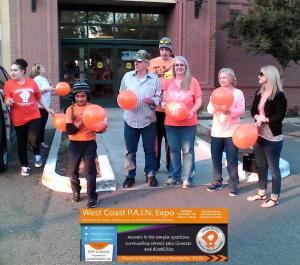
#painPOP #popwcps #NERVEmber November 14, 2015 3After the conference we popped the pain out of ’em! #painPOP

#painPOP with attendees from WCPS

Published on Nov 14, 2015

#painPOP with some of the attendees from the POP’s West Coast Pain Summit 2015 for neuropathy awareness in #‎NERVEmber #‎ihavethenervetobeheard #‎doyouhavethenervetobeheard #‎powerofpain
http://PowerofPain.org/conditions #‎ShareAndMakeAware #‎ParticipateAndOrDonate


Additional photos can be found on the Power of Pain Foundation’s Facebook Page at facebook.com/powerofpain in the 2015 POP Events Album.

Twinkle VanFleet, Lynn Green, Jacie Touart #popwcps #NERVEmber November 14, 2015 POPF 2Lynn Green Medtronic, Twinkle VanFleet #popwcps #NERVEmber November 14, 2015 POPFLynn Green – Pain Therapist, Medtronic INC (Medtronic.com), Twinkle VanFleet – Advocacy Director (powerofpain.org) and Jacie Tourart – PA-C, Spine & Nerve Diagnostic Center (spinenerve.com).


POPFLogoEmailThe 8 key areas of the Patient’s Bill of Rights

Information for patients

You have the right to accurate and easily understood information about your health plan, health care professionals, and health care facilities. If you speak another language, have a physical or mental disability, or just don’t understand something, help should be given so you can make informed health care decisions.

Choice of providers and plans

You have the right to choose health care providers who can give you high-quality health care when you need it.

Access to emergency services

If you have severe pain, an injury, or sudden illness that makes you believe that your health is in danger, you have the right to be screened and stabilized using emergency services. You should be able to use these services whenever and wherever you need them, without needing to wait for authorization and without any financial penalty.

Taking part in treatment decisions

You have the right to know your treatment options and take part in decisions about your care. Parents, guardians, family members, or others that you choose can speak for you if you cannot make your own decisions.

Respect and non-discrimination

You have a right to considerate, respectful care from your doctor’s, health plan representatives, and other health care providers that does not discriminate against you.

Confidentiality (privacy) of health information

You have the right to talk privately with health care providers and to have your health care information protected. You also have the right to read and copy your own medical record. You have the right to ask that your doctor change your record if it is not correct, relevant, or complete.

Complaints and appeals

You have the right to a fair, fast, and objective review of any complaint you have against your health plan, doctors, hospitals or other health care personnel. This includes complaints about waiting times, operating hours, the actions of health care personnel, and the adequacy of health care facilities.

Consumer responsibilities

In a health care system that protects consumer or patients’ rights, patients should expect to take on some responsibilities to get well and/or stay well (for instance, exercising and not using tobacco). Patients are expected to do things like treat health care workers and other patients with respect, try to pay their medical bills, and follow the rules and benefits of their health plan coverage. Having patients involved in their care increases the chance of the best possible outcomes and helps support a high quality, cost-conscious health care system.

According to the presentation at the POPF Midwest PAIN Expo attendee’s learn the importance of the of the “Patient Bill of Rights”  (“Patient Rights” 3). (et al.) 


We look forward to seeing you next year!

Twinkle VanFleet, Sacramento resident and pain patient. Executive Board Member and Advocacy Director, Power of Pain Foundation.


A Call for Action- 2016

A Call for Action 2016

By Twinkle VanFleet

disabilityIntegration

‎Since 2012, the estimated rise in addiction and opioid related abuse was an astounding 26.4 to 36 million people throughout the world. The accidental overdose of prescription related deaths were 4 times the amount of similar deaths in 1999.[1] According to the National Survey on Drugs Use and Health, 70 percent of all people who abused prescription analgesics got them from friends or relatives while 5 percent got them from a drug dealer or the internet.[2] While most of the focus has been on patients abusing their medications we must not lose sight that the majority of these patients take their medication as prescribed. The  negative innuendos influence the positive conclusion that long-term opioid treatment does in fact give quality of life to not only cancer patients, but non-cancerous chronic pain patients whose pain cannot be controlled any other way.

In an effort to deter abuse and/or misuse in patients, family, friends or associates, decrease the value in street sales, reduce the drug epidemic in certain populations, abuse deterrent formulations (ADF) are beneficial step forward in the diversion of the prescription drug issue.

OxyContin, Nucynta ER, Opana ER, Oxecta, Embeda, and Targiniq each contain abuse deterrent formulations (ADF) or tamper deterrent formulations (TDF). The most common form of abuse is by swallowing the medication. Other forms are chewing, swallowing, snorting, ingesting, inhaling, and injecting for the fast acting euphoric effect. Naloxone is a narcotic that reverses the effects of other narcotic medicines and can be used to treat drug overdose in emergency situations. Naltrexone hydrochloride blocks the effects of opioids by competitive binding (i.e., analogous to competitive inhibition of enzymes) at opioid receptors. Naloxone and Naltrexone are both opioid antagonists and each conclusively block the body from experiencing the opiate and related endorphins. This occurs by binding of the opioid receptors with higher than affinity than agonists, but do not activate the receptors.

TDFs will protect people who decide to modify the medication’s original form by removing the opioid for prompt use and abuse. Otherwise, extraction acts quickly and the time it takes to produce its effects can be immediate.[3]

ADF’s contain ingredients for safer distribution. Patients would continue to receive the management of pain and physicians would be less likely to stop providing access to pain care.

Not all patients should be diverted to ADF or TDF by their physicians. Patient Evaluation and Risk Stratification should be utilized to mitigate potential risks. Pharmacies and insurance companies should not be allowed to replace an Abuse Deterrent Formulation prescription opioid for a similar generic non ADF opioid. The prescription drug abuse issue has brought an adverse impression onto honest patients with incurable and intractable chronic pain syndromes and diseases and has left some pain professionals feeling perplexed.

With the continued development of these safer opioid medications we are contributing to the future of better health and pain care practices. Pain patients must remain a high priority in the midst of the current and ongoing concern that prescriptions will likely be misused or abused. It is imperative that patients be assessed on an individual basis and not as an assumption to the status quo.

We must find a balance that separates patients who truly need opioid medication to live productive lives and those who are abusing them. Responsible patients should not be punished in an attempt to crack down on prescription drugs and opioid abuse. Legislators, health care professionals and pharmaceutical companies must work together to stop opioid abuse while keeping the needs of chronic intractable pain patients in mind.

Patients are being labeled for their chronic pain identity. In the last year or more they have not been receiving their medication management either by their physicians, insurance or pharmacy. In one instance, I was informed that a patient with no history of abuse was being referred to what seemed a drug rehabilitation program in order to get her medication. If she did not comply, she would not receive.

Another gentleman, previously prescribed Suboxone for pain management, now cannot receive opioid managed care because the information in his Prescription Drug Monitoring Program insinuates prescription drug abuse.

Steps need to be taken to ensure that notes are added to the PDMP/CURES database on individuals. Suboxone itself is only an implication without verification for what the medication was prescribed for.

On behalf of those who need, not want, but need medication to sustain quality of life, I call upon our legislative leaders to be proactive in this area.  Help stop the abuse without penalizing those of us who are able to live at least a modicum of life due to the effectiveness of these prescription pain medications.

Think about it,  as if you’re needing to… no! really needing to, begging to, ease your Mama. Close your eyes and imagine.

I call on you to not make any compromises for a standard not yet met.

  1. America’s Addiction to Opioids: Heroin and Prescription Drug Abuse. Nora D. Volkow, M.D. May 14, 2014.

Senate Caucus on International Narcotics Control. NIH National Institute on Drug Abuse

http://www.drugabuse.gov/about-nida/legislative-activities/testimony-to-congress/2014/americas-addiction-to-opioids-heroin-prescription-drug-abuse

  1. 2. Prescription Drug Abuse. Office of National Drug Control Policy

http://www.whitehouse.gov/ondcp/prescription-drug-abuse

  1. 3. Tamper-Deterrent Opioid Formulations: Who Needs Them, and at What Cost? Robert Twillman, PhD. Pain Practitioner

http://www.aapainmanage.org/resources/articles/tamper-deterrent-opioid-formulations-who-needs-them-and-at-what-cost/

Twinkle VanFleet, Sacramento resident, pain patient, Executive Board Member and Advocacy Director for the Power of Pain Foundation.

Written Thursday, ‎December ‎04, ‎2014

Updated Wednesday October 14, 2015

National Pain Strategy Chat #NPSChat- Review

The first National Pain Strategy Chat was held on September 29, 2015. Hosted by the Power of Pain Foundation with formal guest speakers Bob Twillman, Executive Director of the American Academy of Pain Management, Lynn R Webster VP of Scientific Affairs, PRA HS, Former President of the American Academy of Pain Medicine, Author of The Painful Truth and Christin Veasley, founding member of the Chronic Pain Research Alliance, whose mission is to advance scientific research on prevalent, neglected and poorly understood pain disorders that frequently co-occur and disproportionately affect women.

#NPSChat Hosted by the Power of Pain Foundation

“The Assistant Secretary for Health and Human Services (HHS) asked the Interagency Pain Research Coordinating Committee (IPRCC) to oversee creation of this resultant National Pain Strategy. Guided and coordinated by an oversight panel, expert working groups explored six important areas of need identified in the IOM recommendations—population research, prevention and care, disparities, service delivery and reimbursement, professional education and training, and public awareness and communication. The working groups comprised people from a broad array of relevant public and private organizations, including health care providers, insurers, and people with pain and their advocates.”

Excerpt from EXECUTIVE SUMMARY Page 3.

National Pain Strategy
A Comprehensive Population Health-Level Strategy for Pain

http://iprcc.nih.gov/docs/DraftHHSNationalPainStrategy.pdf

Attendee’s included but are not limited to, Women in Pain (@forgrace), Gina Salminen (@gnsalminen), American Academy of Pain Management (@AAPainManage), PAINS Project (@PAINSProject), The Pain Community (@PainComm), Fibro and Pain (@FibroAndPain), US Pain Foundation (@US_Pain), State Pain Policy Advocacy Network SPPAN (@SPPAN1), The American Chronic Pain Association (@ACPA), Reflex Sympathetic Dystrophy Association RSDSA (@RSDSA), Community Pain Center (@Our_CPC), Bob Twillman (@BobTwillman), Lynn Webster (@LynnRWebster), Christin Veasley (@CPRAlliance_org), Power of Pain Foundation (@powerofpain), Barby Ingle (@barbyingle), Consumer Pain Advocacy Task Force CPATF http://consumerpainadvocacy.org/twitter-chat/


The Chat Transcript is available at:

The Consumer Pain Advocacy Task Force CPATF

Direct link to PDF

http://consumerpainadvocacy.org/wp-content/uploads/2015/10/Twitter-Chat-9-29-2015-CPATF-Transcript-Final1.pdf

http://consumerpainadvocacy.org/twitter-chat/   http://consumerpainadvocacy.org/


The Interagency Pain Research Coordinatiing Committee-  National Pain Strategy

http://iprcc.nih.gov/National_Pain_Strategy/NPS_Main.htm

Solicitation of Public Comments on Draft National Pain Strategy
DEPARTMENT OF HEALTH AND HUMAN SERVICES
National Institutes of Health

http://iprcc.nih.gov/National_Pain_Strategy/Public_Comment_NPS_Draft.htm

National Pain Strategy
A Comprehensive Population Health-Level Strategy for Pain

http://iprcc.nih.gov/docs/DraftHHSNationalPainStrategy.pdf

Overview of the NPS Planning Process and Major Elements by Sean Mackey –

Presented at the NPS Collaborators Meeting Convened by PAINS – June 29, 2015

http://www.painsproject.org/overview-nps-planning-process/


While I participated to send out Questions, and re-share answers, I used the opportunity to listen instead of voice any thought at this time.

In closing, The Power of Pain Foundation asked – We’ve covered quite a bit today. Would you be interested in a future chat about NPS—if yes, on what? #CPATF #NPSChat

My response- Yes. Q and A’s educate to form solutions and partnerships. Chats provide opportunity for involvement.

This was my only contribution. For those who haven’t read the National Pain Strategy, I encourage you to do so now. We often want to be involved and voice our opinions, we want to help make change, or be there to advocate for our loved ones, or ourselves, yet too often we rely on others to tell us what something is, what it says, or what it’s all about. You have to read it for yourself, otherwise, you’re only receiving pieces and parts and from another’s perspective. I’m not embarrassed to admit a one time read isn’t enough. Neither is the second re-do. It’s in-depth and complex.

Future chats are important for all of us to come together to discuss the report.

After the NPSChat I was asked “@rsdcrpsfire @powerofpain Do you believe Sean Mackey cares? or NIH cares?”

I did exchange further conversation with the person who asked and replying to other questions. And I hope Mr. Mackey does care as my own daughter is now in the care of Stanford, both transplant center and pain management. His job is above caring though. Learning that Dr. Mackey’s parents both live with chronic pain didn’t really impact me. It only means that he does in fact have a personal connection to pain in addition to his education and experiences. It doesn’t mean at all that it will influence him either way. Of course my heart goes out to his parents.

It’s like saying “my best friend is black” to appease a situation of color. Stating a family member has chronic pain is like attempting a nudge toward acceptance. It doesn’t make any difference to me. Actions speak louder than words, so we’ll see and I do mean that with the utmost respect.

For the sake of the NPS and those of you who support it, I support it for you at this time. I’m not entirely certain of its benefits or that it will be implemented properly. Like most strategies, guidelines, and law the benefits are often dismissed when they matter most.

Having been apart of change and implementation for the current California Pain Management Guidelines I’m not naive to opioid prescribing, risks or need.

There are too many guidelines being developed. The CDC, government and state levels. The only people who are going to suffer are those who are labeled with “pain”.

Opioids don’t kill, being irresponsible does. The double-edged sword in under treated pain and prescribing.

Take Our Survey About the CDC Opioid Guidelines September 29, 2015 By Pat Anson, Editor

http://www.painnewsnetwork.org/stories/2015/9/29/pain-patients-take-our-survey-about-cdc-opioid-guidelines

Direct link to Survey

https://www.surveymonkey.com/r/GGJ5ZCH

Your voice matters!

I look forward to the next #NPSChat.

Together, we can..

… And we will.

~Twinkle V.

Executive Board/Advocacy Director powerofpain.org

Pain Awareness Month 2015 – Mid Month Review with Feature 7- The ACPA- History of Pain Awareness Month

I wish I could share the goodness of the world with everyone. The people I’ve shared have been people who are making an impact in the lives of others despite their own complications. Illness, disability, pain, yet hope enough in their passion’s to keep going… for you.

Some of them I barely know in the sense of talking with them. A few of them, I’ve had less than an hour or so of combined time in conversation exchange. Having the gift of knowing and the ability to feel at higher levels than most, I was compelled to ask these people if I could share them, honor them, and feature them this month. Each one of them, by their own energy, gave me a piece of them, the part that let me show you who they are in spirit. It was by a glimpse of their own souls experiences that led me to reach out to them.

Review

Pain Awareness Month 2015 – Feature 1 – The Faces and Limbs of Pain

https://rsdadvisory.com/2015/08/31/pain-awareness-month-2015-feature-1-the-faces-and-limbs-of-pain/


Pain Awareness Month 2015 – Feature 2 – Trudy Thomas, Living with HOPE Radio Show

https://rsdadvisory.com/2015/09/03/pain-awareness-month-feature-2-trudy-thomas-living-with-hope-radio-show/


Pain Awareness Month 2015 – Feature 3 – Shane Schulz, Arisen Strength

https://rsdadvisory.com/2015/09/07/pain-awareness-month-2015-feature-3-shane-schulz-arisen-strength/


Pain Awareness Month 2015 – Feature 4 – Power of Pain Foundation

https://rsdadvisory.com/2015/09/12/pain-awareness-month-2015-feature-4-power-of-pain-foundation/


Pain Awareness Month 2015 – Feature 5 – Sheila Purcell – United Kentucky Pain Care Action Network

https://rsdadvisory.com/2015/09/15/pain-awareness-month-2015-feature-5-sheila-purcell-united-kentucky-pain-care-action-network/


Pain Awareness Month 2015 – Feature 6 – Epithelioid hemangioendothelioma (EHE)

https://rsdadvisory.com/2015/09/19/pain-awareness-month-2015-feature-6-epithelioid-hemangioendothelioma-ehe/


Pain Awareness Month 2015 – Feature 7 – American Chronic Pain Association

Have you ever wondered about the history of pain awareness month? The American Chronic Pain Association and Partners for Understanding Pain is your last feature share for September.

September is Pain Awareness Month
http://theacpa.org/September-is-Pain-Awareness-Month


Below you will find the history of pain awareness month in a timeline PDF document. Beginning in 2001 with a pain awareness campaign. Did you know? Please consider sharing so that others might learn also. Be sure to share in the documents original form.


Pain Awareness Month History

http://theacpa.org/uploads/Pain_Awareness_Month_History.pdf

For more information

The American Chronic Pain Association (ACPA)
http://theacpa.org/

The American Chronic Pain Association (ACPA)
Partners for Understanding Pain
http://theacpa.org/Partners-for-Understanding-Pain

Pain Awareness Toolkits
http://theacpa.org/Pain-Awareness-Toolkits

You can also find the American Chronic Pain Association on:

Facebook-
https://www.facebook.com/pages/The-American-Chronic-Pain-Association/113362482021895

Twitter-
https://twitter.com/TheACPA
@TheACPA

YouTube-
http://www.youtube.com/user/TheACPAChannel

Pinterest-
https://www.pinterest.com/theacpa/
The information provided is for pain awareness and educational purposes only. All rights reserved to The American Chronic Pain Association for their content.


I hope that I’ve proffered enough of myself this year for you and I wish you all the very best in your journeys to continue to make a difference in the lives of others. I pray each of you get all that you need in this life and give back all that you’re able to.

thank-you-

I wish you all well,

And enough.

~Twinkle V.
Te quiero más

Pain Awareness Month 2015 – Feature 6 – Epithelioid hemangioendothelioma (EHE)

HopeDawn R. Scott was only 20 years old in 1998 and a junior in college when she was first diagnosed with Epithelioid Hemangioendothelioma (EHE). The primary site of her EHE was in her right subclavian vein which had metastasized to her lungs. She had about 20 tumors bilaterally. Dawn’s primary surgery was extensive, enduring four rounds of rough and intense chemotherapy. The primary tumor was completely removed via surgery and the lung tumors have been stable since August of 1998. Dawn received her undergrad in 2001 and went on to law school. She graduated again in 2005 and has been practicing law in Wyoming for the last 10 years.

In April of 2013, she met a young woman named Tory who had angiosarcoma. Tory was the first person Dawn met in person that had anything similar to EHE. Tory invited Dawn to join an angiosarcoma group on Facebook. The group joined people from all over the world. An eye-opening experience. During the summer of 2013, Dawn connected with Vlad in a chat forum, his brother, Dmitri, had just been diagnosed with EHE. They talked on the phone and in turn, his mom Jane was introduced to her. Tory passed away in September of that same year and from there Dawn was compelled to start a Facebook group for epithelioid hemangioendothelioma.

“Never did I dream that we would grow to be what we have become and I am so happy that we have one another.” ~Dawn Scott

Jane joined Dawn shortly after she started the group, and gradually they gained key members such as Guy Weinberg (CRAVAT) and Gayla Loller. Cynthia Lee, who had started the HEARD registry years ago before was soon on board, too. Halt EHE thru Analysis, Research and Discovery (H.E.A.R.D.). Jane alerted the group to Dr. Rubin’s work, field of research, study and fundraising for EHE.

Brian Rubin, MD, PhD, is certified by the American Board of Pathology in anatomic pathology. He specializes in the diagnosis of diseases of bone and soft tissue and is an expert in the diagnosis of sarcomas. He’s a world-renowned pathologist and medical researcher who’s brought new hope for patients diagnosed with Epithelioid Hemangioendothelioma (EHE). Dr. Rubin is at the Cleveland Clinic.

“I may have “created” the group but it is truly all of ours and we’d be nowhere without the dedication of so very many.” ~Dawn Scott


Epithelioid Hemangioendothelioma (EHE) Cancer Support Group
https://www.facebook.com/groups/EHEcancer/

This group is for epithelioid hemangioendothelioma (EHE) cancer fighters/survivors, caregivers, friends, and medical professionals. Per Wikipedia, epithelioid hemangioendothelioma (EHE or eHAE) is a rare tumor that typically strikes both women and men who are in their 20s through their 40s. EHE is a vascular cancer, often growing in the liver, lungs, and within the veins of arms and legs. However, it can be found in other locations throughout the body, including the mediastinal region of the chest, in skin and other organs, and also in bones. The prognosis varies for those diagnosed, with many living successfully with the disease while others do not survive.

What is universal is that EHE fighters/survivors are scattered across the globe, and often never have the opportunity to connect with someone else who is fighting the same disease. This group hopes to change that! We want to be a source of support for those fighting the disease as well as those who love them. We also want to raise awareness of this rare form of cancer and advocate for a cure while being a source of knowledge and resources. You do not have to fight this battle alone, we all fight together!

This FB group reflects numerous positive steps that are being made in the awareness, identification, and treatment of EHE. Please check out the links at the top of the page for additional information such as the status of research breakthroughs made by Dr. Brian Rubin at Cleveland Clinic; fundamental information about EHE from CRAVAT (Center for Research and Analysis of VAscular Tumors) Foundation; and of course, PLEASE take a moment to register your information at our new EHE patient registry.

NEWLY DIAGNOSED? Please click on this link: http://www.cravatfoundation.org/newly-diagnosed/ to find key information that will be helpful. Our members bring diverse experiences and information to this group. Please remember that postings on this site are NOT MEDICAL ADVICE and should not be taken as such! Your doctor or doctors should always be the final authority on your treatment measures, supplements, etc. However, we encourage you to educate yourself about this disease, possible treatments and to ask questions in order to have open and honest conversations with your doctors.

Description written by and is the property of Epithelioid Hemangioendothelioma (EHE) Cancer Support Group.

Leadership Team
Dawn R. Scott, Jane Gutkovitch, Gayla Loller, Guy Weinberg, Cynthia Lee, and Jono Granek.

(Closed Group)


Epithelioid hemangioendothelioma is a rare and devastating vascular sarcoma that affects between 100 and 200 people, mostly young adults, each year in the United States. The cancer may arise as a solitary lesion but more commonly presents with metastatic involvement, usually in the liver and lungs. When confined to soft tissue, mortality from epithelioid hemangioendothelioma is between 13% and 18% but increases dramatically to 40% and 65% when it is found in the lungs and livers, respectively. Although localized epithelioid hemangioendothelioma can be surgically resected, currently there is no effective therapy for systemic disease. And because the cancer is so rare, public funding for research is scarce, making the development of targeted therapies difficult.

Citation: Unraveling the Mysteries of Epithelioid Hemangioendothelioma
A Conversation With Brian P. Rubin, MD, PhD By Jo Cavallo, February 10, 2015, Volume 6, Issue 2

See full article below


As some of you may know by now, Kharisma’s Journey hasn’t been a simple one. Since my post February 4, 2015, so much more has been revealed by my own discovery. Through my daughter’s medical records, I learned it’s not just her liver that’s affected, she also has a lesion on her kidney, an accessory spleen (Splenule) and other abnormalities. I highlighted these findings for her appointment less than a month ago. She’s not received any care the last 7 months, we’ve tried, but to no avail. At this last appointment she was put out of work for a minimum of 3 months. This was an emergency appointment scheduled with her primary after her dad took her to the ED for severe pain and she was dismissed without care. 2 weeks later, she finally seen a Gastroenterologist specializing in the liver, and was immediately scheduled for an Endoscopy 2 days later. Yesterday, we got word that Standford Medical Center in San Francisco received an urgent request from our daughters new doctor. They called to schedule an appointment for next Thursday, September 24, 2015 to begin the process for a liver transplant. It’s a consultation visit to get her on the National Transplant Waiting List. I’ve already looked into being a living donor for her. I had part of my own liver removed in July of 2013. Hepatic Hemangioma with small portions of attached benign hepatic parenchyma. Several benign masses that were only discovered as a result of a second Gall bladder surgery. Hemangioma is made up of a tangle of blood vessels. The liver is the only organ in the body that is able to regenerate and a removed or transplanted portion of a liver can rebuild itself to normal capacity within weeks. I could still give a part of mine. It shouldn’t be removed or given more than twice, but she’s my daughter, and there’s not anything I wouldn’t do to give her life again.

In August, I began researching almost endlessly on EHE. Case reports, abstracts, research articles, definitions. In February, I did it all over again. Someone responded to my blog post to refer me to:

Epithelioid Hemangioendothelioma (EHE) Cancer Support Group, so thankful for the reply to share with me its existence.

I sent a request and Jane accepted me in. I was welcomed with open arms. A most loving community. I began talking with Dawn a few months back. Getting to know one another a little at a time. An amazing lady and a courageous friend. I needed these people to know that I wasn’t there to promo anything, so many people jump into groups to do just that. My hope was to learn and I have.  While I do stay in the background more than anything else, I’m truly grateful for each and every one of them.

From what we understand resection isn’t possible for our daughter due the number of lesions, size and location of each. But if it is…


EHE Research – Dr. Brian Rubin
General Fundraising

http://giving.ccf.org/site/TR?px=2538406&fr_id=1360&pg=personal#.VfB_FxFVhBd


Unraveling the Mysteries of Epithelioid Hemangioendothelioma
A Conversation With Brian P. Rubin, MD, PhD
By Jo Cavallo
February 10, 2015, Volume 6, Issue 2

http://www.ascopost.com/issues/february-10,-2015/unraveling-the-mysteries-of-epithelioid-hemangioendothelioma.aspx


Research Gives New Hope To Those With Rare Vascular Cancer August 31, 2011

http://my.clevelandclinic.org/about-cleveland-clinic/newsroom/releases-videos-newsletters/2011-8-31-research-gives-new-hope-to-those-with-rare-vascular-cancer


Patient Crossroads

CRAVAT (Center for Research and Analysis for Vascular Tumors)

https://connect.patientcrossroads.org/?org=cravat

If you are an EHE patient and will be undergoing surgery in the near future, please contact the office of Dr. Brian Rubin, Anatomic Pathology Department of the Cleveland Clinic at 216-445-5551 to see about contributing your tumor specimen to his important research. Thank you.


CRAVAT Foundation
EHE Epithelioid Hemangioendothelioma
Education and Resources for EHE Patients, Their Families, and Doctors

For Newly Diagnosed

http://www.cravatfoundation.org/newly-diagnosed/


More information

Case Report
http://www.amepc.org/tgc/article/view/1119/1455

Radiopaedia
http://radiopaedia.org/articles/hepatic-epithelioid-hemangioendothelioma-1

Overview
http://www.oncologyreviews.org/article/view/259

Wiki
https://en.wikipedia.org/wiki/Epithelioid_hemangioendothelioma


By sharing the resources on this page, you’re gifting new hope back in hopelessness.

Thank you.