National Pain Strategy Chat #NPSChat- Review

The first National Pain Strategy Chat was held on September 29, 2015. Hosted by the Power of Pain Foundation with formal guest speakers Bob Twillman, Executive Director of the American Academy of Pain Management, Lynn R Webster VP of Scientific Affairs, PRA HS, Former President of the American Academy of Pain Medicine, Author of The Painful Truth and Christin Veasley, founding member of the Chronic Pain Research Alliance, whose mission is to advance scientific research on prevalent, neglected and poorly understood pain disorders that frequently co-occur and disproportionately affect women.

#NPSChat Hosted by the Power of Pain Foundation

“The Assistant Secretary for Health and Human Services (HHS) asked the Interagency Pain Research Coordinating Committee (IPRCC) to oversee creation of this resultant National Pain Strategy. Guided and coordinated by an oversight panel, expert working groups explored six important areas of need identified in the IOM recommendations—population research, prevention and care, disparities, service delivery and reimbursement, professional education and training, and public awareness and communication. The working groups comprised people from a broad array of relevant public and private organizations, including health care providers, insurers, and people with pain and their advocates.”

Excerpt from EXECUTIVE SUMMARY Page 3.

National Pain Strategy
A Comprehensive Population Health-Level Strategy for Pain

http://iprcc.nih.gov/docs/DraftHHSNationalPainStrategy.pdf

Attendee’s included but are not limited to, Women in Pain (@forgrace), Gina Salminen (@gnsalminen), American Academy of Pain Management (@AAPainManage), PAINS Project (@PAINSProject), The Pain Community (@PainComm), Fibro and Pain (@FibroAndPain), US Pain Foundation (@US_Pain), State Pain Policy Advocacy Network SPPAN (@SPPAN1), The American Chronic Pain Association (@ACPA), Reflex Sympathetic Dystrophy Association RSDSA (@RSDSA), Community Pain Center (@Our_CPC), Bob Twillman (@BobTwillman), Lynn Webster (@LynnRWebster), Christin Veasley (@CPRAlliance_org), Power of Pain Foundation (@powerofpain), Barby Ingle (@barbyingle), Consumer Pain Advocacy Task Force CPATF http://consumerpainadvocacy.org/twitter-chat/


The Chat Transcript is available at:

The Consumer Pain Advocacy Task Force CPATF

Direct link to PDF

http://consumerpainadvocacy.org/wp-content/uploads/2015/10/Twitter-Chat-9-29-2015-CPATF-Transcript-Final1.pdf

http://consumerpainadvocacy.org/twitter-chat/   http://consumerpainadvocacy.org/


The Interagency Pain Research Coordinatiing Committee-  National Pain Strategy

http://iprcc.nih.gov/National_Pain_Strategy/NPS_Main.htm

Solicitation of Public Comments on Draft National Pain Strategy
DEPARTMENT OF HEALTH AND HUMAN SERVICES
National Institutes of Health

http://iprcc.nih.gov/National_Pain_Strategy/Public_Comment_NPS_Draft.htm

National Pain Strategy
A Comprehensive Population Health-Level Strategy for Pain

http://iprcc.nih.gov/docs/DraftHHSNationalPainStrategy.pdf

Overview of the NPS Planning Process and Major Elements by Sean Mackey –

Presented at the NPS Collaborators Meeting Convened by PAINS – June 29, 2015

http://www.painsproject.org/overview-nps-planning-process/


While I participated to send out Questions, and re-share answers, I used the opportunity to listen instead of voice any thought at this time.

In closing, The Power of Pain Foundation asked – We’ve covered quite a bit today. Would you be interested in a future chat about NPS—if yes, on what? #CPATF #NPSChat

My response- Yes. Q and A’s educate to form solutions and partnerships. Chats provide opportunity for involvement.

This was my only contribution. For those who haven’t read the National Pain Strategy, I encourage you to do so now. We often want to be involved and voice our opinions, we want to help make change, or be there to advocate for our loved ones, or ourselves, yet too often we rely on others to tell us what something is, what it says, or what it’s all about. You have to read it for yourself, otherwise, you’re only receiving pieces and parts and from another’s perspective. I’m not embarrassed to admit a one time read isn’t enough. Neither is the second re-do. It’s in-depth and complex.

Future chats are important for all of us to come together to discuss the report.

After the NPSChat I was asked “@rsdcrpsfire @powerofpain Do you believe Sean Mackey cares? or NIH cares?”

I did exchange further conversation with the person who asked and replying to other questions. And I hope Mr. Mackey does care as my own daughter is now in the care of Stanford, both transplant center and pain management. His job is above caring though. Learning that Dr. Mackey’s parents both live with chronic pain didn’t really impact me. It only means that he does in fact have a personal connection to pain in addition to his education and experiences. It doesn’t mean at all that it will influence him either way. Of course my heart goes out to his parents.

It’s like saying “my best friend is black” to appease a situation of color. Stating a family member has chronic pain is like attempting a nudge toward acceptance. It doesn’t make any difference to me. Actions speak louder than words, so we’ll see and I do mean that with the utmost respect.

For the sake of the NPS and those of you who support it, I support it for you at this time. I’m not entirely certain of its benefits or that it will be implemented properly. Like most strategies, guidelines, and law the benefits are often dismissed when they matter most.

Having been apart of change and implementation for the current California Pain Management Guidelines I’m not naive to opioid prescribing, risks or need.

There are too many guidelines being developed. The CDC, government and state levels. The only people who are going to suffer are those who are labeled with “pain”.

Opioids don’t kill, being irresponsible does. The double-edged sword in under treated pain and prescribing.

Take Our Survey About the CDC Opioid Guidelines September 29, 2015 By Pat Anson, Editor

http://www.painnewsnetwork.org/stories/2015/9/29/pain-patients-take-our-survey-about-cdc-opioid-guidelines

Direct link to Survey

https://www.surveymonkey.com/r/GGJ5ZCH

Your voice matters!

I look forward to the next #NPSChat.

Together, we can..

… And we will.

~Twinkle V.

Executive Board/Advocacy Director powerofpain.org

Making Complex Regional Pain Syndrome Simple For a Jury

MAKING COMPLEX REGIONAL PAIN SYNDROME SIMPLE FOR A JURY

A start-to-finish strategy for proving the chronic pain and resultant damages of CRPS

When God was testing the faith of Job, the worst punishment was physical pain…. He lost his lands and property, his family – but it was not until physical pain was inflicted that Job broke. (Job 16:6).

A case dealing with chronic pain can be difficult to prove due to the subjective nature of pain itself. This is especially true for Complex Regional Pain Syndrome cases (“CRPS”). CRPS, formerly known as Reflex Sympathetic Distrophy Syndrome (“RSD”), is an incurable chronic pain condition that is often debilitating. For trial lawyers and their clients, this disorder is especially troubling because of the controversy surrounding its diagnosis and treatment. As its very name implies, the disorder is “complex” in nature, is routinely misdiagnosed, and as such, is difficult to explain and prove to a jury.

Take a recent case that had a mixed diagnosis: Some doctors thought it was CRPS, while some did not. In the end, what mattered was our client had severe pain that would likely afflict him for the rest of his life. This was something the jury understood, whether we called it CRPS or not. The primary purpose of this article is to explain the basics of CRPS, highlight some of the challenges in dealing with a CRPS case, and discuss some useful strategies from a recent trial.

CRPS – WHAT IS IT?

CRPS is a chronic pain condition most often affecting one of the limbs (arms, legs, hands, or feet), in which the pain is out of proportion to thc injury. There are two designations of CRPS: Type I and II. Typc I, which this article will focus on, is a result of trauma. Type II stems from a specific injury to a nerve.

Some researchers have said CRPS is potentially the worst chronic pain disorder a human being could endure. Doctors describe the severe cases of CRPS as being higher on the pain scale than childbirth and amputation. However, over the years, pain management practitioners were overzealous in diagnosing chronic pain patients with CRPS. In the early 1990s, “RSD” cases were popping up everywhere, perhaps in part due to the unclear diagnostic criteria at the time. Now, after the hype has calmed and thorough research has flushed out a more clear understanding of the disorder, CRPS cases can and should command the same attention as other severe injuries such as brain and spinal cord injuries.

To begin with, CRPS arises typically after an injury or trauma to the affected limb. For example, a seemingly simple fracture to the ankle eventually causing a severe pain disorder in that limb. The most frightening aspect of the disease is that it often initially begins in an arm or a leg and often spreads throughout the body. In fact, according to the National Institute of Health, 92 percent of patients state that they have experienced a spread, and 35 percent of patients report symptoms in their whole body.

CRPS is characterized by prolonged or excessive pain and mild or dramatic changes in skin color, temperature, and/or swelling in the affected area. These signs can be subtle in nature, or dramatic, depending on the severity of the CRPS.

CRPS symptoms vary in severity and duration. The key symptom is prolonged pain that may be constant and, in some people, extremely uncomfortable or severe. The pain may feel like a burning or “pins and needles” sensation, or as if someone is squeezing the affected limb. The pain may spread to include the entire arm or leg, even though the precipitating injury might have been only to a finger or toe. Pain can sometimes even travel to the opposite extremity. There is often increased sensitivity in the affected area, such that even light touch or contact is painful (called allodynia).

People with CRPS also experience constant or intermittent changes in temperature, skin color, and swelling of the affected limb. An affected arm or leg may feel warmer or cooler compared to the opposite limb. The skin on the affected limb may change color, becoming blotchy, blue, purple, pale, or red. As discussed in more detail below, due to the complexity of the disorder, CRPS cases are often overlooked, misdiagnosed, and not properly worked up.

VETTING A CRPS CASE

As trial lawyers, we appreciate that many of our clients do not have the type of medical treatment and insurance required to get a complete medical workup and diagnosis. Often, an injury like a brain bleed or spinal fracture might go misdiagnosed. With a disorder such as CRPS, this is truly one of the injuries that often require an attorney’s eye and attention to appreciate the client’s dilemma.

The following are a few points to consider when interviewing a client to determine if he or she potentially has CRPS:

• An injury causing pain which is out of proportion to injury,

• Changes in skin texture on the affected area; it may appear shiny and thin,

• Abnormal sweating pattern in the affected area or surrounding areas,

• Changes in nail and hair growth patterns,

• Stiffness in affected joints,

• Problems coordinating muscle movement, with decreased ability to move the affected body part, and,

• Abnormal movement in the affected limb (most often fixed abnormal posture, or tremors of the affected limb).

For a full CRPS potential case checklist, please contact the author.

Find out more about:

What Causes CRPS?

CRPS Diagnosis and Prognosis

How to Deal with Conflicting CRPS Diagnoses

Voir Dire Tips in a Pain Trial

Experts: Get the Dream Team

Dealing with the Defense “Expert”

Making it Simple

via Making Complex Regional Pain Syndrome Simple For a Jury.

COMPLEX REGIONAL PAIN SYNDROME

THE RELENTLESS PURSUIT OF JUSTICE

Complex Regional Pain Syndrome: The Relentless Pursuit of Justice

Causes

Symptoms

Diagnosis and Risk Factors

Prognosis and Treatment

Lawsuits and Damages

Spencer Lucas is a trial lawyer at Panish Shea & Boyle and specializes in complex catastrophic personal injury, products liability and wrongful death cases.  He has extensive experience in cases involving traumatic brain injuries, spinal cord injuries, and chronic pain.

Panish Shea & Boyle, LLP

11111 Santa Monica Blvd #700, Los Angeles, CA 90025

PHONE 877.800.1700

FAX 310.477.1699

My Week in Review- July 5, 2015

My week in review- July 5, 2015 – July 11, 2015

4th of July at our son-in-law to be and daughter’s was a nice one despite the fact 2 of us were missing from the evening. Ozra spent it with his girlfriend and our grandson spent it with his dad and family. We didn’t do any firework’s. That’s something we would have only done for De’Mantai. It was always a tradition for the kids. We passed this year. We did though sit out front and watch other’s in the neighborhood do theirs. Not loud at all. Just the little festivities of cone fountains on the ground. The BBQ was amazing. We were home about 4 hours after arriving.

On July 6th, I received a call from my Gastroenterologist that I wasn’t expecting at all. In April I was diagnosed with Diverticulosis in the recto-sigmoid colon and the sigmoid colon by Colonoscopy. At that same time I had a polyp removed. Benign inflammatory hematochezia. So we increased fiber intake. That was my plan. It was in January when the bleeding became a constant. Prior it was often, but not each time. Diarrhea was something I could no longer stop. Several times a day to the point I had to prepare to leave the home unlike before. The call was to start the process for surgery. Endoscopic band ligation.

I had just received the results of an ultrasound that one of the cysts on my right ovary had doubled in size and that I needed to repeat it in 8 weeks. That would be in about 6 weeks from now at this point. I’m not sure though anymore what is causing the most discomfort as so much is overlapping in my belly. I’m not even sure if my July 2013 diagnosis of hepatic hemangioma is still playing a significant role. That pathology was benign hepatic parenchyma with erythematous of the liver. I’ve basically just learned to deal with it. It has bothered me that my daughter was diagnosed with hepatic epithelioid hemangioendothelioma (EHE) which is rare. Mine is more common. Both can be genetic. The only reason mine were found is because of my second Gallbladder surgery, where a portion of Gallbladder had taken on new growth and had become stuck to my liver. When the rest of the gallbladder was removed so was a portion of my liver and some of the lesions as well. I’ve never had any followup since the post op. What do you do when you have too much going on within your body? Especially when they also know you’re also a chronic pain patient? I had never hit a wall before 2013. I never felt the judgement many spoke of. Not until all those trips to the ER during the 4 month wait on the scheduled surgery. Those trips didn’t do me any favors. I’m sure it made it look like I was seeking. Especially when on the last visit I declined another ultrasound do the severe pain, and I declined pain medication. Yet was prescribed a couple of days of Tramadol, I suppose for good measure. I really needed what was wrong fixed. When my surgeon did get inside me, I had been hemorrhaging. His own words to me at my post op “Thank you for making me believe you”.  I wanted to cry! But I didn’t! Maybe someone could have believed me before that! Thanking me after the fact. After I made myself look like a fool for seeking help, begging really. Honesty really can backfire. Just because my ability to hide pain is just that, hidden, doesn’t mean it wasn’t there. I’m tough when it comes to the pain scale. When I see people online say they are at a 10, I doubt it. Why? Not because I doubt you’re hurting but because 10 is a number reserved for the worse pain of all. When people say their pain is a 20 or 100. Nope, sorry! Again, I believe you’re hurting, I believe it may be hard, I can’t believe it’s the 10 described. When you’re at a 10, you’re out of your mind, you hurt so bad being online, visiting, doing anything even for pain distraction doesn’t work. It can’t work. 10 means medical intervention. I mean seriously, you think you’re dying body and mind. Even when I did go to the ER, I never told them 10. Most likely 8. Even people who don’t believe are praying to God at a real 10.

No one is going to take us seriously if we tell our doctor, a new referral or an ED physician we’re at a 10. No wonder the pain patient is often doubted. This is when assessment is most important.

Pain behaviors- I’m really good at not showing these. Partly due to the Functional Restoration Program I completed in 2009. Prior to that I was fairly decent already. Why is this so important to me? Because while CRPS alone has me in a non stop state of burning, stabbing, throbbing, piercing, bee stinging sensations and living in my head all day long, I want to appear as a productive member of society when I am out and not be noticed as having any illness, disability or limitation. I’ll do what ever I can to be mindful to not grab at an area, or focus on it. The only behavior I might show from time to time is shifting and I can fake it to make it because other people shift and change positions in their seats, too.

However, when in an emergency situation I’m not sure if I’m failing myself or if those medical professionals are failing me. Pain behavior’s are also indicators. High blood pressure (or too low), sweating, vomiting, complexion, the eyes, skin, breathing, temperature. Hyperventilating. These are objective.

If they don’t believe in us, how can we believe in them.

I told the GI that I needed time because my husband was scheduled for surgery on the 10th. Which he has now had to repair a tear in his shoulder. It’s taken 2 and a half years to get his surgery so there was no way I would interfere with it happening. He’s doing well so far, although it has only been 2 days. Due to his quad bypass in December of 2012 and his history of 2 previous heart attacks before that. They did take special precautions by placing an arterial line to monitor his blood pressure in real-time rather than using the cuff. He was under general anesthesia and given a full block. The block lasted the first 24 hours. He didn’t feel any pain during that time. I’m so glad. He was kept in recovery longer that usual, but we were still home the same day from the outpatient procedure. He was really taken care of by his surgeon, anesthesiologist and after care team.

The first thing I did was call my Pain Management Physician to let them know about an upcoming surgery. I have a pain contract. I’ve been with then since 2004. Work Comp/CRPS. Pre planning in case I need to take pause from care to be treated through my primary. One should not be prescribed by separate physicians especially if it may involve a pain reliever.

My ability to breathe is worsening and I’m not sure if it’s due to internal pressure, my Central Apnea, (I have complex/mixed apnea) or Cheyne-Stokes. Air is like a water faucet that’s been turned down or a drowning feeling. Sleep disorders seem to be getting worse, but I can’t tell if fatigue is contributing. I should be feeling better since my Pulmonary Specialist helped me with a medication about 5 months ago to assist wakefulness. I do get the wakefulness for a couple of hours. All I can think is that there’s so much blood and water loss, dehydration could be contributing. Doc said to keep the fiber high and use OTC to help time spent in the bathroom.

Someone replied to one of my posts the other day “boy, you guys have had a year”. It’s been non stop since the start of our sons freshman year. 2011. Ozra (Kurtis) had a severe brain injury, frontal lobe bleeds, and more. He was in PICU for a week. I stayed the entire 9 days in the hospital with him. My husband had his second heart attack, he was 42. He had his first at 37. December of 2012 I stayed the 10 days at the hospital with him when he had his open heart surgery, quadruple bypasses. 3 of those days, I stayed in the van, storming rain. I couldn’t be with him yet. 2012, I also had my first Gallbladder surgery. 2013, ERCP, second gallbladder and partial liver removal surgery. 2014, SCS battery replacement (phew, easy), all of us numerous appointments, our son’s diagnosis from Shriners Hospitals for Children, our daughter’s diagnosis and extended hospital stays. When my husband came home from his open heart surgery, I was his only caregiver. I had to figure out how to lift him, care for those incisions, his chest, the 4, 2 inch horizontal’s where each tube was placed beneath his diagonal chest incision, the one from his wrist to up (near where blood is drawn) approx 8 inches, the 5-6 inch on his leg. I had to take a class in the hospital. They did teach me how to swing him, and his legs in and out of a position. Get him to his feet. I was exhausted. I thought the flare up was from over exerting. During this same time I was already having belly pain, but I thought it was left over pain from the surgery the year before. It couldn’t be from the Gallbladder. I didn’t have one. 2 months after my husbands surgery he was able to get me to the hospital. Way too funny! Not! I had Cholecystitis and there that story begun. So yep, we’ve had a year! Several.

Eventually I’ll share all those other things I haven’t spoken of in the open at all. I hope that by doing so, someone out there finds hope in believing there is always a way to overcome. I might not prefer my journey, but I’m blessed by it. By every situation, every struggle, every brick wall, every pain and emotion and every mountain I climb, each keeps me doing what I do best.

If you wonder why I share these stories it’s so that you know you aren’t alone going through tough times, struggles, living with physical pain or emotional ups and downs. So you know that families have it hard too. Not just the patient. Caregiver’s don’t have an easy job taking care of their partner’s. Children are affected whether minor or adult. Never knowing if someone’s day will be the better one or the worse one, each and every moment can change without notice, never knowing when a snap will come, or how you should handle it. You can’t baby someone with chronic pain. All you can do is educate yourself on their condition so that you can understand it. Be supportive, but also not allow them to limit themselves beyond actual limitations. Encourage actual limitations that can be overcome. Learned helplessness occurs by waiting on those who are not well and the person will think they can’t do something they can do. After awhile it becomes a part of their illness and disability when it never was and was never meant to be. It’s just something created that evolves. This becomes another problem of its own. Then when you don’t do something for the person they think you aren’t supporting or caring when really the opposite is true.

I know because I’m a chronic pain patient and a caregiver.

I’ve been working on my will. In California it really doesn’t need to be complicated. A handwritten will is a legal document. It can be as in-depth or as simple as needed. The most important factor is that it is legible. That is my challenge since many have a hard time reading my handwriting. Being ambidextrous I favor my right hand for writing it, yet I have a deep left-handed slant. Of course my husband gets everything, but there are a few personal items that I’d like to leave to specific people and places. There is one item I’m having a hard time deciding on. Perhaps it belongs in a history museum or the like. It’s nice to know my copyrights are mine 70 years after my death, but I’m looking into that, too. In addition, those pieces written under pseudonyms, 95 and 120 years after is nice too, but again, options.

Mom was supposed to be here from Georgia on the 10th too, then delayed until today. The trip is hard on them. They should be here by tomorrow if all goes well. I just can’t wait. It would be an awesome surprise if they made it in tonight after all.

Our daughter has her appointment on the 29th for her EHE. Hoping we can get better answers this time, a treatment plan.

Had a really great meeting on the 9th. Apart of an amazing team. Looking forward to continuing to learn, grow and evolve with each of them.

Still working on an exciting project, too. The elements continue to evolve. It’s not my project, I’m just one of the elements. The end result is going to be incredible.
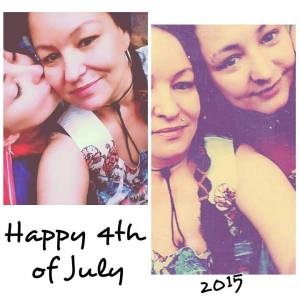
MyGirls&I_4thOfJuly2015_Kharisma-Twinkle_Rikki


My girls and I – 4th of July 2015

Kharisma on the left

Rikki on the right

Still

#StrongerThanPain

How Can Mindfulness Help With Chronic Pain? | Stephanie Weaver

Does mindfulness practice help reduce pain, or help us cope with pain better?

Both. Mindfulness can help reduce pain because it removes the worry about it, which is the other layer. Emotional and mental tension can add to physical pain. I have seen chronic pain go away via mindfulness. With systemic pain that does have a cause, mindfulness helps people cope with it better. When people rate their quality of life after mindfulness training, their scores on happiness, life satisfaction, and often activity level go up, even though the objective pain hasn’t changed. One student said, “I used to be my pain. Now I’m much more.”

Can you explain the phrase “suffering is optional”? I find it one of the most challenging sayings in Buddhism, because it implies I want to be in pain.

I don’t like that phrase because it’s confusing. I prefer to think of it like this equation from Shinzen Young: suffering = pain X worry

We typically equate pain with suffering. Pain and suffering are two different things. Nobody likes pain. But just because something is unpleasant doesn’t mean we have to suffer or react against it. Think of a time when you had pain, but no suffering was involved, like getting a tattoo or giving birth.

If we put what is happening to us in a different perspective, we’re suddenly able to tolerate it. In the beginning it’s a little bit of a mind game. But when mindfulness students look at it, and start to investigate their own experience, it starts to change.

You talk about separating our experience of pain into three components: the physical sensation, the emotions we feel about it, and the meaning the pain has for us.

When you break it into parts, it helps make it more manageable. We work with where the suffering is the strongest.

Let’s start with the physical sensation of pain. How does mindfulness deal with that?

We start to see that the physical pain is separate from the emotions we feel about it. We describe the sensation. We label it. That awareness is what is helpful.

And the emotions surrounding it?

We don’t often look at how we feel about the pain. What emotion is connected to the pain? Are you feeling sad, angry, or another emotion about it?

And finally the meaning of pain? I especially related to this because I do this myself. I feel fear about what a migraine might mean for me in the future.

Much of the suffering is often in the story we tell ourselves about it. Are you running loops about the story in your head, and is that making it worse? We might be stuck in the past, for example: that surgery or accident messed me up. Or we obsess about the future: because I have this condition, I will never be able to do X. Mindfulness brings you into the present moment. Instead of ruminating or rehearsing, be present and see how you actually feel.

Where can someone look to find out more about using mindfulness practice to deal with chronic pain?

It’s very difficult to start a mindfulness practice without a teacher, so finding a local class that teaches MBSR is the best approach. I like Living Well with Chronic Pain and Disease by Vidyamala Birch. There is an eight-week program called Breathworks that may help. Or try a recorded guided meditation.

How has mindfulness practice changed you?

I’m an M.D. by background, but I teach mindfulness full time now. I think that says a lot. As a physician, I became impressed with how mindfulness training is able to relieve suffering on all levels. As a physician my job was to “fix” people. As a mindfulness instructor, I give them tools to heal themselves. That’s really different.

Christiane Wolf, M.D., Ph.D., is a physician turned mindfulness meditation teacher. She is coauthor of the book, The Clinician’s Guide to Teaching Mindfulness.

Read the full article-

via How Can Mindfulness Help With Chronic Pain? | Stephanie Weaver.

Microglia Activation Causes Depression, Anxiety in Chronic Pain

June 11, 2015

Brain inflammation from chronic pain increases microglia activation, which inhibits the release of dopamine and may lead to depression and anxiety, according to a study published in The Journal of Neuroscience.

Although more than half of chronic pain patients experience depression, anxiety, or substance abuse, scientists were unable to determine what caused this association until now. In this study, the researchers sought to test if chronic pain disrupted the transmission of dopamine.

The researchers demonstrated that the activation of microglia in mice with chronic pain inhibited the release of dopamine. These results shed light on why opioids, which stimulate a dopamine response, can be ineffective for chronic pain patients.

The researchers instead tested a drug that inhibited the activation of microglia. This, they found, restored normal dopamine release and reward-motivated behavior in the mice.

“For over 20 years, scientists have been trying to unlock the mechanisms at work that connect opioid use, pain relief, depression and addiction,” said Catherine Cahill, PhD, of the University of California, Irvine. “Our findings represent a paradigm shift which has broad implications that are not restricted to the problem of pain and may translate to other disorders.”­

In future studies, the researchers hope to explore if mood disorders are caused by similar brain alterations, regardless of the presence of chronic pain.

Read more-

via Microglia Activation Causes Depression, Anxiety in Chronic Pain.

Read the full article at:

The Journal of Neuroscience

Microglia Disrupt Mesolimbic Reward Circuitry in Chronic Pain

Errors and Bullying in Chronic Pain Care

Oxy10Insurance is denying payment for opioid medication unless the patient agrees to attend a drug program. A California chronic pain patient with Reflex Sympathetic Dystrophy told me of her experience. She wants others to be aware that this could happen to them. The patient was fortunate to be able to pay for her medication/  She said “Poor people are screwed! If I wouldn’t have had the money, I’d be without meds”. This seems to be a rising problem. The issue of prescription drug abuse is an important one and is being addressed. This patient has no history with abuse. It would be important to address this if she was a previous addict or if an issue developed during the course of treatment, but I find it disconcerting that she not be entitled to coverage unless she agrees. This brings me to another point. Will it be clearly noted in the record that the patient was not misusing or abusing prescription medication when referred to the program. It is important that it be made clear and precise because otherwise as the medical record follows her it could simply be said that a drug diversion or drug rehabilitation program was attended leading another doctor or pharmacist to the belief the person is an addict.

These are important questions and they cannot be ignored. There is a problem with file management that already exists. Previous medications aren’t removed from the record and for other patients that leave one State to find a Physician in another it appears they are still on narcotics they were no longer taking. With the development of the Controlled Substance Utilization Review and Evaluation System (CURES) and the California Prescription Drug Monitoring Program (PDMP) healthcare providers who are eligible to prescribe controlled substances, pharmacists authorized to dispense, law enforcement, and regulatory boards are able to access patients controlled substance history.

These are tools that assist in learning information about a patient, but if information is not entered in correctly can also do harm. A little example, my husband was at his appointment recently and was asked if his medications had changed. This appointment was with his heart specialist. We had let the assistant know that his Gabapentin which he takes for Diabetic Neuropathy had been altered. She did right by asking but it didn’t make it into the record. An oversight. What if the medication was an analgesic opioid that was no longer being taken? Human error. No one would know it was no longer being taken. The assumption if a patient needed to be treated with a narcotic might be that they were drug seeking. Especially if other medications weren’t removed as well. Fortunately it wasn’t a major error. Unfortunately for someone else it could have been. Information still has to be entered accurately and people do make mistakes. Others simply don’t care enough to make sure it’s right.

Another example, an emergency room visit for an injury to the body. When the report was available it read, Alcohol Intoxication, as the reason for the visit. While the patient was intoxicated the only reason for the visit was to control bleeding, severe soft tissue damage requiring x-rays, and soft casting. While it should have been noted that the person was intoxicated it should not have been listed as the primary reason for the visit. This leads other physicians and emergency room personal who are only viewing the first part of the record to misconceptions which can adversely affect a patient in a new situation. They don’t have enough time in triage to look further, nor are most interested.

Learn the difdifferences between Electronic Medical Records, Electronic Health Records, and Personal Health Records

Patients need to become more assertive. Most of us feel that we are doing something wrong if we ask too many questions or if we demand a change. We have to take a more active role in our own care and lack thereof. We now have access to many of our own records for review in online patient centers. We can even communicate with our physicians.

If we don’t play an active role in our own care, records management and pain management, we will continue to be the scapegoat for other peoples errors. Lets review. A patient being required to enter a drug program in order to receive medication through her insurance. Another patient whose medication wasn’t updated and another whose reason for an emergency room visit wasn’t accurate.

There are hundreds of other stories that have been shared with me that just don’t add up. It all has more to do with the businesses involved than it does with any of us. For an insurance company to tell a patient they will only cover her medication if she completes a drug program, when she isn’t an addict, leads me to believe there is something in it for them, even if it’s to fulfill and obligation. An incentive. Patients are made to feel like they are abusers and addicts. This is wrong. For the small percentage that might be, it still wouldn’t be right to treat them poorly. These are the ones that would need help and to be assessed accordingly. I do know of legislation in the works that if a patient is on an opioid for 3 months or longer a drug program would be required to continue the medication.

Stay tuned,

~Twinkle V.

High-Frequency Surpasses Traditional Spinal Cord Stimulation in First Controlled Trial Comparing Technologies

Released: 24-Mar-2015 2:05 PM EDT 

Newswise — March 24, 2015, NATIONAL HARBOR, Md. –- The first-ever randomized, controlled trial to compare spinal cord stimulation (SCS) technologies found that high-frequency SCS using 10 kHz (HF10) exceeded lower-frequency, traditional SCS in response rate and pain relief. Further, this was achieved without the paresthesia that may cause discomfort with traditional SCS, the researchers reported in a scientific poster at the 31st Annual Meeting of the American Academy of Pain Medicine.

Traditional SCS low-frequency (~50 Hz) stimulation is an attempt to mask the sensation of pain with a tingling or buzzing sensation, known as paresthesia. Therefore, the therapeutic goal with traditional SCS is to cover the areas of pain with paresthesias, explained B. Todd Sitzman, M.D., M.P.H., medical director of Advanced Pain Therapy, PLLC, in Hattiesburg, Miss.

In contrast, “high-frequency HF10 therapy utilizes a stimulation frequency that is orders of magnitude higher than traditional SCS,” Sitzman said. “HF10 therapy does not produce paresthesias and achieves superior back and leg pain relief.”

More importantly, HF10 therapy was shown to be superior to traditional SCS in all of the study-related primary and secondary endpoints, including response rate and pain relief. The magnitude of back pain relief was consistent with previous European research of HF10 therapy (Van Buyten et al, Neuromodulation 2013;16(1):59-65; Al-Kaisy et al, Pain Med 2014;15(3):347-54).

The use of SCS, introduced in 1967, has expanded as a treatment for difficult pain syndromes, encompassing peripheral neuropathies, complex regional pain syndromes, peripheral vascular disease and other disorders in addition to failed back surgery syndrome (Deer, Techniques in Regional Anesthesia and Pain Management 1998 2(3):161-7).

Traditional low-frequency SCS systems are widely used in clinical practice. However, the scientific literature indicates that achieving back pain coverage with traditional SCS is technically difficult and is often not sustained over time. (North et al, Neurosurgery 2005;57(5):990-62005; Frey et al, Pain Physician 2009;12(2):379-97). According to one report, 71 percent of patients who received an implant with traditional SCS experienced discomfort from the stimulation of paresthesia (Kuechmann et al, Abstract. Pain in Europe VI [EFIC], Lisbon, Portugal: Sept. 9-12, 2009). In the current study, 44 percent of patients receiving traditional SCS reported uncomfortable stimulation.

The study was a prospective, randomized, multicenter, comparative trial of the investigational HF10 vs. the standard SCS therapy, designed in consultation with and monitored by the FDA. Institutional review board approval was obtained for each study site.

The 12-month follow-up data indicated that the responder rate with HF10 therapy was twice that with traditional SCS for both back and leg pain. Also, the average degree of pain relief with HF10 therapy was more than 50 percent greater than with traditional SCS. The level-1 evidence with 12-month follow-up meets today’s rigorous standards for evidence-based healthcare and complies with regulatory agency and payer preference for comparative effectiveness, the investigators said.

“These results provide important comparative effectiveness data for healthcare providers and clinically relevant information for pain physicians, patients and payers,” Sitzman said.

At present, HF10 therapy is investigational in the United States. The manufacturer of the device, Nevro Corp., which funded this study, anticipates obtaining market approval from the FDA by mid-2015.

Poster 140 – Rationale for the SENZA-RCT Study Design and Comparative Outcomes

About AAPM

The American Academy of Pain Medicine is the premier medical association for pain physicians and their treatment teams with over 2,500 members. Now in its 32nd year of service, the Academy’s mission is to optimize the health of patients in pain and eliminate pain as a major public health problem by advancing the practice and specialty of pain medicine through education, training, advocacy and research. Information is available on the Academy’s website at http://www.painmed.org.

via High-Frequency Surpasses Traditional Spinal Cord Stimulation in First Controlled Trial Comparing Technologies.

Power of Pain Foundation Co Sponsor Assembly Bill 623

california-sacramento-state-capitol-1Yesterday the Power of Pain Foundation Co-Sponsored AB 623 with Assembly Member Wood at the California State Capital in Sacramento where the bill was officially introduced.  I spoke on behalf of both pain patients and opioid abuse. In attendance with me and on behalf of POPF and the bill was Erik VanFleet, Kharisma VanFleet, Debbie Ellis, and Brandy Ellis.

Speaking at the event was: Assemblymember Wood (author), Assemblymember Levine, Mendocino County Sheriff Tom Allman,  Ralph A. Cansimbe, Chapter Commander PFC Alejandro R. Ruiz Chapter, American G.I. Forum, Representatives from bill sponsors US Pain Foundation, Power of Pain and American Chronic Pain Foundations and the CA Academy of Physician Assistants.

Legislation to Curb Prescription Drug Deaths UnveiledAB623_March242015_POPFCoSponsorWithAssemblymanWood

Published on Mar 26, 2015

(Sacramento) – California legislators, public health representatives and law enforcement officials announced new legislation at a State Capitol news conference to curb prescription drug abuse and deaths. Assembly Bill 623, authored by Assemblyman Jim Wood (D-Healdsburg), aims to reduce prescription drug abuse-related deaths by reducing their access to those most prone to abusing them. More than 60 people die every day in the United States from prescription drug overdoses. Approximately 6.5 million people in the US abused prescription drugs in 2013, more than double those that abused heroin, cocaine and hallucinogens combined. “Narcotic pain medications, or opioids, have an important role in our health care system,” said Assemblymember Wood, who is a licensed dentist. “They provide effective relief for the millions of Americans who suffer from chronic pain. But too easily they are getting into the wrong hands.” Here’s more in this Assembly Access video.http://www.asmdc.org/wood

Watch the Press Conference on Assembly Live

AB623_March242015_POPFCoSponsorWithAssemblymanWood_1

My speech-

Hello, My name is T. VanFleet, I am the Advocacy Director and Executive Board Member of the Power of Pain Foundation. I am also a pain patient myself. Through painful trial and error, my physicians and I have finally found the appropriate combination of medications to provide some relief from my debilitating symptoms. The prescription medications that I take allow me to do things that most people take for granted. Now, I celebrate small triumphs such as cooking, occasionally attending a function, and watching my grandson grow. One of the medications that helped give me my life back is a prescription opioid. A type of medication which has recently come under increased scrutiny due to heavy abuse by some.

Unfortunately, people who use prescription medications as intended can become unfortunate casualties of efforts to regulate opioid abuse, as we end up getting lumped in with those who misuse treatments. It is difficult to obtain refills,, denials and delays by pharmacists and insurance, including workers compensation leave patients in withdrawal and un-manageable circumstances including suicidal ideation.

Fortunately, there are new weapons available to help combat prescription opioid abuse which do not sacrifice the many patients who legitimately use the medications to fight pain. New “abuse deterrent formulations” (ADF) for opioids have properties that make it difficult or undesirable for someone to tamper with them. These medications are made with physical and chemical barriers, such as a special kind of coating or hardness to the pill itself, that won’t allow them to be chewed, crushed, cut, grated, ground up, or melted with water or alcohol.

The Power of Pain Foundation strongly believes that California policymakers must enact policies such as AB 623 to help develop a strong, lasting solution to the health crisis of prescription opioid abuse. We must find a balance that separates patients who truly need opioid medication to live productive lives and those who are abusing them. Responsible patients should not be punished in an attempt to crack down on prescription drug mis-use and abuse. Legislators, health care professionals and pharmaceutical companies must work together to stop opioid abuse while keeping the needs of chronic pain patients front-of-mind.

<end>

—-

I was honored to support this bill with Assemblyman Wood on behalf of the Power of Pain Foundation. It’s important that we assist in the prescription opioid drug abuse problem. This will help responsible pain patients get access to the care they need. Too many are denied now because of the stigma attached to their chronic pain identity. Abuse deterrent formulation’s will assist both issues.

AB623_March242015_POPFCoSponsorWithAssemblymanWood_2

Press Release Article Tuesday, March 24, 2015

Legislation to Curb Prescription Drug Deaths Unveiled by Assemblyman Jim Wood

For more information on the Power of Pain Foundation’s Policy Efforts, please visit-

Power of Pain Foundation | Policy Efforts | PatientAwareness.org

patient-awareness1-popf

-Friday March 20, 2014 Episode of

The Burning for a Cure show

With Hosts POPF President, Barby Ingle and POPF Executive Board Member & Marketing Director and Promotions Chairman – Joeygiggles and Co-Hosts Executive Board Member and Advocacy Chairwoman Twinkle VanFleet with Power of Pain Foundation Executive Director Ken Taylor.

Discussion: Legislation- Abuse Deterrent Formulation (ADF), more  Listen Here

Out in the real world, I try not to identify as a pain patient. We will be judged. You know it, and I know it. It becomes our label. As I attempt to go forward in advocacy it can sometimes be a little awkward. Not in my physical appearance, but In my inability to speak properly, delays, memory, forgetfulness, stuttering, wake-sleep, sleep-wake. I’m heading into my 15th year with CRPS type 2. My Neurocognitive deficit seemed a rapid decline. It’s part of the story that helps me fight to go on, for my family, for you.

You have to hang on to you! It’s okay to not be perfect. It’s okay to not be your “yesterday”.

The struggle is real. We are who we’ve become.  And it really is okay in all that it is. We might not like it, but we have to learn to accept it.

POPF-CoSponsor-AB623_BrandyEllis_DebbieEllis_TwinkleVanFleet_March242015PostPressConferenceCaliforniaStateCapital

Perfection is all that you can achieve in the here and the now. Getting that shower, getting dressed, combing our hair. Those are the triumphs.

There’s so much worth in the smallest things.

I believe in you! Believe in you, too.

Thank you Barby Ingle for always believing in me and my ability even when I didn’t.

POPF_AB623_KharismaVanFleet_BrandyEllis_DebbieEllis_TwinkleVanFleet_March242015
Lets try to remember to not pre-judge a chronic pain patient on appearance or preconceived notions, but instead, assess on diagnosis, and credibility. ~Twinkle V.

Overcoming the Stress Response

comtragcrpsa1The Sympathetic Nervous System is derived of 2 components. The Sympathetic Nervous System (SNS) and the Para-Sympathetic Nervous System (PSNS) both of which makes up the Autonomic Nervous System. The Sympathetic Nervous System is also known as Fight, Flight or Freeze. Stress and the Brain can be a serious issue for many individuals. Related or unrelated to various diagnosis’. Over the years I have lisened to thousands of individuals with a multitude of diagnoses.

Most of which touch on the the Stress Response. The stress response is “The Sympathetic Nervous System”. The Sympathetic Nervous System is the Stress Response. It is Fight, Flight or Freeze.

Having Complex Regional Pain Syndrome Type 2/Causalgia, I’ve had to take pause for an extra peek. Was there something there in my life at the time to cause my body to take this abnormal path. Has the stress and idea of not being able to heal kept me in this abnormal pattern. For me and only me, I cannot dismiss it. I cannot seem to find anything solid, but our minds don’t always work that way conclusively.

I refuse to give up, yet I fall to my own victimization in that I, at times, give up. It doesn’t matter if it is for 5 minutes or for a day. I have the awareness to know that by giving in, am I somehow reconditioning that stress response. I think it is possible. I use many of the alternative techniques available to me on a regular basis. That is how I survive. I also know that I succumb to fears of the future. Fear is anxiety. Anxiety is fear. Fear and anxiety is stress.  Add stress to chronic pain and you, or I, will always have a vicious cycle to endure.

Rarely do I focus on the physical decline of my being, I am aware. If I did, I would continue to re trigger the same event each and every day. I don’t focus on the look, or what I see. I do have trouble with the fact I can’t get out on my own. I have been trying to clear the secondary issue of depression. Many of us believe we are reasonably well. That is what we represent. My family fell to a hard decline a few years ago and since then it has been non stop. Surreal in some ways. A living dream. My personality type is to fix. My family is everything. My husband, children, and my grandchild.

If I can’t fix it, love it, make it right then it is wrong to me.

I have been taught not to show pain behaviors and not to guard. This is almost nature to me. For years now. Seldom if at all.

Perhaps there are times, yet they would be minimal.

I am on my way to getting better! You won’t be able to until you get rid of everything heavy you ever carried. Why? Because chronic pain has a way of bringing it all back. Heavier than it ever was. You will keep everything inside you. All thoughts, misconceptions, hurts, perceived hurts. You will! You have to let it go. And once you do, you will find peace not only in yourself, but in your pain.

~Twinkle VanFleet

Overview of the Autonomic Nervous System

http://www.merckmanuals.com/home/brain_spinal_cord_and_nerve_disorders/autonomic_nervous_system_disorders/overview_of_the_autonomic_nervous_system.html

The sympathetic division of the autonomic nervous system maintains internal organ homeostasis and initiates the stress response.

https://www.boundless.com/physiology/textbooks/boundless-anatomy-and-physiology-textbook/autonomic-nervous-system-ans-14/physiology-of-ans-142/sympathetic-responses-750-9204/

Fight, Flight or Freeze: The Stress Response

http://psychcentral.com/blog/archives/2014/07/31/fight-flight-or-freeze-the-stress-response/

What is the Stress Response?

What is the Stress Response

Stress Management

http://www.mayoclinic.org/healthy-living/stress-management/in-depth/stress/art-20046037

Chronic Stress Puts Your Health At Risk

http://www.mayoclinic.org/healthy-living/stress-management/in-depth/stress/art-20046037

Post Traumatic Stress Disorder (PTSD)

http://www.nimh.nih.gov/health/publications/post-traumatic-stress-disorder-ptsd/index.shtml

Systemic Complications of Complex Regional Pain Syndrome

Click to access Systemic-Complications-of-CRPS.pdf

Power of Pain Foundation- ADF and Access to Care


AZ State Capitol BuildingADF

Power of Pain Foundation recognizes that Abuse Deterrent Formulations are only a step forward
toward drug diversion. We know this isn’t the final answer. It allows an option for patients to
continue to be treated with opioid analgesics and removes many of the barriers involved in non abuse
deterrent medication.


POPF Pain Community Needs Assessment Survey

We are not focusing on any one treatment option, we are improving upon the patient/provider
relationship.

The purpose of our survey was to determine who is having trouble getting access to quality care.
who is being dismissed, who is being cared for by a primary physician, who is being sent to pain
management and who is having difficulty receiving ongoing pain care.

We are aware of many individuals who are not receiving proper medication management or treatment
and others who had been receiving care that are now facing obstacles.

Our goal is continued access to care. Our goal is patient empowerment.

Recent Articles

INEFFECTIVE TREATMENT ASSOCIATED WITH THE CHRONIFICATION OF PAIN by Barby Ingle
http://www.lynnwebstermd.com/ineffective-treatment-associated-with-the-chronification-of-pain/

BARBY INGLE ON CHRONIC PAIN AND OPIOIDS by Barby Ingle
http://www.lynnwebstermd.com/guest-post-barby-ingle-on-chronic-pain-and-opioids/

The Unintended Side Effects of Fighting Prescription Drug Abuse by Twinkle VanFleet
http://www.californiaprogressreport.com/site/unintended-side-effects-fighting-prescription-drug-abuseTwinkleV_SB1258


Barby Ingle: Tamper-proof pain drugs deserve support

http://www.desertsun.com/story/opinion/contributors/2015/02/28/ingle-pain-medication-%20tech/24144627/
With the Power of Pain Foundation as a sponsor of the new bill AB 623 on Abuse Deterrent
Formulations, the above article  Op-Ed by our President has special significance being published 2/28/2015.
#RareDiseaseDay http://www.rarediseaseday.org/

Our President also wrote articles for for WA, NV, AZ, and CA.
She wrote letters to legislators in MD, MO, UT, CO, AZ.
BarbyIngle-FillYourPrescriptionOfHope
We are committed to you!


Power of Pain Foundation Advocacy Committee
Twinkle VanFleet, Board Member, Advocacy Chariwoman