It’s unfortunate that as pain patients we have to play the game you want us to in order to be accepted into society. In the midst of the CDC’s Opioid Prescribing Guidelines that are being implemented and much of the commentary by various members of the medical community, PROP or anti opioid groups I’m left with a single phrase of truth. “I’m damned if I do and I’m damned if I don’t.” And so are you!
Pain patients should just push through it right? Okay! We should stop whining, quit complaining, cease everything you consider negative and survive it, right? Damned straight I’m right! But check it out! As soon as we do, to appease you, we’re well enough, we fabricated it, malingerers, and we’re a yxz with predominate pain as described in the ICD 10. We’re fine if we do and we’re lazy cry babies if we don’t. Oh and that pain we have? We’re just obsessed. Are you sure about that?
The Power of Pain Foundation is seeking a volunteer who can commit to approximately 5 hours per month to run our 2016 Webinar project. Some media background is required. Duties include but are not limited to contacting speakers, confirming dates and times. You would provide confirmation details to Executive Director Ken Taylor in a timely manner for promo purposes. Set up webinar page, and run webinar software during events. POP President, Barby Ingle will be serving as host. If she is unable to host, you, the Webinar Director will fill in. The title of your position is IPF Webinar Director.
The West Coast Pain Summit was held on November 14, 2015 at the Elk Grove Public Library Conference Room. In attendance was Lynn Green – Pain Therapist, Medtronic INC (Medtronic.com), Jacie Tourart – PA-C, Spine & Nerve Diagnostic Center (spinenerve.com), MarLeice Hyde – Erasing Pain (erasingpain.com) and Michael Connors, LVN. Harmony Home Care (harmonycareathome.com). We had local and out-of-town attendee’s join us. Our Power of Pain Foundation Delegates Erik and Kharisma VanFleet assisted as needed and 9-year-old ‘Tai Howard offered a friendly smile and a well-behaved demeanor.
Mr. Clete Dodson won our Power of Pain Long Sleeve Shirt chosen from the in person drawing. Monique Maxwell was chosen for our #NERVEmber silent drawing.
My presentation included, but was not limited to:
<Begin>
Welcome to the First Annual West Coast Pain Forum hosted by the Power of Pain Foundation.
This year hosted and sponsored by both the Power of Pain Foundation and Medtronic Neuromodulation.
Our topics today include Access to Care, Advocacy and Neuromodulation with Medtronic Pain Therapies from Medtronic.com and TameThePain.com
Access to Care
Patient Rights
There are 8 key areas to the Patients’ Bill of Rights
You have the right to accurate and easily understood information about your health plan, healthcare professionals, and health care facilities.
You have the right to your choice of providers and plans.
You have the right to emergency services. (Emergency department, urgent care)
You have the right to take part in treatment decisions.
You have the right to respect and non-discrimination
You have the right to confidentiality. (Privacy of healthcare information)
You have the right to file complaints and appeals.
You have the right to your consumer responsibilities. (Take an active role in your own health and well-being. Doctors are only a tool, too. )
Patient Communication
Understand your symptoms
Communicate with caregivers and healthcare professionals
Communication is essential.
Become an expert in your pain
Be prepared when attending your doctor’s visit.
Keep a pain journal.
Write down your questions.
Do you have concerns about your medication, or treatments?
Take notes.
Have a shared understanding of your pain and symptoms.
Get emotions under control.
Be assertive, but listen to others.
Describe your pain. (Don’t just say its pain. Does it burn, stab, pinch, tingle. Does it feel like cutting, aches, or throbbing? Is it localized or all over? Is it instigated by stress, depression, emotions?) Your doctor can’t help you if you’re not able to communicate.
Take someone with you to your appointments.
Take responsibility in reaching goals.
Caregivers: Be mindful and assertive in caregiving. According to the Department of Pain Medicine and Palliative Care at Beth Israel Hospital in New York, a family caregiver is “anyone who provides any type of physical and or emotional care for an ill or disabled loved one at home”. For this definition, “family” refers to a nonprofessional who is called “family” by the person who is sick. Sometimes, family is whoever shows up to help. (IN the FACE of PAIN, 5th edition, page 40)
Patients
Be easy on your caregiver without them you might not have any one to care for you. If you’re both a patient and a caregiver, be easy on each other. No one knows better than both of you.
Reducing Conflicts
Keep one network of physicians. One primary care provider, let referrals be given by only him or her.
Use only one pharmacy. Have medications sent to the same location. Pick them up from that location.
Don’t allow more than one physician to prescribe you an opioid pain medication.
The PDMP/ Prescription Drug Monitoring Program contains records of your prescribing history and is maintained and reviewed for changes in your habits.
When visiting ED’s describe your pain on the 0 – 10 NRS or Numeric Rating Scale which is most commonly recognized in emergency care. The NRS Scale for pain measures the intensity of your pain. It’s the 11 point numeric scale with 0 representing “no pain” and 10 representing “the worse pain imaginable”, “as bad as you can imagine” or unimaginable and unspeakable pain”.
Don’t tell the doctor your pain is an 11 or 20. You may be found unbelievable and your access to timely and proper care may be delayed, or in some instances even denied. You want them ready and willing to assist and care for you without second guessing.
*Adherence
Medications don’t work if we don’t take them. They’re prescribed to be taken as directed. Not doing so can lead to flare ups, increased pain, adverse reactions, withdrawal and misuse.
Examples of non-adherence
Not filling prescriptions
Not picking up filled prescriptions from the pharmacy
Skipping doses
Stopping medication before instructions say you should
Taking more than instructed or at the wrong time of day
*(IN the FACE of PAIN, 5th edition, page 16)
Potential setbacks
Many patients, including myself, have a severe Vitamin D deficiency in addition to the dystrophy caused by their diseases, or syndromes. Dystrophy is defined as – a disorder in which an organ or tissue of the body wastes away. This includes the bone and tissue in the mouth, jaw, teeth, and gums. Access to care can be a setback when our teeth decay, break away, or we’ve lost them as a result. Lacking dental insurance is an issue of its own. Judgement regarding addiction, misuse and drug seeking can hinder care until each time we prove otherwise. Additionally, BiPAP and CPAP use can contribute to dry mouth and decay. Moisture removed from the mouth is another price we pay just to breathe.
AB 374
The California Legislature approved a bill (Assembly Bill 374) the second week of September. Step Therapy required that a patient try and fail (fail first) a medication before being allowed to take the one their physician would have otherwise prescribed for them. AB 374 now allows providers in California to fill out a form to bypass step therapy requirements.
The PA Shuffle: Prior Authorization; information on our efforts can be found at our table, next to our ADF Policy efforts.
An energy assistance program is available through SMUD for qualifying patients who use specific medical devices. You can request the Medical Assistance Program Application by calling the Residential Inquiries number located on your bill.
Each of the above can assist in access and care. ( 7 min ) ^
–
Introduce
Pain Clinic (15 mins)
–
Break, meet and greet, #painPOP info
We’d love to have you take part in our #painPOP in the parking lot after the conference for photos and a bit of fun in raising awareness for National Reflex Sympathetic Dystrophy/Complex Regional Pain Syndrome Month. Our #painPOP campaign is participate or donate. Accept a challenge or donate to our cause.. I challenge all of you to raise awareness for the painful, debilitating and often progressive Neuro autoimmune illness that desperately needs a cure, an understanding for better quality of care, early diagnosis for stabilization or remission, and continued education and support materials, programs, free public educational events and conferences that we provide free to patients, caregivers, the healthcare community and the general public. We can’t do it without the help of awareness and funding. If you didn’t receive your raffle ticket joining us today, ask for one. Check NERVEmber.org tomorrow to see if you’ve got the winning numbers. You’ll be contacted to be sent your prize. Medtronic is up next with a demo, overview and a Q & A session. Enjoy each other!
–
Introduce
Medtronic
–
Advocacy
The Power of Pain Foundation Co-Sponsored SB 623 ( Abuse-deterrent Opioid Analgesics ) with Assemblyman Jim Wood and attended the live press conference held at the California State Capital on March 24, 2015. We will continue to support this bill in 2016. The bill will provide a safer alternative option to opioid medications by deterring several non-swallowing ways opioids can be abused.
Getting involved
You can join our international Delegates team by visiting: powerofpain.org/delegates-of-popf
We’re always looking for committed local volunteer advocates to support our legislative and policy efforts. The Power of Pain Foundation is a member of:
The Consumer Pain Advocacy Task Force (CPATF) which is comprised of national leaders and decision-makers from 16 consumer-nonprofit organizations that are dedicated to patient well-being and supporting the use of effective methods for pain treatment. The State Pain Policy Advocacy Network (SPPAN) first convened these leaders in March 2014 to organize a collective action effort to benefit people with pain. consumerpainadvocacy.org
SPPAN is an association of leaders, representing a variety of health care and consumer organizations and individuals, who work together in a cooperative and coordinated fashion to effect positive pain policy on the state level—policy that guarantees access to comprehensive and effective pain care for all people living with pain. Power of Pain Foundation is one of the original SPPAN partners. sppan.aapainmanage.org/
As POP Advocacy Director (POP 2011-12) and a SPPAN leader since 2013, locals would be working with me, as needed, to attend and represent us at the Capital.
We thank you all for attending today. We look forward to seeing you again next year. Please visit powerofpain.org for our education, awareness, advocacy and access to care missions.
<End>
#painPOP
After the conference we popped the pain out of ’em! #painPOP
#painPOP with attendees from WCPS
Published on Nov 14, 2015
#painPOP with some of the attendees from the POP’s West Coast Pain Summit 2015 for neuropathy awareness in #NERVEmber #ihavethenervetobeheard #doyouhavethenervetobeheard #powerofpain http://PowerofPain.org/conditions #ShareAndMakeAware #ParticipateAndOrDonate
Additional photos can be found on the Power of Pain Foundation’s Facebook Page at facebook.com/powerofpain in the 2015 POP Events Album.
–
Lynn Green – Pain Therapist, Medtronic INC (Medtronic.com), Twinkle VanFleet – Advocacy Director (powerofpain.org) and Jacie Tourart – PA-C, Spine & Nerve Diagnostic Center (spinenerve.com).
The 8 key areas of the Patient’s Bill of Rights
Information for patients
You have the right to accurate and easily understood information about your health plan, health care professionals, and health care facilities. If you speak another language, have a physical or mental disability, or just don’t understand something, help should be given so you can make informed health care decisions.
Choice of providers and plans
You have the right to choose health care providers who can give you high-quality health care when you need it.
Access to emergency services
If you have severe pain, an injury, or sudden illness that makes you believe that your health is in danger, you have the right to be screened and stabilized using emergency services. You should be able to use these services whenever and wherever you need them, without needing to wait for authorization and without any financial penalty.
Taking part in treatment decisions
You have the right to know your treatment options and take part in decisions about your care. Parents, guardians, family members, or others that you choose can speak for you if you cannot make your own decisions.
Respect and non-discrimination
You have a right to considerate, respectful care from your doctor’s, health plan representatives, and other health care providers that does not discriminate against you.
Confidentiality (privacy) of health information
You have the right to talk privately with health care providers and to have your health care information protected. You also have the right to read and copy your own medical record. You have the right to ask that your doctor change your record if it is not correct, relevant, or complete.
Complaints and appeals
You have the right to a fair, fast, and objective review of any complaint you have against your health plan, doctors, hospitals or other health care personnel. This includes complaints about waiting times, operating hours, the actions of health care personnel, and the adequacy of health care facilities.
Consumer responsibilities
In a health care system that protects consumer or patients’ rights, patients should expect to take on some responsibilities to get well and/or stay well (for instance, exercising and not using tobacco). Patients are expected to do things like treat health care workers and other patients with respect, try to pay their medical bills, and follow the rules and benefits of their health plan coverage. Having patients involved in their care increases the chance of the best possible outcomes and helps support a high quality, cost-conscious health care system.
According to the presentation at the POPF Midwest PAIN Expo attendee’s learn the importance of the of the “Patient Bill of Rights” (“Patient Rights” 3). (et al.)
We look forward to seeing you next year!
Twinkle VanFleet, Sacramento resident and pain patient. Executive Board Member and Advocacy Director, Power of Pain Foundation.
Since 2012, the estimated rise in addiction and opioid related abuse was an astounding 26.4 to 36 million people throughout the world. The accidental overdose of prescription related deaths were 4 times the amount of similar deaths in 1999.[1] According to the National Survey on Drugs Use and Health, 70 percent of all people who abused prescription analgesics got them from friends or relatives while 5 percent got them from a drug dealer or the internet.[2] While most of the focus has been on patients abusing their medications we must not lose sight that the majority of these patients take their medication as prescribed. The negative innuendos influence the positive conclusion that long-term opioid treatment does in fact give quality of life to not only cancer patients, but non-cancerous chronic pain patients whose pain cannot be controlled any other way.
In an effort to deter abuse and/or misuse in patients, family, friends or associates, decrease the value in street sales, reduce the drug epidemic in certain populations, abuse deterrent formulations (ADF) are beneficial step forward in the diversion of the prescription drug issue.
OxyContin, Nucynta ER, Opana ER, Oxecta, Embeda, and Targiniq each contain abuse deterrent formulations (ADF) or tamper deterrent formulations (TDF). The most common form of abuse is by swallowing the medication. Other forms are chewing, swallowing, snorting, ingesting, inhaling, and injecting for the fast acting euphoric effect. Naloxone is a narcotic that reverses the effects of other narcotic medicines and can be used to treat drug overdose in emergency situations. Naltrexone hydrochloride blocks the effects of opioids by competitive binding (i.e., analogous to competitive inhibition of enzymes) at opioid receptors. Naloxone and Naltrexone are both opioid antagonists and each conclusively block the body from experiencing the opiate and related endorphins. This occurs by binding of the opioid receptors with higher than affinity than agonists, but do not activate the receptors.
TDFs will protect people who decide to modify the medication’s original form by removing the opioid for prompt use and abuse. Otherwise, extraction acts quickly and the time it takes to produce its effects can be immediate.[3]
ADF’s contain ingredients for safer distribution. Patients would continue to receive the management of pain and physicians would be less likely to stop providing access to pain care.
Not all patients should be diverted to ADF or TDF by their physicians. Patient Evaluation and Risk Stratification should be utilized to mitigate potential risks. Pharmacies and insurance companies should not be allowed to replace an Abuse Deterrent Formulation prescription opioid for a similar generic non ADF opioid. The prescription drug abuse issue has brought an adverse impression onto honest patients with incurable and intractable chronic pain syndromes and diseases and has left some pain professionals feeling perplexed.
With the continued development of these safer opioid medications we are contributing to the future of better health and pain care practices. Pain patients must remain a high priority in the midst of the current and ongoing concern that prescriptions will likely be misused or abused. It is imperative that patients be assessed on an individual basis and not as an assumption to the status quo.
We must find a balance that separates patients who truly need opioid medication to live productive lives and those who are abusing them. Responsible patients should not be punished in an attempt to crack down on prescription drugs and opioid abuse. Legislators, health care professionals and pharmaceutical companies must work together to stop opioid abuse while keeping the needs of chronic intractable pain patients in mind.
Patients are being labeled for their chronic pain identity. In the last year or more they have not been receiving their medication management either by their physicians, insurance or pharmacy. In one instance, I was informed that a patient with no history of abuse was being referred to what seemed a drug rehabilitation program in order to get her medication. If she did not comply, she would not receive.
Another gentleman, previously prescribed Suboxone for pain management, now cannot receive opioid managed care because the information in his Prescription Drug Monitoring Program insinuates prescription drug abuse.
Steps need to be taken to ensure that notes are added to the PDMP/CURES database on individuals. Suboxone itself is only an implication without verification for what the medication was prescribed for.
On behalf of those who need, not want, but need medication to sustain quality of life, I call upon our legislative leaders to be proactive in this area. Help stop the abuse without penalizing those of us who are able to live at least a modicum of life due to the effectiveness of these prescription pain medications.
Think about it, as if you’re needing to… no! really needing to, begging to, ease your Mama. Close your eyes and imagine.
I call on you to not make any compromises for a standard not yet met.
America’s Addiction to Opioids: Heroin and Prescription Drug Abuse. Nora D. Volkow, M.D. May 14, 2014.
Senate Caucus on International Narcotics Control. NIH National Institute on Drug Abuse
The first National Pain Strategy Chat was held on September 29, 2015. Hosted by the Power of Pain Foundation with formal guest speakers Bob Twillman, Executive Director of the American Academy of Pain Management, Lynn R Webster VP of Scientific Affairs, PRA HS, Former President of the American Academy of Pain Medicine, Author of The Painful Truth and Christin Veasley, founding member of the Chronic Pain Research Alliance, whose mission is to advance scientific research on prevalent, neglected and poorly understood pain disorders that frequently co-occur and disproportionately affect women.
“The Assistant Secretary for Health and Human Services (HHS) asked the Interagency Pain Research Coordinating Committee (IPRCC) to oversee creation of this resultant National Pain Strategy. Guided and coordinated by an oversight panel, expert working groups explored six important areas of need identified in the IOM recommendations—population research, prevention and care, disparities, service delivery and reimbursement, professional education and training, and public awareness and communication. The working groups comprised people from a broad array of relevant public and private organizations, including health care providers, insurers, and people with pain and their advocates.”
Excerpt from EXECUTIVE SUMMARY Page 3.
National Pain Strategy
A Comprehensive Population Health-Level Strategy for Pain
Attendee’s included but are not limited to, Women in Pain (@forgrace), Gina Salminen (@gnsalminen), American Academy of Pain Management (@AAPainManage), PAINS Project (@PAINSProject), The Pain Community (@PainComm), Fibro and Pain (@FibroAndPain), US Pain Foundation (@US_Pain), State Pain Policy Advocacy Network SPPAN (@SPPAN1), The American Chronic Pain Association (@ACPA), Reflex Sympathetic Dystrophy Association RSDSA (@RSDSA), Community Pain Center (@Our_CPC), Bob Twillman (@BobTwillman), Lynn Webster (@LynnRWebster), Christin Veasley (@CPRAlliance_org), Power of Pain Foundation (@powerofpain), Barby Ingle (@barbyingle), Consumer Pain Advocacy Task Force CPATF http://consumerpainadvocacy.org/twitter-chat/
While I participated to send out Questions, and re-share answers, I used the opportunity to listen instead of voice any thought at this time.
In closing, The Power of Pain Foundation asked – We’ve covered quite a bit today. Would you be interested in a future chat about NPS—if yes, on what? #CPATF #NPSChat
My response- Yes. Q and A’s educate to form solutions and partnerships. Chats provide opportunity for involvement.
This was my only contribution. For those who haven’t read the National Pain Strategy, I encourage you to do so now. We often want to be involved and voice our opinions, we want to help make change, or be there to advocate for our loved ones, or ourselves, yet too often we rely on others to tell us what something is, what it says, or what it’s all about. You have to read it for yourself, otherwise, you’re only receiving pieces and parts and from another’s perspective. I’m not embarrassed to admit a one time read isn’t enough. Neither is the second re-do. It’s in-depth and complex.
Future chats are important for all of us to come together to discuss the report.
After the NPSChat I was asked “@rsdcrpsfire @powerofpain Do you believe Sean Mackey cares? or NIH cares?”
I did exchange further conversation with the person who asked and replying to other questions. And I hope Mr. Mackey does care as my own daughter is now in the care of Stanford, both transplant center and pain management. His job is above caring though. Learning that Dr. Mackey’s parents both live with chronic pain didn’t really impact me. It only means that he does in fact have a personal connection to pain in addition to his education and experiences. It doesn’t mean at all that it will influence him either way. Of course my heart goes out to his parents.
It’s like saying “my best friend is black” to appease a situation of color. Stating a family member has chronic pain is like attempting a nudge toward acceptance. It doesn’t make any difference to me. Actions speak louder than words, so we’ll see and I do mean that with the utmost respect.
For the sake of the NPS and those of you who support it, I support it for you at this time. I’m not entirely certain of its benefits or that it will be implemented properly. Like most strategies, guidelines, and law the benefits are often dismissed when they matter most.
Having been apart of change and implementation for the current California Pain Management Guidelines I’m not naive to opioid prescribing, risks or need.
There are too many guidelines being developed. The CDC, government and state levels. The only people who are going to suffer are those who are labeled with “pain”.
Opioids don’t kill, being irresponsible does. The double-edged sword in under treated pain and prescribing.
Take Our Survey About the CDC Opioid Guidelines September 29, 2015 By Pat Anson, Editor
American Academy of Pain Management’s Executive Director, Bob Twillman, PhD discusses opioid prescribing and regulations on PBS’s Newshour
Forty-six people die every day in the U.S. after overdosing on prescription painkillers, causing some states to crack down. Are tighter laws creating new problems? Judy Woodruff gets views from Bob Twillman of the American Academy of Pain Management and Dr. Andrew Kolodny of Physicians for Responsible Opioid Prescribing.
TRANSCRIPT (Partial)
JUDY WOODRUFF: Each day, 46 people die in this country after overdosing on prescription painkillers. In 2012 alone, the CDC says 259 million prescriptions were written for painkillers, enough to supply every American adult with a bottle of pills.
Now many states are pushing back, including New York, Tennessee, Kentucky, Florida, and Washington State. Three of those states now require doctors to check a patient database before writing a prescription. This year, Massachusetts, Rhode Island, Georgia, and Texas are also considering tighter laws.
But some physicians and patient advocates say this crackdown is creating new problems.
We get two views now.
Dr. Andrew Kolodny is the director of Physicians for Responsible Opioid Prescribing. He’s also chief medical officer for the Phoenix House Foundation. It’s a national nonprofit addiction agency. Bob Twillman is the executive director of the American Academy of Pain Management and also a clinical psychologist at the University of Kansas Medical Center. Mr. Twillman was caught in a traffic jam tonight. He couldn’t make it to the studio, so he joins us by telephone.
Read the rest of the transcript and listen to the podcast-
As the Committee Chairwoman for Advocacy, I would like to emphasize the importance of connecting a unified populace for better access to care.
Our community constitutes a commonwealth of patients with various diseases and who are in various stages of their illness. The Power of Pain Foundation
advocates for several different distinctive medical conditions.
I am now seeking applicants from those interested in joining my committee. These are all volunteer positions. Since I am diverse, I prefer those choosing to
work with me to be also. I appreciate diversity and so does the Power of Pain Foundation.
If you are ready to help work on access to care, abuse deterrent formulations, prior authorizations, specialty tier’s, step therapy/fail first and other
issues that we can tackle together, please contact me.
I am passionate about my role as Advocacy Director. I am seeking 7 individuals who aren’t afraid to raise their voice when needed.
1- Legislative and Advocacy Assistant (National)
1- Research (National)
1- CRPS/RSD (National)
2- Neuropathy/Nerve (National)
2- Help oversee my Region. Region 1 (NW) including Alaska, California (Northern), Idaho, Montana, Oregon, Utah, Washington, Wyoming
While a pain related illness with experience and knowledge is a plus, it is not necessary.
With the position you are interested in, Tell me about yourself and how can we help each other to help others?
List any experience. Please don’t over-think it.
Together, we can!
~Twinkle VanFleet
Executive Board Member/Advocacy Director Power of Pain Foundation
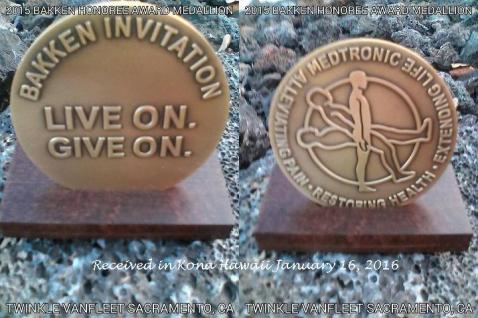


 The
The 
 Caregivers: Be mindful and assertive in caregiving. According to the Department of Pain Medicine and Palliative Care at Beth Israel Hospital in New York, a family caregiver is “anyone who provides any type of physical and or emotional care for an ill or disabled loved one at home”. For this definition, “family” refers to a nonprofessional who is called “family” by the person who is sick. Sometimes, family is whoever shows up to help. (IN the FACE of PAIN, 5th edition, page 40)
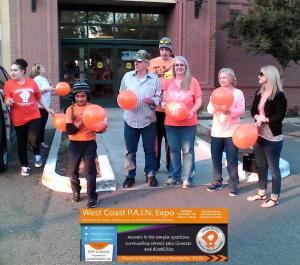 After the conference we popped the pain out of ’em! #painPOP
 Lynn Green – Pain Therapist, Medtronic INC (Medtronic.com), Twinkle VanFleet – Advocacy Director (powerofpain.org) and Jacie Tourart – PA-C, Spine & Nerve Diagnostic Center (spinenerve.com).


 RSD Advisory- Where Chronic Pain & Depression Collide