Pain Awareness Month 2015 – Feature 5 – Sheila Purcell – United Kentucky Pain Care Action Network

Sheila Purcell


Sheila Purcell isn’t your average pain patient. She’s actively involved in reforming laws and regulations that directly impact’s the quality of life of those suffering from chronic, long term, intractable pain. Sheila endures pain everyday herself, the life threatening seizures leave her worn, yet she’s a fighter, a strong one.

As an advocate and spokesperson supporting medication management options, including opioid analgesics, she stresses how important that it is that these prescription pain relievers should not be withheld as an initial treatment plan or be removed from the course of treatment for patients who are already using them.

Sheila recognizes that controlled substances are needed to treat certain conditions and that removing them as options for treatment causes hardships that are sometimes irreversible. She’s dealt with denials, delays and dismissal’s herself and knows first hand the demise of quality of life. There is more risk in under treated pain and the direct or unintended consequences than there is in the stable regimen of prescribed pain management.


Sheila was featured on The Pain Nation show with Ken McKim – Episode 1

http://youtu.be/625fZH9xn6c?a


She’s the Founder of the United Kentucky Pain Care Action Network (UKPCAN) (Closed Group)
https://www.facebook.com/groups/FFPCANkentucky/

United Pain Care Action Network of Kentucky and Tennessee (Community)

https://m.facebook.com/profile.php?id=628656307243460

The mission:

“Kentucky Pain Care Action Network” is a network of people living with Chronic Intractable Pain, their caregivers and others who share the belief that people suffering with Chronic Pain, Cancer, Mental Illness or any other disease have the right to timely, appropriate and effective Pain Care Management and Medical Treatment.

“Kentucky has a major problem that needs to be addressed and we want to help change the negative stigma around to positive for those in pain.”

We educate people and teach them that suffering from pain is not acceptable!

We do this though active advocacy, education, letter writing campaigns to State and Local Representatives and Senators. E-mails, faxes, telephone calls to our elected officials. We comment on “our” elected officials Facebook pages, we write letters to the Editor of our newspapers, we comment on articles posted in the group. We take action and by doing so, we make our efforts known.

Therefore it is very important that each group member take an active role in these actions. It only takes a few minutes a day to make a comment or write a letter. Many members set aside 30 minutes of one day to do this. WE MUST DO THIS TO MAKE OUR CAUSE KNOWN!

We are a Open Group. All info in this group is private and CANNOT be used for any purpose other than what each member give’s permission for us to use it for. This includes your Name, City, and County in which you live Medical Conditions, and any treatments you are receiving or have received.

The more people that are involved the quicker we can make progress on bringing it to the attention of Kentucky’s law makers and make them understand that HB- 1 & HB- 217 needs to be re- written to protect the THOUSANDS OF PEOPLE SUFFERING as a result of these bills

They also need to be aware that this has hurt “TOURISM” and will continue to do so as NO one wants to vacation in a state were Medical Care is NOT something they would receive if they or a family member becomes ill or has an accident of any kind requiring, surgery or pain care.

Let’s get busy fellow Kentuckians and show the lawmakers we will not rest until HB-1 and HB-217 are repealed!

“Kentucky Pain Care Action Network”


Opposition to Kentucky HB 1-Reform HB 217 aka “Pill Mill Bill”

https://www.facebook.com/Opposition-to-Kentucky-HB-1-Reform-HB-217-aka-Pill-Mill-Bill-595049517218134/timeline/

Opposition to Kentucky HB 1-Reform HB 217 aka “Pill Mill Bill” (Community)
https://m.facebook.com/profile.php?id=595049517218134

Chronic pain patients that are trying to get Pill Mill Bill’s reformed ln EVERY STATE not just Kentucky! Please join the fight and cause. Thank you!

This page is dedicated to raising awareness for chronic pain patients, children with attention deficit disorder (ADD/ADHD), Cancer patients, HIV/AIDS patients, patients suffering from certain mental disorders, patients requiring Testosterone, and their families affected by the changing environment of the medical community whereby those in need of controlled substances are refused treatment or made to endure many hardships, unnecessary for their care, as a direct result of laws enacted by the state of Kentucky.

Through any peaceful means necessary, we seek to contact State and Community leaders, The American Medical Association, Pharmaceutical Vendors, the DEA, the FDA and local/national media sources.


Mission and information statements by Sheila Purcell.


Sheila is a Delegate for the Power of Pain Foundation, active in various groups and organizations throughout the States, and she continues to work on much-needed change for the thousands of people suffering from pain and the inadequate treatments they are receiving.

If you need a voice for Kentucky and Tennessee pain care rights, Sheila isn’t shy. Her vast knowledge is your benefit. Her leadership is your tool.  The information she provides is your education. Her strength is your willingness to take part in your own health challenges and I hope all of you get the proper and timely care you need to survive.


Sheila can be contacted at: sheliakim1251@gmail.com

Making Complex Regional Pain Syndrome Simple For a Jury

MAKING COMPLEX REGIONAL PAIN SYNDROME SIMPLE FOR A JURY

A start-to-finish strategy for proving the chronic pain and resultant damages of CRPS

When God was testing the faith of Job, the worst punishment was physical pain…. He lost his lands and property, his family – but it was not until physical pain was inflicted that Job broke. (Job 16:6).

A case dealing with chronic pain can be difficult to prove due to the subjective nature of pain itself. This is especially true for Complex Regional Pain Syndrome cases (“CRPS”). CRPS, formerly known as Reflex Sympathetic Distrophy Syndrome (“RSD”), is an incurable chronic pain condition that is often debilitating. For trial lawyers and their clients, this disorder is especially troubling because of the controversy surrounding its diagnosis and treatment. As its very name implies, the disorder is “complex” in nature, is routinely misdiagnosed, and as such, is difficult to explain and prove to a jury.

Take a recent case that had a mixed diagnosis: Some doctors thought it was CRPS, while some did not. In the end, what mattered was our client had severe pain that would likely afflict him for the rest of his life. This was something the jury understood, whether we called it CRPS or not. The primary purpose of this article is to explain the basics of CRPS, highlight some of the challenges in dealing with a CRPS case, and discuss some useful strategies from a recent trial.

CRPS – WHAT IS IT?

CRPS is a chronic pain condition most often affecting one of the limbs (arms, legs, hands, or feet), in which the pain is out of proportion to thc injury. There are two designations of CRPS: Type I and II. Typc I, which this article will focus on, is a result of trauma. Type II stems from a specific injury to a nerve.

Some researchers have said CRPS is potentially the worst chronic pain disorder a human being could endure. Doctors describe the severe cases of CRPS as being higher on the pain scale than childbirth and amputation. However, over the years, pain management practitioners were overzealous in diagnosing chronic pain patients with CRPS. In the early 1990s, “RSD” cases were popping up everywhere, perhaps in part due to the unclear diagnostic criteria at the time. Now, after the hype has calmed and thorough research has flushed out a more clear understanding of the disorder, CRPS cases can and should command the same attention as other severe injuries such as brain and spinal cord injuries.

To begin with, CRPS arises typically after an injury or trauma to the affected limb. For example, a seemingly simple fracture to the ankle eventually causing a severe pain disorder in that limb. The most frightening aspect of the disease is that it often initially begins in an arm or a leg and often spreads throughout the body. In fact, according to the National Institute of Health, 92 percent of patients state that they have experienced a spread, and 35 percent of patients report symptoms in their whole body.

CRPS is characterized by prolonged or excessive pain and mild or dramatic changes in skin color, temperature, and/or swelling in the affected area. These signs can be subtle in nature, or dramatic, depending on the severity of the CRPS.

CRPS symptoms vary in severity and duration. The key symptom is prolonged pain that may be constant and, in some people, extremely uncomfortable or severe. The pain may feel like a burning or “pins and needles” sensation, or as if someone is squeezing the affected limb. The pain may spread to include the entire arm or leg, even though the precipitating injury might have been only to a finger or toe. Pain can sometimes even travel to the opposite extremity. There is often increased sensitivity in the affected area, such that even light touch or contact is painful (called allodynia).

People with CRPS also experience constant or intermittent changes in temperature, skin color, and swelling of the affected limb. An affected arm or leg may feel warmer or cooler compared to the opposite limb. The skin on the affected limb may change color, becoming blotchy, blue, purple, pale, or red. As discussed in more detail below, due to the complexity of the disorder, CRPS cases are often overlooked, misdiagnosed, and not properly worked up.

VETTING A CRPS CASE

As trial lawyers, we appreciate that many of our clients do not have the type of medical treatment and insurance required to get a complete medical workup and diagnosis. Often, an injury like a brain bleed or spinal fracture might go misdiagnosed. With a disorder such as CRPS, this is truly one of the injuries that often require an attorney’s eye and attention to appreciate the client’s dilemma.

The following are a few points to consider when interviewing a client to determine if he or she potentially has CRPS:

• An injury causing pain which is out of proportion to injury,

• Changes in skin texture on the affected area; it may appear shiny and thin,

• Abnormal sweating pattern in the affected area or surrounding areas,

• Changes in nail and hair growth patterns,

• Stiffness in affected joints,

• Problems coordinating muscle movement, with decreased ability to move the affected body part, and,

• Abnormal movement in the affected limb (most often fixed abnormal posture, or tremors of the affected limb).

For a full CRPS potential case checklist, please contact the author.

Find out more about:

What Causes CRPS?

CRPS Diagnosis and Prognosis

How to Deal with Conflicting CRPS Diagnoses

Voir Dire Tips in a Pain Trial

Experts: Get the Dream Team

Dealing with the Defense “Expert”

Making it Simple

via Making Complex Regional Pain Syndrome Simple For a Jury.

COMPLEX REGIONAL PAIN SYNDROME

THE RELENTLESS PURSUIT OF JUSTICE

Complex Regional Pain Syndrome: The Relentless Pursuit of Justice

Causes

Symptoms

Diagnosis and Risk Factors

Prognosis and Treatment

Lawsuits and Damages

Spencer Lucas is a trial lawyer at Panish Shea & Boyle and specializes in complex catastrophic personal injury, products liability and wrongful death cases.  He has extensive experience in cases involving traumatic brain injuries, spinal cord injuries, and chronic pain.

Panish Shea & Boyle, LLP

11111 Santa Monica Blvd #700, Los Angeles, CA 90025

PHONE 877.800.1700

FAX 310.477.1699

Prescribing Task Force Meeting | April 13, 2015

mb

Prescribing Task Force
The Medical Board of California
April 13, 2015

I’ve been apart of this Prescribing Task Force since it began. These are the highlights of the meeting as it pertains to current affairs.

Refer to UStream MBC 4-13-2015 (98:02) Monday at 9:52 a.m
http://www.ustream.tv/recorded/61075030

Jason Smith- Generation Lost
Jason’s story begins at 13:00 of MBC 4-13-2015 (98:02) Monday at 9:52 a.m.

Mr. Smith begins his story by showing us photos of what a drug addict doesn’t look like, he immediately tells us that he abused the system 10 years ago. He say’s we have a preconceived notion of what a junkie looks like as he flips through slides of street bums and obvious users in dirty clothing in underground structures. He tells us that when he was 17 years old he became hooked after a car accident. He shares how he was put on Fentanyl, Norco and Soma. He believes his addiction started from Fentanyl. He said prior to the accident he was never interested in a drug “but when this hit my system, don’t get me wrong, I loved it”.

He was never honest with his doctor because he was worried his doctor would cut him off. He does say now, he has to take personal responsibility. He says his doctor didn’t know any better that he was just trying to keep him out of pain.

Additional Commentary-

I appreciate Mr. Smith’s truthfulness to come forward and tell his story. It would be honest if more patients did the same. We know they are out there. I am glad he is alive to tell his story and help the drug abuse problem. However, I can’t hold back. It is because of patients like this who make patients like me look bad. It is doctors like his that were duped that will second guess me now. I say me because I represent many pain patients who are falsely accused and judged for someone else’s deceit.

Jason appears friendly, handsome, not what society perceives an abuser to be. He’s right about the photo’s he’s shared.

Abusers are every day people, in any community, wealthy, poor, religious, strong, weak, and of any race. It is said that certain populations are at higher risk than others. We hear that over and over again. Don’t be fooled! They are in every class of people. Most dress quite well, are physically beautiful and are not just the poor folk, they are corporate managers, they are of the populations we don’t care to consider. If you think their aches and pains are more relevent then some one elses who might be on medi-cal you are misguided by your own misconceptions.

There has to be patient provider communication. There needs to be patient assessment, risk stratification, and screenings for abuse. Labeling a pain patient a potential abuser without merit because of other people who have used and abused our doctors and themselves is unjust.

Overdose means a person didn’t take a medication as prescribed, mixed it with alcohol, or another substance. Generally addiction and abuse occurs when mis using, again not taking as prescribed. Where is the personal responsibility in all of this? It is because of patients who do these things that contribute to the negative stigma and impede in the access to care and analgesic management to responsible chronic intractable pain patients. Much more work needs to be done not just in curbing abuse, but by making sure access to proper pain care on a case by case basis in ensured.

I admire Jason for sharing his story. His honesty actually brings truth and enlightenment to what many of us have been saying all along. You’re looking in the wrong place.

Dr. Rupali Das, Executive Medical Director of the Division of Workers Compensation spoke on Workers Compensation Guidelines, prescription drug misuse and overuse, and the multidisciplinary approach that the guidelines recommend. Treating providers are required to use the Evidence Based Treatment Schedule (MTUS). Opioid Treatment Guidelines- Refer to 57:00 of MBC 4-13-2015 (98:02) Monday at 9:52 a.m. http://www.ustream.tv/recorded/61075030

Dr. Das’ intentions are decent, yet early treatments such as acupuncture, physical and occupational therapy, yoga and other interventional treatments are more often than not, denied. This leads to the progression of disability and in some cases, irreversible disease. There is no wean down program when determining a modification of medication in many situations. Injured worker’s are abruptly halted leaving them in withdrawal. Even if a patient isn’t taking an opioid medication, withdrawal is dangerous. Injured worker’s continue to deal with denials and delays.

Agenda

1. Call to Order
2. The Lost Generation – Jason Smith
3. Update from the Prescription Opioid Misuse and Overdose Prevention Workgroup –
Julie Nagasako, California Department of Public Health
4. Update from Division of Workers Compensation – Rupali Das, M.D. Depart of Industrial Relations
5. Update on Controlled Substance Utilization Review and Evaluation System (CURES) –
Kimberly Kirchmeyer
6. Discussion on Statewide Best Practices
—–
Twinkle VanFleet
Executive Board Member/Advocacy Director
Power of Pain Foundation http://powerofpain.org

In attendence with
State Pain Policy Advocacy Network (SPPAN) Fellow Leader’s
Scott Clark of the California Medical Association (CMA) http://www.cmanet.org/
Maggie Buckley of the Pain Community http://paincommunity.org/

Nicole Hemmenway, U.S. Pain Foundation.

Errors and Bullying in Chronic Pain Care

Oxy10Insurance is denying payment for opioid medication unless the patient agrees to attend a drug program. A California chronic pain patient with Reflex Sympathetic Dystrophy told me of her experience. She wants others to be aware that this could happen to them. The patient was fortunate to be able to pay for her medication/  She said “Poor people are screwed! If I wouldn’t have had the money, I’d be without meds”. This seems to be a rising problem. The issue of prescription drug abuse is an important one and is being addressed. This patient has no history with abuse. It would be important to address this if she was a previous addict or if an issue developed during the course of treatment, but I find it disconcerting that she not be entitled to coverage unless she agrees. This brings me to another point. Will it be clearly noted in the record that the patient was not misusing or abusing prescription medication when referred to the program. It is important that it be made clear and precise because otherwise as the medical record follows her it could simply be said that a drug diversion or drug rehabilitation program was attended leading another doctor or pharmacist to the belief the person is an addict.

These are important questions and they cannot be ignored. There is a problem with file management that already exists. Previous medications aren’t removed from the record and for other patients that leave one State to find a Physician in another it appears they are still on narcotics they were no longer taking. With the development of the Controlled Substance Utilization Review and Evaluation System (CURES) and the California Prescription Drug Monitoring Program (PDMP) healthcare providers who are eligible to prescribe controlled substances, pharmacists authorized to dispense, law enforcement, and regulatory boards are able to access patients controlled substance history.

These are tools that assist in learning information about a patient, but if information is not entered in correctly can also do harm. A little example, my husband was at his appointment recently and was asked if his medications had changed. This appointment was with his heart specialist. We had let the assistant know that his Gabapentin which he takes for Diabetic Neuropathy had been altered. She did right by asking but it didn’t make it into the record. An oversight. What if the medication was an analgesic opioid that was no longer being taken? Human error. No one would know it was no longer being taken. The assumption if a patient needed to be treated with a narcotic might be that they were drug seeking. Especially if other medications weren’t removed as well. Fortunately it wasn’t a major error. Unfortunately for someone else it could have been. Information still has to be entered accurately and people do make mistakes. Others simply don’t care enough to make sure it’s right.

Another example, an emergency room visit for an injury to the body. When the report was available it read, Alcohol Intoxication, as the reason for the visit. While the patient was intoxicated the only reason for the visit was to control bleeding, severe soft tissue damage requiring x-rays, and soft casting. While it should have been noted that the person was intoxicated it should not have been listed as the primary reason for the visit. This leads other physicians and emergency room personal who are only viewing the first part of the record to misconceptions which can adversely affect a patient in a new situation. They don’t have enough time in triage to look further, nor are most interested.

Learn the difdifferences between Electronic Medical Records, Electronic Health Records, and Personal Health Records

Patients need to become more assertive. Most of us feel that we are doing something wrong if we ask too many questions or if we demand a change. We have to take a more active role in our own care and lack thereof. We now have access to many of our own records for review in online patient centers. We can even communicate with our physicians.

If we don’t play an active role in our own care, records management and pain management, we will continue to be the scapegoat for other peoples errors. Lets review. A patient being required to enter a drug program in order to receive medication through her insurance. Another patient whose medication wasn’t updated and another whose reason for an emergency room visit wasn’t accurate.

There are hundreds of other stories that have been shared with me that just don’t add up. It all has more to do with the businesses involved than it does with any of us. For an insurance company to tell a patient they will only cover her medication if she completes a drug program, when she isn’t an addict, leads me to believe there is something in it for them, even if it’s to fulfill and obligation. An incentive. Patients are made to feel like they are abusers and addicts. This is wrong. For the small percentage that might be, it still wouldn’t be right to treat them poorly. These are the ones that would need help and to be assessed accordingly. I do know of legislation in the works that if a patient is on an opioid for 3 months or longer a drug program would be required to continue the medication.

Stay tuned,

~Twinkle V.

Power of Pain Foundation Co Sponsor Assembly Bill 623

california-sacramento-state-capitol-1Yesterday the Power of Pain Foundation Co-Sponsored AB 623 with Assembly Member Wood at the California State Capital in Sacramento where the bill was officially introduced.  I spoke on behalf of both pain patients and opioid abuse. In attendance with me and on behalf of POPF and the bill was Erik VanFleet, Kharisma VanFleet, Debbie Ellis, and Brandy Ellis.

Speaking at the event was: Assemblymember Wood (author), Assemblymember Levine, Mendocino County Sheriff Tom Allman,  Ralph A. Cansimbe, Chapter Commander PFC Alejandro R. Ruiz Chapter, American G.I. Forum, Representatives from bill sponsors US Pain Foundation, Power of Pain and American Chronic Pain Foundations and the CA Academy of Physician Assistants.

Legislation to Curb Prescription Drug Deaths UnveiledAB623_March242015_POPFCoSponsorWithAssemblymanWood

Published on Mar 26, 2015

(Sacramento) – California legislators, public health representatives and law enforcement officials announced new legislation at a State Capitol news conference to curb prescription drug abuse and deaths. Assembly Bill 623, authored by Assemblyman Jim Wood (D-Healdsburg), aims to reduce prescription drug abuse-related deaths by reducing their access to those most prone to abusing them. More than 60 people die every day in the United States from prescription drug overdoses. Approximately 6.5 million people in the US abused prescription drugs in 2013, more than double those that abused heroin, cocaine and hallucinogens combined. “Narcotic pain medications, or opioids, have an important role in our health care system,” said Assemblymember Wood, who is a licensed dentist. “They provide effective relief for the millions of Americans who suffer from chronic pain. But too easily they are getting into the wrong hands.” Here’s more in this Assembly Access video.http://www.asmdc.org/wood

Watch the Press Conference on Assembly Live

AB623_March242015_POPFCoSponsorWithAssemblymanWood_1

My speech-

Hello, My name is T. VanFleet, I am the Advocacy Director and Executive Board Member of the Power of Pain Foundation. I am also a pain patient myself. Through painful trial and error, my physicians and I have finally found the appropriate combination of medications to provide some relief from my debilitating symptoms. The prescription medications that I take allow me to do things that most people take for granted. Now, I celebrate small triumphs such as cooking, occasionally attending a function, and watching my grandson grow. One of the medications that helped give me my life back is a prescription opioid. A type of medication which has recently come under increased scrutiny due to heavy abuse by some.

Unfortunately, people who use prescription medications as intended can become unfortunate casualties of efforts to regulate opioid abuse, as we end up getting lumped in with those who misuse treatments. It is difficult to obtain refills,, denials and delays by pharmacists and insurance, including workers compensation leave patients in withdrawal and un-manageable circumstances including suicidal ideation.

Fortunately, there are new weapons available to help combat prescription opioid abuse which do not sacrifice the many patients who legitimately use the medications to fight pain. New “abuse deterrent formulations” (ADF) for opioids have properties that make it difficult or undesirable for someone to tamper with them. These medications are made with physical and chemical barriers, such as a special kind of coating or hardness to the pill itself, that won’t allow them to be chewed, crushed, cut, grated, ground up, or melted with water or alcohol.

The Power of Pain Foundation strongly believes that California policymakers must enact policies such as AB 623 to help develop a strong, lasting solution to the health crisis of prescription opioid abuse. We must find a balance that separates patients who truly need opioid medication to live productive lives and those who are abusing them. Responsible patients should not be punished in an attempt to crack down on prescription drug mis-use and abuse. Legislators, health care professionals and pharmaceutical companies must work together to stop opioid abuse while keeping the needs of chronic pain patients front-of-mind.

<end>

—-

I was honored to support this bill with Assemblyman Wood on behalf of the Power of Pain Foundation. It’s important that we assist in the prescription opioid drug abuse problem. This will help responsible pain patients get access to the care they need. Too many are denied now because of the stigma attached to their chronic pain identity. Abuse deterrent formulation’s will assist both issues.

AB623_March242015_POPFCoSponsorWithAssemblymanWood_2

Press Release Article Tuesday, March 24, 2015

Legislation to Curb Prescription Drug Deaths Unveiled by Assemblyman Jim Wood

For more information on the Power of Pain Foundation’s Policy Efforts, please visit-

Power of Pain Foundation | Policy Efforts | PatientAwareness.org

patient-awareness1-popf

-Friday March 20, 2014 Episode of

The Burning for a Cure show

With Hosts POPF President, Barby Ingle and POPF Executive Board Member & Marketing Director and Promotions Chairman – Joeygiggles and Co-Hosts Executive Board Member and Advocacy Chairwoman Twinkle VanFleet with Power of Pain Foundation Executive Director Ken Taylor.

Discussion: Legislation- Abuse Deterrent Formulation (ADF), more  Listen Here

Out in the real world, I try not to identify as a pain patient. We will be judged. You know it, and I know it. It becomes our label. As I attempt to go forward in advocacy it can sometimes be a little awkward. Not in my physical appearance, but In my inability to speak properly, delays, memory, forgetfulness, stuttering, wake-sleep, sleep-wake. I’m heading into my 15th year with CRPS type 2. My Neurocognitive deficit seemed a rapid decline. It’s part of the story that helps me fight to go on, for my family, for you.

You have to hang on to you! It’s okay to not be perfect. It’s okay to not be your “yesterday”.

The struggle is real. We are who we’ve become.  And it really is okay in all that it is. We might not like it, but we have to learn to accept it.

POPF-CoSponsor-AB623_BrandyEllis_DebbieEllis_TwinkleVanFleet_March242015PostPressConferenceCaliforniaStateCapital

Perfection is all that you can achieve in the here and the now. Getting that shower, getting dressed, combing our hair. Those are the triumphs.

There’s so much worth in the smallest things.

I believe in you! Believe in you, too.

Thank you Barby Ingle for always believing in me and my ability even when I didn’t.

POPF_AB623_KharismaVanFleet_BrandyEllis_DebbieEllis_TwinkleVanFleet_March242015
Lets try to remember to not pre-judge a chronic pain patient on appearance or preconceived notions, but instead, assess on diagnosis, and credibility. ~Twinkle V.

Power of Pain Foundation- ADF and Access to Care


AZ State Capitol BuildingADF

Power of Pain Foundation recognizes that Abuse Deterrent Formulations are only a step forward
toward drug diversion. We know this isn’t the final answer. It allows an option for patients to
continue to be treated with opioid analgesics and removes many of the barriers involved in non abuse
deterrent medication.


POPF Pain Community Needs Assessment Survey

We are not focusing on any one treatment option, we are improving upon the patient/provider
relationship.

The purpose of our survey was to determine who is having trouble getting access to quality care.
who is being dismissed, who is being cared for by a primary physician, who is being sent to pain
management and who is having difficulty receiving ongoing pain care.

We are aware of many individuals who are not receiving proper medication management or treatment
and others who had been receiving care that are now facing obstacles.

Our goal is continued access to care. Our goal is patient empowerment.

Recent Articles

INEFFECTIVE TREATMENT ASSOCIATED WITH THE CHRONIFICATION OF PAIN by Barby Ingle
http://www.lynnwebstermd.com/ineffective-treatment-associated-with-the-chronification-of-pain/

BARBY INGLE ON CHRONIC PAIN AND OPIOIDS by Barby Ingle
http://www.lynnwebstermd.com/guest-post-barby-ingle-on-chronic-pain-and-opioids/

The Unintended Side Effects of Fighting Prescription Drug Abuse by Twinkle VanFleet
http://www.californiaprogressreport.com/site/unintended-side-effects-fighting-prescription-drug-abuseTwinkleV_SB1258


Barby Ingle: Tamper-proof pain drugs deserve support

http://www.desertsun.com/story/opinion/contributors/2015/02/28/ingle-pain-medication-%20tech/24144627/
With the Power of Pain Foundation as a sponsor of the new bill AB 623 on Abuse Deterrent
Formulations, the above article  Op-Ed by our President has special significance being published 2/28/2015.
#RareDiseaseDay http://www.rarediseaseday.org/

Our President also wrote articles for for WA, NV, AZ, and CA.
She wrote letters to legislators in MD, MO, UT, CO, AZ.
BarbyIngle-FillYourPrescriptionOfHope
We are committed to you!


Power of Pain Foundation Advocacy Committee
Twinkle VanFleet, Board Member, Advocacy Chariwoman

Barby Ingle: Tamper-proof pain drugs deserve support

:04 p.m. PST February 28, 2015

It’s no secret that the abuse of pain medications has led to a growing public health problem across the country. The numbers are alarming, and they are growing.

But also alarming is the number of people who suffer with chronic pain, including many who come to the desert seeking the arid climate for relief.

The problems are complex and multi-layered and I always applaud solutions that help to balance pain management with the cost that prescription drug abuse has on society. Promising technological advancements in recent years are proving to be an important part of the battle. Among these are so-called “abuse deterrent formulas” of commonly prescribed narcotic painkillers that are being developed to prevent some of the most deadly forms of pain pill abuse.

Since 2002, I have been battling Reflex Sympathetic Dystrophy (RSD), a progressive neuro-autoimmune condition that affects multiple systems in the body. I know firsthand how difficult the journey for relief can be, particularly the sidelong glances and disbelief from medical professionals. One in three people (116 million) in the United States are affected with a condition that causes pain.

But what if there were medications that can offer pain sufferers relief, while also protecting those who might be prone to abuse them?

There are. These little known, new tamper proof formulas of strong narcotic pain medications provide patients with the same pain relief as conventional opioids, while incorporate breakthrough technology designed to protect against tampering and abuse.

Several states are considering legislation this year to improve and safeguard patient access to these new formulas of painkillers.

Abuse-deterrent formulations have received widespread support as part of a comprehensive effort to combat prescription drug abuse and promote appropriate pain management, including from the Office of National Drug Control Policy, the Community Anti-Drug Coalitions of America, members of Congress, and the National Association of Attorneys General — including California Attorney General Kamala Harris.

Abuse of pain medications has led to a growing public health problem in California and nationwide. Each year approximately 4.5 million Americans use prescription pain medications for non-medical purposes, contributing to more than 16,000 deaths annually.

This technology is only part of the solution; but it is a solution nonetheless. Patients that have struggled with addiction or substance abuse in the past, those who live with others who are current or recovering addicts and those who live with teens or young adults who may seek opioids for recreational use can all benefit from ADFs.

Abuse-deterrent formulations have received widespread support as part of a comprehensive effort to combat prescription drug abuse and promote appropriate pain management, including support from the Office of National Drug Control Policy, the Community Anti-Drug Coalitions of America, members of Congress and the National Association of Attorneys General.

To date, the Food and Drug Administration (FDA) has approved abuse-deterrent labeling for four drugs, with other abuse-deterrent opioids in various stages of development.

For the sake of those with legitimate, life-altering pain and for the safety of those prone to use these medications for non-medical use, I urge our lawmakers to stand up for policies that preserve and improve patient access to this new technology. Failing to do so would be failing to do all we can to protect our residents.

Barby Ingle is a chronic pain educator, patient advocate and chairman of the board for the Power of Pain Foundation.

via Barby Ingle: Tamper-proof pain drugs deserve support.

Another excellent article “urging our lawmakers to stand up for policies that preserve and improve patient access”. With the Power of Pain Foundation as a sponsor of the new bill CA AB623 on Abuse Deterrent Formulations addressing Opioid Abuse, this Op-Ed by our ‪#‎POPF‬ President has special significance being published today, ‪#‎RareDiseaseDay‬

Work Comp, Denials, Delays and Dangerous Outcomes

Just last evening I got back on the medication that should have been filled January 4th, 2015.  On January 9th, I received a modification approval through PRIUM quoting reasons for denial using the California MTUS.  Two of the medications were available for pick up on Monday January 19th. One was a modification and reduction of Duloxetine, the other an Anti-Seizure.  Both of these medications warn that patients should not abruptly stop them. Cymbalta/Duloxetine withdrawal was so bad that I couldn’t see straight, literally. I saw lights flashing before my eyes, instability, rapid heart rate, a rise and fall in blood pressure and I heard sounds in my ears, head? I felt as if I was dissociating from myself. Bouncing in and out of my entire being. I only take one actual pain medication. On the 4th when they all should have been filled. I was still okay there. On the 8th, I had a Lumbar Sympathetic Block that seemingly failed due to the Duloxetine withdrawal state I was already in. I was already off the Anti Seizure as well. I removed my patch on time 3 days later. I knew I was heading into another withdrawal. This medication was approved on the 9th also. It is a partial agonist and partial antagonist.  It was still not made available to me. None of them were. 2 of the medications will not be filled at all, anymore. At this time I am coming off another that helped me greatly over the years, but which I will no longer get.  In addition Lidoderm will no longer be approved. It has not been easy.  Last night my patch, the lowest dose of its type was finally put back on.

I know what Lidoderm was originally classified for, yet it seems a little odd to take away a patch that eases nerve pain in targeted areas. Especially when the indications for Shingles is post use and not during break out.

Cost, I am sure!

What is important to point out here is that if the insurance or adjuster has an idea that medication will not be filled for any reason notify the patient or provider before hand.  Give opportunity to properly reduce to avoid side effects. I could have seized! I may have and just don’t know it. Nausea, vomiting, dehydration from not being able to keep liquid or food in was also most unpleasant.  Edema, myoclonic jerks were in an uproar. I had respiratory depression and ended up with flu and cold like symptoms which still exist. I couldn’t lay down and I couldn’t use my Auto Servo Ventilator during the worse of it because of its unique ability to force me to breathe. I coughed uncontrollably. My chest is still heavy.

I do not mean to place myself in another category than other’s on Worker’s Compensation. However, my claim is closed with lifetime medical. My rating above 70 percent was issued in 2008. So how do you determine who is entitled to what and when? Or are none of us entitled at all? New claims, old claims, open claims? We seem to be at the mercy of someone who holds our lives in their hands. I seriously want to learn more! I would appreciate honest answers, but I don’t expect a single one.

We should not have to go through this because someone somewhere is sloppy in their own duties. So what do we do? What are all the patients who are being effected by similar issues suppose to do? Every time I’m denied for a procedure it’s overturned and approved by a medical professional. Why is all the money spent to deny and delay instead of treat in the first place? You speak of high cost in the Work Comp System, oh yes, I agree! While our awards are sitting in an investment account, paid out in bi weekly portions, you get the interest we never see. And then some of you show us your new multi-million dollar buildings and all we want is access to care.  If I had gone to the hospital it would have been initially assumed I was an addict drug seeking. I already know this because this is the position many of you have placed us in.  An immediate assumption, no presumption, no fact or basis for the pre judgement.

Discontinuation of Treatment with Cymbalta

Discontinuation symptoms have been systematically evaluated in patients taking Cymbalta. Following abrupt or tapered discontinuation in adult placebo-controlled clinical trials, the following symptoms occurred at 1% or greater and at a significantly higher rate in Cymbalta-treated patients compared to those discontinuing from placebo: dizziness, headache, nausea, diarrhea, paresthesia, irritability, vomiting, insomnia, anxiety, hyperhidrosis, and fatigue.

During marketing of other SSRIs and SNRIs (serotonin and norepinephrine reuptake inhibitors), there have been spontaneous reports of adverse events occurring upon discontinuation of these drugs, particularly when abrupt, including the following: dysphoric mood, irritability, agitation, dizziness, sensory disturbances (e.g., paresthesias such as electric shock sensations), anxiety, confusion, headache, lethargy, emotional lability, insomnia, hypomania, tinnitus, and seizures. Although these events are generally self-limiting, some have been reported to be severe.

Patients should be monitored for these symptoms when discontinuing treatment with Cymbalta. A gradual reduction in the dose rather than abrupt cessation is recommended whenever possible. If intolerable symptoms occur following a decrease in the dose or upon discontinuation of treatment, then resuming the previously prescribed dose may be considered. Subsequently, the physician may continue decreasing the dose but at a more gradual rate [see Dosage and Administration (2.7)].  Indications and Usage for Cymbalta ~Drugs.com

What is also interesting is that while both my provider and I was told by my Pharmacist that my Rx’s were put into the inactive file and that there was nothing they could do, when the first 2 were picked up on the 19th, the info on the bottles are back dated to the 15th and 16th. That’s wrong! That is not when they were filled. I have kept the receipt/dated of when they were picked up.

I will not name the Pharmacy as I have always had a great relationship with them. So while I continue to withdrawal from one medication, and try to re stabilize from those that had been removed, modified, approved and denied, I can’t help but wonder when the solution is coming to fix a broken system that doesn’t only affect me but millions of injured workers through the States.

As the prescription drug epidemic continues to fuel, let me also mention that slam dunking people off medication has them consider alternatives they would have never considered before.

You make some people become the person they never were. Before you jump to conclusions I beat this! I am beating it! I did not turn to alcohol, I didn’t seek out pills, I did not do what you could have pushed me into.  Suicide increases more and more each day and will become the next epidemic. No one cares to see that part. No one cares to listen enough. Even those that reach out are left hopeless. This isn’t just about Work Comp it’s about access to care in the chronically ill intractable pain patient.  If treatment was offered early, progression of injuries, disease and pain could be controlled instead of becoming out of hand.  Some people with diagnosis’ like mine would even have the chance at remission! Wouldn’t that save billions of dollars?

So I have to wonder if anyone really wants to change anything at all.

We’re not victims, I play an active role in my own pain care. My physicians are just another tool in my tool box of modalities, spirituality and assistance to help me survive and have some semblance of life.

So what do we do, and how do we do it?

I’m all ears.


~Twinkle VanFleet,

Advocacy,  Power of Pain Foundation


Prescription drug abuse versus chronic pain care

RSD(S)CRPSAdvisoryLogoPrescription drug abuse versus chronic pain care continues to be a hot topic.  In a previous post How should U.S. regulate powerful pain killers? American Academy of Pain Management’s Executive Director, Bob Twillman, PhD discusses opioid prescribing and regulations with Dr. Andrew Kolodny, Director of Physicians for Responsible Opioid Prescribing on PBS’s Newshour.  Dr. Kolodny acknowledges Chronic Pain is a serious problem. He adds “But, unfortunately, we are harming far more people with chronic pain than we’re helping when we treat them with long-term opioid medications”.

He doesn’t believe long term use of opioids should be prescribed to those with low back pain, Fibromyalgia and chronic headaches.  He goes on to discuss what many of us believe in that there is a separate population in the drug abuse epidemic and chronic pain person.

I do believe there is an overlap in some patients. I do not believe all patients should be classified in the overlap scenario. I do know that opioid induced hyperalgesia can occur from long term use, but usually when the medication is increased for not controlling pain. I also know people who have experienced it who have taken it as prescribed long term.

Harming which ones? All of them? Some of us? One or two? Consider another possible epidemic by the refusal, discontinuation, denials, and/or delays of needed medication, suicide. Patients are becoming pre disposed to emotions and actions they would have never felt or done otherwise.

Lee_OpioidInducedHyperalgesia

Sadly, many overdoses are from abusing, mixing with alcohol, illicit street drugs, changing the Rx and simply not thinking. No one wants to be accountable instead just bounce the blame.

In a recent publication, The Unintended Side Effects of Fighting Prescription Drug Abuse, an op-ed piece published January 8th, 2015 on the California Progress Report, I shared a bit of me and spoke on the importance and options of Abuse Deterrent Formulations (ADF) while also showing that there are some people whose quality of life depends on an opioid medication.

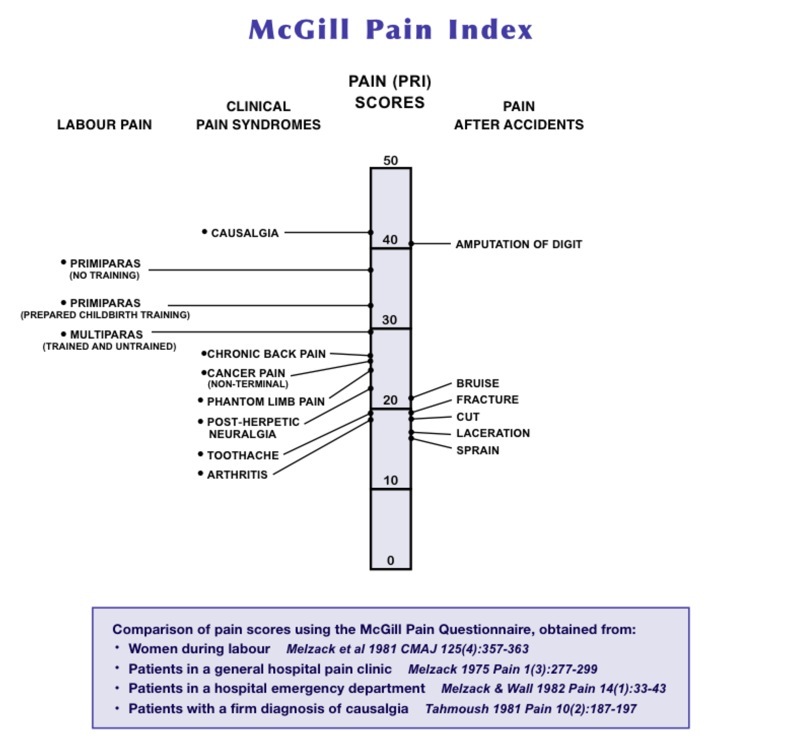
It seems my article has come under some scrutiny by opposer’s of opioid prescribing.  I am heading into my 15 year with the diagnosis of CRPS /Causalgia type 2 with confirmed nerve damage. Complex Regional Pain Syndrome/Reflex Sympathetic Dystrophy are other names. A neurological, neuropathic autoimmune disease which causes a malfunction in the Sympathetic Nervous System commonly known as Fight or Flight. Now referred to as Fight, Flight,or Freeze)  (1 of 2 parts of the Autonomic Nervous System), Autonomic Nervous System ANS (Sympathetic SNS and Para-Sympathetic PNS). All of which reside within the Central Nervous System CNS. RSD/CRPS described by the National Institute of Neurological Disorders and Stroke in 2001 and also at the National Institute of Neurological Disorders and Stroke we know more. While it’s rated 42/50 on the McGill pain index, I use all the additional tools I’ve learned over the years. Meditation, bio feedback, deep breathing, imagery, guided imagery, distraction, pacing activities, relaxation techniques, progressive muscle relaxation audios, hearts house and various other modalities to help ease my own pain.

mcgill-pain-index-with-academic-citations


I’ve had a Permanent Spinal Cord Stimulator implant since 2006.  I am on one low dose narcotic.  The lowest dose for it’s type.  My other medications do not apply.

I’ve been a part of the California Medical Board’s Prescribing Task Force in Sacramento California since it was formed.  I do not advocate for or endorse any opioid analgesic.  I gave testimony for Senate Public Safety on SB 1258 (DeSaulnier) April 29, 2014.

I agree there is a problem.  I appreciate the passion in those who are advocating for change in over prescribing, abuse, misuse and diversion. I too have the same goal, but not an agenda at the risk of cutting patients off medication. Try to appreciate my passion in the fact that many chronic pain patients are being depraved proper pain care due to the “epidemic”.  One second I hear certain Workers Compensation posters complain about Lidoderm being prescribed to pain patients stating that it’s intent is for Shingles. True, but let me clear something up for that poster, “Post Shingle Pain”. One cannot use it during and until any open wounds or blistering heals. LIDODERM® (lidocaine patch 5%) is used to relieve the pain of post-herpetic neuralgia, also referred to as after-shingles pain. Apply only to intact skin with no blisters.

Lidoderm, seriously? Weren’t we just talking about opioids? The reason I mentioned this is because the same page that complained.. also complained about opiods with the WC treated patient.

Tell me what you want, what you really really want! In other words, a narcotic or a lidoderm patch. Hm…    sheesh.

I agree that patients should be assessed accordingly. Patient Evaluation and Risk Stratification should be utilized to mitigate potential risks. I’ve been with the same doctor since 2004, I use the same pharmacy.  I’m randomly drug tested for my prescription medications and for those not prescribed, illegal ones.

The overlap is partial.  Drug abuse and pain care do not overlap entirely. There is a difference between dependency and addiction.

Dependency, (Psychol) over reliance by a person on another person or on a drug,

Addiction, the state of being enslaved to a habit or practice or to something that is psychologically or physically habit-forming, as narcotics, to such an extent that its cessation causes severe trauma. The condition of being abnormally dependent on some habit, esp compulsive dependency on narcotic drugs. Habitual psychological and physiological dependence on a substance or practice beyond one’s voluntary control. A physical or psychological need for a habit-forming substance, such as a drug or alcohol. In physical addiction, the body adapts to the substance being used and gradually requires increased amounts to reproduce the effects originally produced by smaller doses.

Addiction is when you want and crave the drug so bad your body has to have it, some will lie, steal and search until they get their fix.

I’ll use myself as an example, dependent, yes. I rely on it to ease pain that is often so unbearable most of you would have no idea.  Unrelenting, constant… all day, all night.

So lets take a look

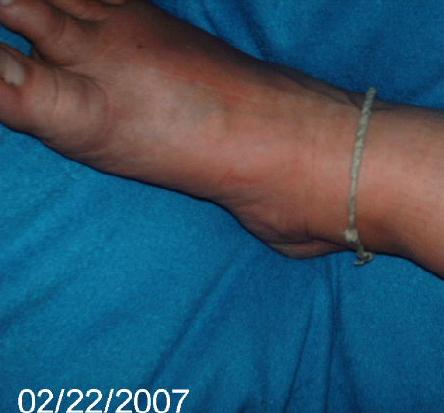
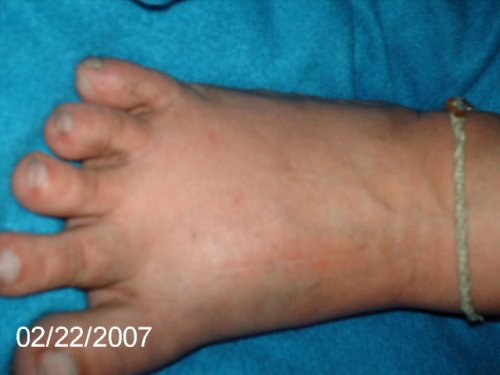
TwinkleV_RFoot_Feb222007

The above photo is 6 years after the injury that led to my diagnosis.  Can you possibly imagine walking on that? This photo includes swelling, blood vessel constriction, discoloration and the burning pain while internal became exterior to the point of simulating actual burns. I cycle through my symptoms which include burning, ice fire, discoloration, temperature changes to the extremity, hair and nail changes, sensory and motor difficulties, atrophy is apparent when swelling has eased.  These cycles occur daily. I’m sensitive to loud sounds, my skin is hyper sensitive. Clothing hurts. I’m unable to drive and have to rely on 3 people to get me anywhere. Allodynia and hyperalgesia are present. Bones have wasted away in addition to muscle. You can feel it. Increases in barometric pressure causes flare-ups. Now imagine that throughout your body.  Several secondary diagnosis’ that I will not discuss at this time.

TwinkleV_JPDrain2012 TwinkleV_RFoot_Feb222007+1 TwinkleV_RFootAatrophicCRPS TwinkleV_RFootAtrophicCRPS TwinkleV_RFootAtrophyCRPS TwinkleV_RFootCRPS


These photos include atrophy when swelling reduces to bone. Try putting a shoe on that or trying to be a productive member of society. Chronic pain patients already have a negative stigma of being whiners, complainer’s and drug seekers.  None of what I’ve written includes the back pain caused by the same injury, or the hard landing of my head on concrete flooring. I won’t even go into secondary depression due to the loss.  Lose what you wonder? All that you might have been! I volunteer 1-4 hours a week. That’s what my life is. We are all different.

Taking medication as prescribed, not sooner, not later, not double dipping makes up half the difference here.

For more information visit- The Neuropathy Action Foundation

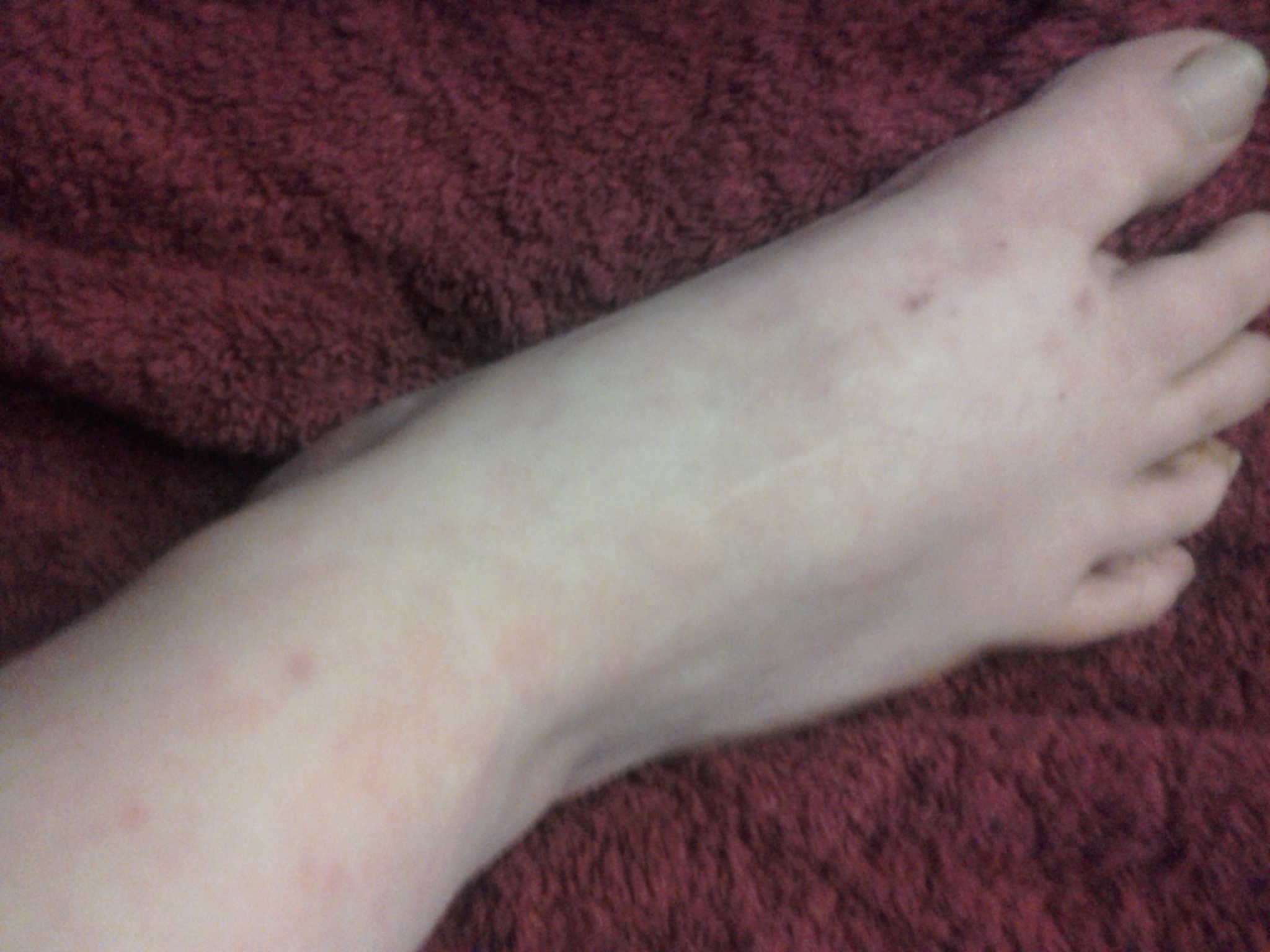
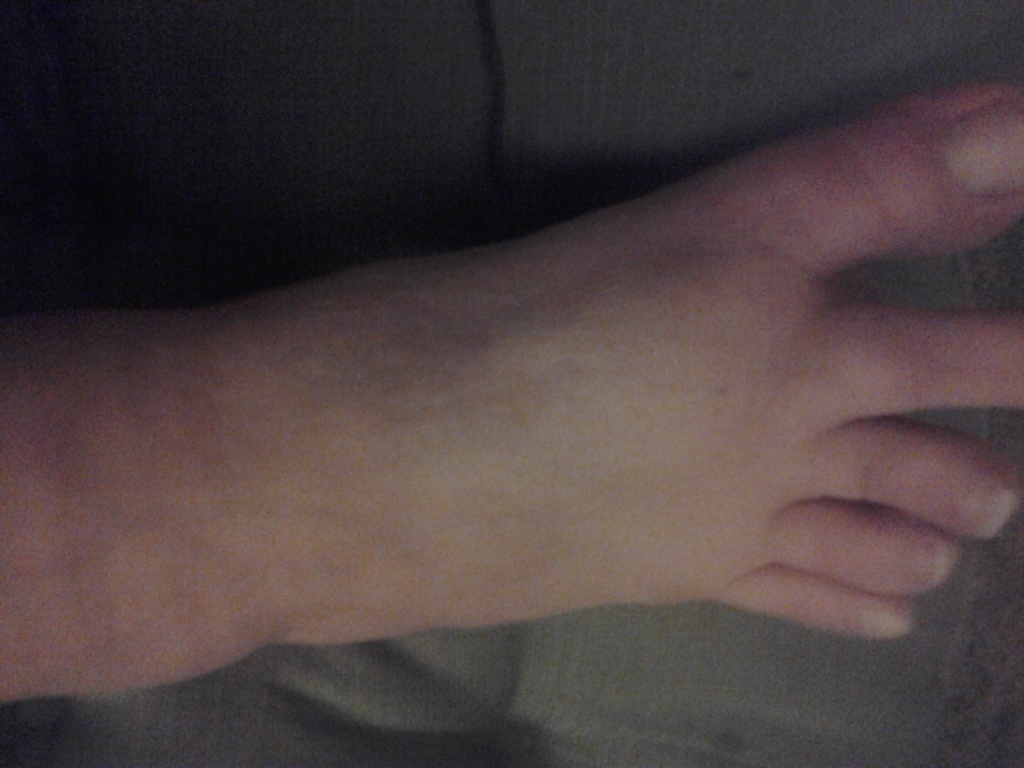
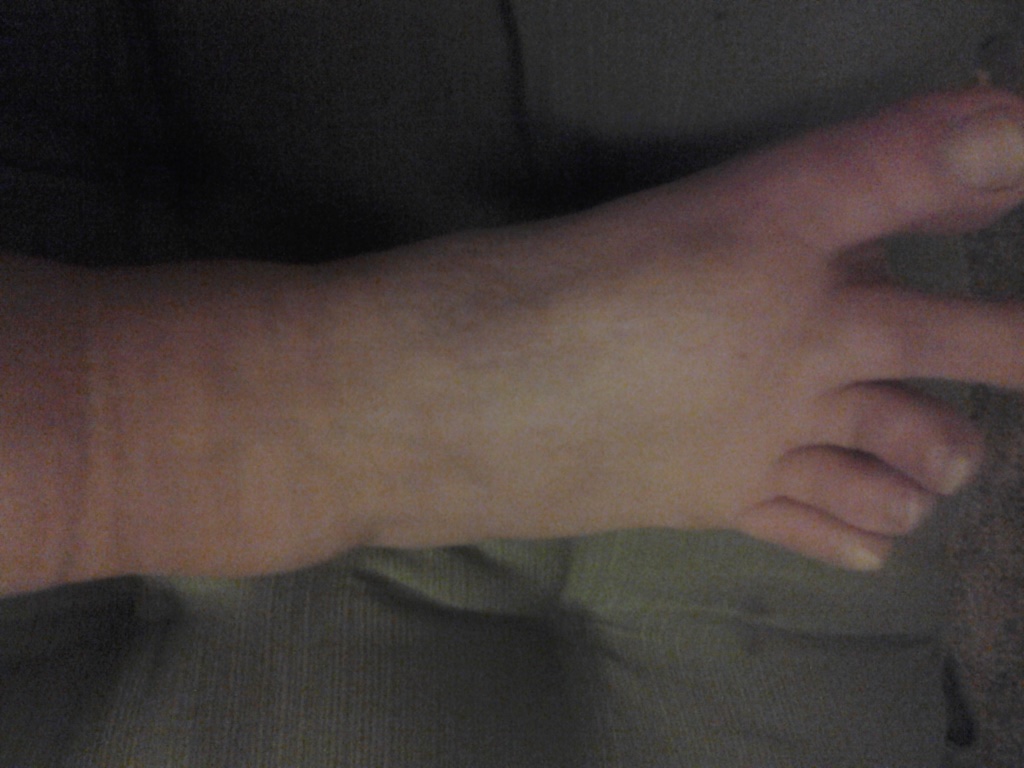
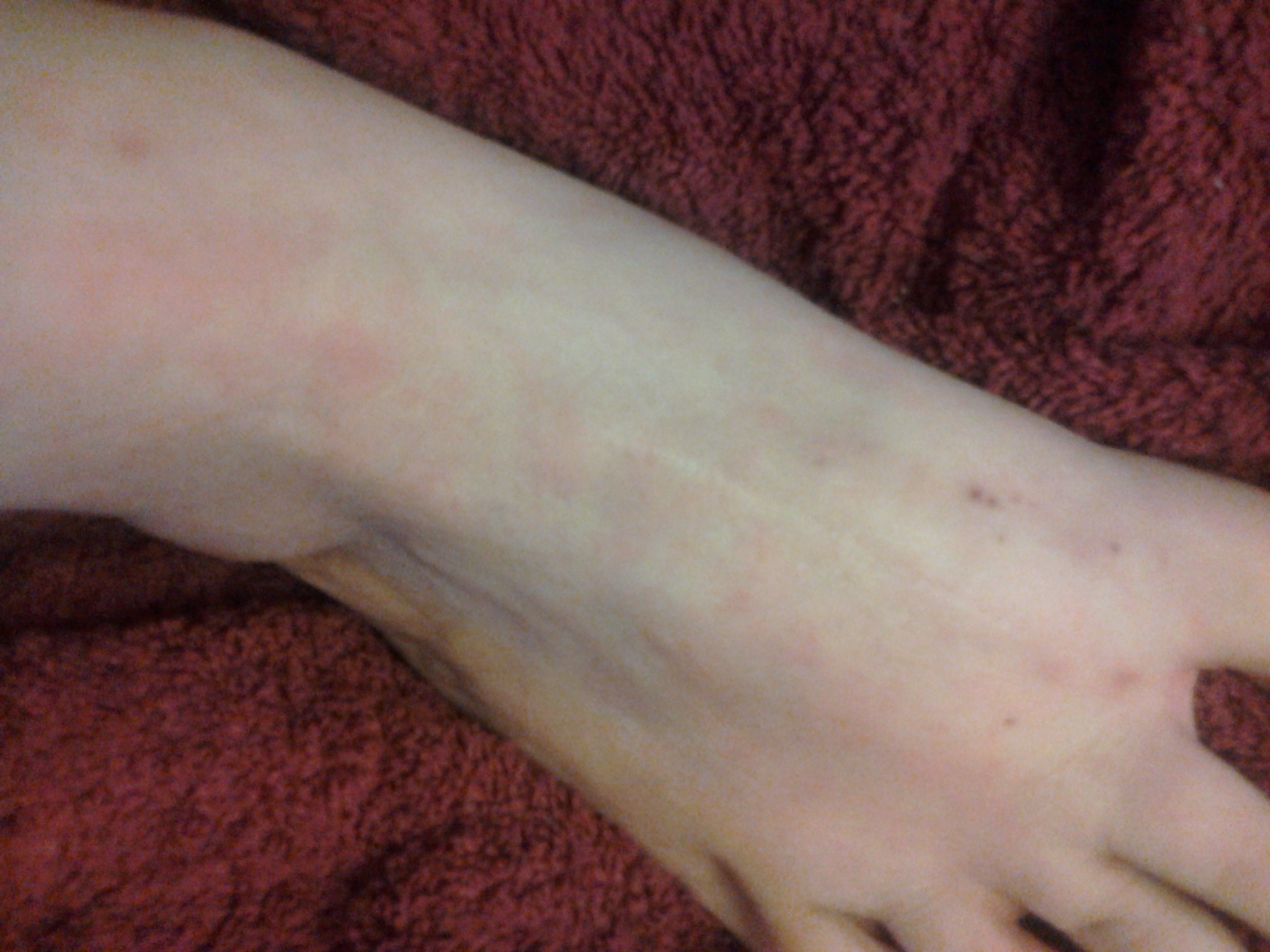
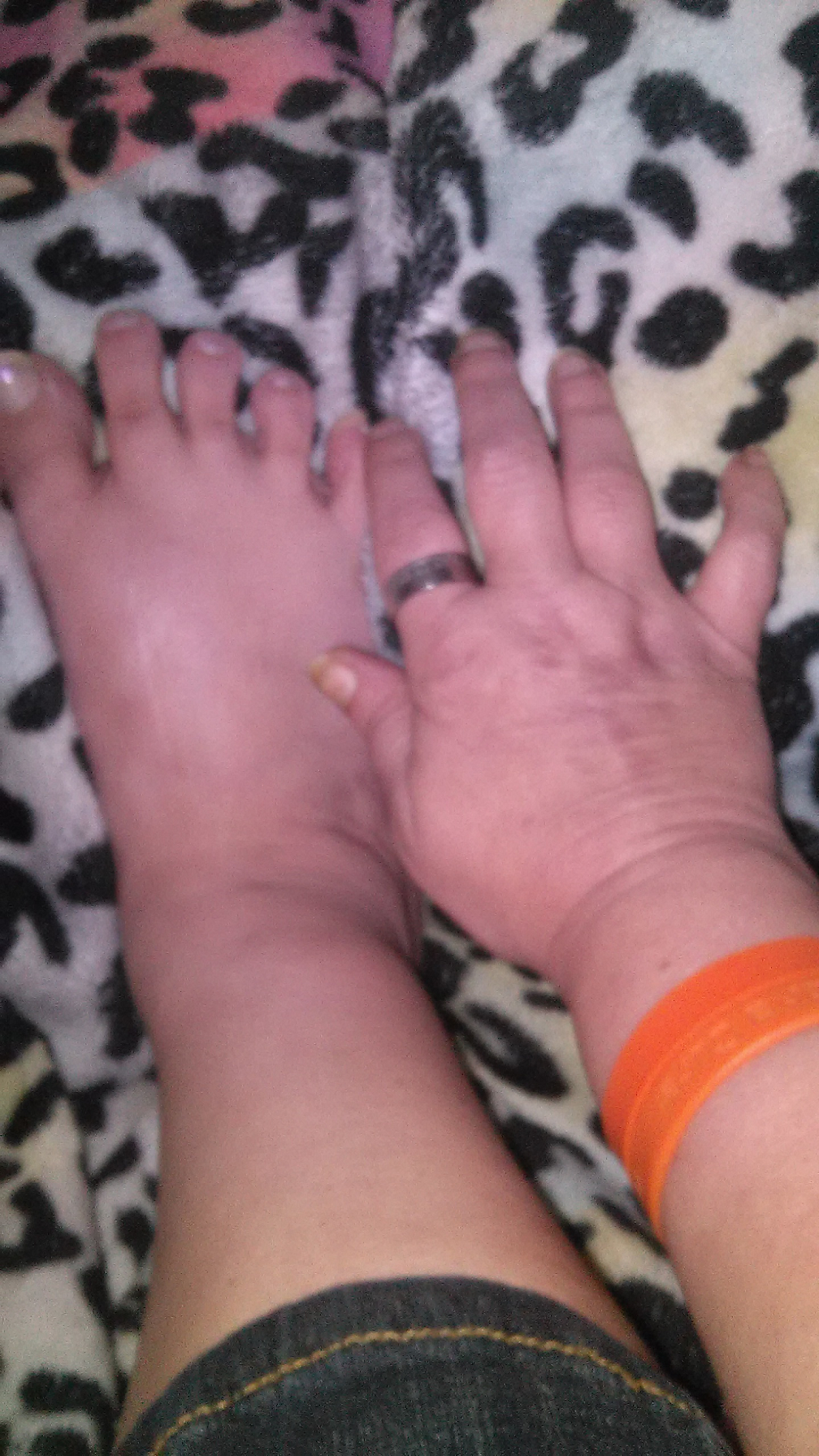
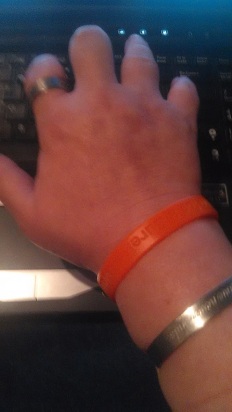
Current photos. Left 3 weeks old. The right 5 weeks.


TwinkleV_RightFootRightHandDec192014

TwinkleV_RightHandNov292014a


We should be working together to bring a sound solution to this ongoing topic while keeping in mind,.. It really hurts to hurt!  Ask yourselves this, what if we were you. What if you were one of us?!

First it was the patients abusing the drugs, now it’s the physician’s fault for prescribing them. I can’t wait to find out whose fault it is next.


TwinkleV_ASV_Dec2014


Would you trade places with me?

Nope, you’d most likely beg for pain relief in the form of an opioid.

So let’s be easy on each other.

I wish you pain eased days and nights,

Twinkle VanFleet, Advocacy Director/Board Member Power of Pain Foundation


Opportunity to join Advocacy Committee

As the Committee Chairwoman for Advocacy, I would like to emphasize the importance of connecting a unified populace for better access to care.

Our community constitutes a commonwealth of patients with various diseases and who are in various stages of their illness. The Power of Pain Foundation
advocates for several different distinctive medical conditions.

I am now seeking applicants from those interested in joining my committee. These are all volunteer positions. Since I am diverse, I prefer those choosing to
work with me to be also. I appreciate diversity and so does the Power of Pain Foundation.

If you are ready to help work on access to care, abuse deterrent formulations, prior authorizations, specialty tier’s, step therapy/fail first and other
issues that we can tackle together, please contact me.

I am passionate about my role as Advocacy Director. I am seeking 7 individuals who aren’t afraid to raise their voice when needed.

1- Legislative and Advocacy Assistant (National)
1- Research (National)
1- CRPS/RSD (National)
2- Neuropathy/Nerve (National)
2- Help oversee my Region. Region 1 (NW) including Alaska, California (Northern), Idaho, Montana, Oregon, Utah, Washington, Wyoming

While a pain related illness with experience and knowledge is a plus, it is not necessary.

Email me: Twinkle.CA@powerofpain.org

With the position you are interested in, Tell me about yourself and how can we help each other to help others?
List any experience. Please don’t over-think it.

Together, we can!
~Twinkle VanFleet
Executive Board Member/Advocacy Director Power of Pain Foundation
POPFLogo