Making Complex Regional Pain Syndrome Simple For a Jury

MAKING COMPLEX REGIONAL PAIN SYNDROME SIMPLE FOR A JURY

A start-to-finish strategy for proving the chronic pain and resultant damages of CRPS

When God was testing the faith of Job, the worst punishment was physical pain…. He lost his lands and property, his family – but it was not until physical pain was inflicted that Job broke. (Job 16:6).

A case dealing with chronic pain can be difficult to prove due to the subjective nature of pain itself. This is especially true for Complex Regional Pain Syndrome cases (“CRPS”). CRPS, formerly known as Reflex Sympathetic Distrophy Syndrome (“RSD”), is an incurable chronic pain condition that is often debilitating. For trial lawyers and their clients, this disorder is especially troubling because of the controversy surrounding its diagnosis and treatment. As its very name implies, the disorder is “complex” in nature, is routinely misdiagnosed, and as such, is difficult to explain and prove to a jury.

Take a recent case that had a mixed diagnosis: Some doctors thought it was CRPS, while some did not. In the end, what mattered was our client had severe pain that would likely afflict him for the rest of his life. This was something the jury understood, whether we called it CRPS or not. The primary purpose of this article is to explain the basics of CRPS, highlight some of the challenges in dealing with a CRPS case, and discuss some useful strategies from a recent trial.

CRPS – WHAT IS IT?

CRPS is a chronic pain condition most often affecting one of the limbs (arms, legs, hands, or feet), in which the pain is out of proportion to thc injury. There are two designations of CRPS: Type I and II. Typc I, which this article will focus on, is a result of trauma. Type II stems from a specific injury to a nerve.

Some researchers have said CRPS is potentially the worst chronic pain disorder a human being could endure. Doctors describe the severe cases of CRPS as being higher on the pain scale than childbirth and amputation. However, over the years, pain management practitioners were overzealous in diagnosing chronic pain patients with CRPS. In the early 1990s, “RSD” cases were popping up everywhere, perhaps in part due to the unclear diagnostic criteria at the time. Now, after the hype has calmed and thorough research has flushed out a more clear understanding of the disorder, CRPS cases can and should command the same attention as other severe injuries such as brain and spinal cord injuries.

To begin with, CRPS arises typically after an injury or trauma to the affected limb. For example, a seemingly simple fracture to the ankle eventually causing a severe pain disorder in that limb. The most frightening aspect of the disease is that it often initially begins in an arm or a leg and often spreads throughout the body. In fact, according to the National Institute of Health, 92 percent of patients state that they have experienced a spread, and 35 percent of patients report symptoms in their whole body.

CRPS is characterized by prolonged or excessive pain and mild or dramatic changes in skin color, temperature, and/or swelling in the affected area. These signs can be subtle in nature, or dramatic, depending on the severity of the CRPS.

CRPS symptoms vary in severity and duration. The key symptom is prolonged pain that may be constant and, in some people, extremely uncomfortable or severe. The pain may feel like a burning or “pins and needles” sensation, or as if someone is squeezing the affected limb. The pain may spread to include the entire arm or leg, even though the precipitating injury might have been only to a finger or toe. Pain can sometimes even travel to the opposite extremity. There is often increased sensitivity in the affected area, such that even light touch or contact is painful (called allodynia).

People with CRPS also experience constant or intermittent changes in temperature, skin color, and swelling of the affected limb. An affected arm or leg may feel warmer or cooler compared to the opposite limb. The skin on the affected limb may change color, becoming blotchy, blue, purple, pale, or red. As discussed in more detail below, due to the complexity of the disorder, CRPS cases are often overlooked, misdiagnosed, and not properly worked up.

VETTING A CRPS CASE

As trial lawyers, we appreciate that many of our clients do not have the type of medical treatment and insurance required to get a complete medical workup and diagnosis. Often, an injury like a brain bleed or spinal fracture might go misdiagnosed. With a disorder such as CRPS, this is truly one of the injuries that often require an attorney’s eye and attention to appreciate the client’s dilemma.

The following are a few points to consider when interviewing a client to determine if he or she potentially has CRPS:

• An injury causing pain which is out of proportion to injury,

• Changes in skin texture on the affected area; it may appear shiny and thin,

• Abnormal sweating pattern in the affected area or surrounding areas,

• Changes in nail and hair growth patterns,

• Stiffness in affected joints,

• Problems coordinating muscle movement, with decreased ability to move the affected body part, and,

• Abnormal movement in the affected limb (most often fixed abnormal posture, or tremors of the affected limb).

For a full CRPS potential case checklist, please contact the author.

Find out more about:

What Causes CRPS?

CRPS Diagnosis and Prognosis

How to Deal with Conflicting CRPS Diagnoses

Voir Dire Tips in a Pain Trial

Experts: Get the Dream Team

Dealing with the Defense “Expert”

Making it Simple

via Making Complex Regional Pain Syndrome Simple For a Jury.

COMPLEX REGIONAL PAIN SYNDROME

THE RELENTLESS PURSUIT OF JUSTICE

Complex Regional Pain Syndrome: The Relentless Pursuit of Justice

Causes

Symptoms

Diagnosis and Risk Factors

Prognosis and Treatment

Lawsuits and Damages

Spencer Lucas is a trial lawyer at Panish Shea & Boyle and specializes in complex catastrophic personal injury, products liability and wrongful death cases.  He has extensive experience in cases involving traumatic brain injuries, spinal cord injuries, and chronic pain.

Panish Shea & Boyle, LLP

11111 Santa Monica Blvd #700, Los Angeles, CA 90025

PHONE 877.800.1700

FAX 310.477.1699

Microglia Activation Causes Depression, Anxiety in Chronic Pain

June 11, 2015

Brain inflammation from chronic pain increases microglia activation, which inhibits the release of dopamine and may lead to depression and anxiety, according to a study published in The Journal of Neuroscience.

Although more than half of chronic pain patients experience depression, anxiety, or substance abuse, scientists were unable to determine what caused this association until now. In this study, the researchers sought to test if chronic pain disrupted the transmission of dopamine.

The researchers demonstrated that the activation of microglia in mice with chronic pain inhibited the release of dopamine. These results shed light on why opioids, which stimulate a dopamine response, can be ineffective for chronic pain patients.

The researchers instead tested a drug that inhibited the activation of microglia. This, they found, restored normal dopamine release and reward-motivated behavior in the mice.

“For over 20 years, scientists have been trying to unlock the mechanisms at work that connect opioid use, pain relief, depression and addiction,” said Catherine Cahill, PhD, of the University of California, Irvine. “Our findings represent a paradigm shift which has broad implications that are not restricted to the problem of pain and may translate to other disorders.”­

In future studies, the researchers hope to explore if mood disorders are caused by similar brain alterations, regardless of the presence of chronic pain.

Read more-

via Microglia Activation Causes Depression, Anxiety in Chronic Pain.

Read the full article at:

The Journal of Neuroscience

Microglia Disrupt Mesolimbic Reward Circuitry in Chronic Pain

High-Frequency Surpasses Traditional Spinal Cord Stimulation in First Controlled Trial Comparing Technologies

Released: 24-Mar-2015 2:05 PM EDT 

Newswise — March 24, 2015, NATIONAL HARBOR, Md. –- The first-ever randomized, controlled trial to compare spinal cord stimulation (SCS) technologies found that high-frequency SCS using 10 kHz (HF10) exceeded lower-frequency, traditional SCS in response rate and pain relief. Further, this was achieved without the paresthesia that may cause discomfort with traditional SCS, the researchers reported in a scientific poster at the 31st Annual Meeting of the American Academy of Pain Medicine.

Traditional SCS low-frequency (~50 Hz) stimulation is an attempt to mask the sensation of pain with a tingling or buzzing sensation, known as paresthesia. Therefore, the therapeutic goal with traditional SCS is to cover the areas of pain with paresthesias, explained B. Todd Sitzman, M.D., M.P.H., medical director of Advanced Pain Therapy, PLLC, in Hattiesburg, Miss.

In contrast, “high-frequency HF10 therapy utilizes a stimulation frequency that is orders of magnitude higher than traditional SCS,” Sitzman said. “HF10 therapy does not produce paresthesias and achieves superior back and leg pain relief.”

More importantly, HF10 therapy was shown to be superior to traditional SCS in all of the study-related primary and secondary endpoints, including response rate and pain relief. The magnitude of back pain relief was consistent with previous European research of HF10 therapy (Van Buyten et al, Neuromodulation 2013;16(1):59-65; Al-Kaisy et al, Pain Med 2014;15(3):347-54).

The use of SCS, introduced in 1967, has expanded as a treatment for difficult pain syndromes, encompassing peripheral neuropathies, complex regional pain syndromes, peripheral vascular disease and other disorders in addition to failed back surgery syndrome (Deer, Techniques in Regional Anesthesia and Pain Management 1998 2(3):161-7).

Traditional low-frequency SCS systems are widely used in clinical practice. However, the scientific literature indicates that achieving back pain coverage with traditional SCS is technically difficult and is often not sustained over time. (North et al, Neurosurgery 2005;57(5):990-62005; Frey et al, Pain Physician 2009;12(2):379-97). According to one report, 71 percent of patients who received an implant with traditional SCS experienced discomfort from the stimulation of paresthesia (Kuechmann et al, Abstract. Pain in Europe VI [EFIC], Lisbon, Portugal: Sept. 9-12, 2009). In the current study, 44 percent of patients receiving traditional SCS reported uncomfortable stimulation.

The study was a prospective, randomized, multicenter, comparative trial of the investigational HF10 vs. the standard SCS therapy, designed in consultation with and monitored by the FDA. Institutional review board approval was obtained for each study site.

The 12-month follow-up data indicated that the responder rate with HF10 therapy was twice that with traditional SCS for both back and leg pain. Also, the average degree of pain relief with HF10 therapy was more than 50 percent greater than with traditional SCS. The level-1 evidence with 12-month follow-up meets today’s rigorous standards for evidence-based healthcare and complies with regulatory agency and payer preference for comparative effectiveness, the investigators said.

“These results provide important comparative effectiveness data for healthcare providers and clinically relevant information for pain physicians, patients and payers,” Sitzman said.

At present, HF10 therapy is investigational in the United States. The manufacturer of the device, Nevro Corp., which funded this study, anticipates obtaining market approval from the FDA by mid-2015.

Poster 140 – Rationale for the SENZA-RCT Study Design and Comparative Outcomes

About AAPM

The American Academy of Pain Medicine is the premier medical association for pain physicians and their treatment teams with over 2,500 members. Now in its 32nd year of service, the Academy’s mission is to optimize the health of patients in pain and eliminate pain as a major public health problem by advancing the practice and specialty of pain medicine through education, training, advocacy and research. Information is available on the Academy’s website at http://www.painmed.org.

via High-Frequency Surpasses Traditional Spinal Cord Stimulation in First Controlled Trial Comparing Technologies.

Power of Pain Foundation- ADF and Access to Care


AZ State Capitol BuildingADF

Power of Pain Foundation recognizes that Abuse Deterrent Formulations are only a step forward
toward drug diversion. We know this isn’t the final answer. It allows an option for patients to
continue to be treated with opioid analgesics and removes many of the barriers involved in non abuse
deterrent medication.


POPF Pain Community Needs Assessment Survey

We are not focusing on any one treatment option, we are improving upon the patient/provider
relationship.

The purpose of our survey was to determine who is having trouble getting access to quality care.
who is being dismissed, who is being cared for by a primary physician, who is being sent to pain
management and who is having difficulty receiving ongoing pain care.

We are aware of many individuals who are not receiving proper medication management or treatment
and others who had been receiving care that are now facing obstacles.

Our goal is continued access to care. Our goal is patient empowerment.

Recent Articles

INEFFECTIVE TREATMENT ASSOCIATED WITH THE CHRONIFICATION OF PAIN by Barby Ingle
http://www.lynnwebstermd.com/ineffective-treatment-associated-with-the-chronification-of-pain/

BARBY INGLE ON CHRONIC PAIN AND OPIOIDS by Barby Ingle
http://www.lynnwebstermd.com/guest-post-barby-ingle-on-chronic-pain-and-opioids/

The Unintended Side Effects of Fighting Prescription Drug Abuse by Twinkle VanFleet
http://www.californiaprogressreport.com/site/unintended-side-effects-fighting-prescription-drug-abuseTwinkleV_SB1258


Barby Ingle: Tamper-proof pain drugs deserve support

http://www.desertsun.com/story/opinion/contributors/2015/02/28/ingle-pain-medication-%20tech/24144627/
With the Power of Pain Foundation as a sponsor of the new bill AB 623 on Abuse Deterrent
Formulations, the above article  Op-Ed by our President has special significance being published 2/28/2015.
#RareDiseaseDay http://www.rarediseaseday.org/

Our President also wrote articles for for WA, NV, AZ, and CA.
She wrote letters to legislators in MD, MO, UT, CO, AZ.
BarbyIngle-FillYourPrescriptionOfHope
We are committed to you!


Power of Pain Foundation Advocacy Committee
Twinkle VanFleet, Board Member, Advocacy Chariwoman

How should U.S. regulate powerful painkillers?

American Academy of Pain Management’s Executive Director, Bob Twillman, PhD discusses opioid prescribing and regulations on PBS’s Newshour

Forty-six people die every day in the U.S. after overdosing on prescription painkillers, causing some states to crack down. Are tighter laws creating new problems? Judy Woodruff gets views from Bob Twillman of the American Academy of Pain Management and Dr. Andrew Kolodny of Physicians for Responsible Opioid Prescribing.

TRANSCRIPT (Partial)

JUDY WOODRUFF: Each day, 46 people die in this country after overdosing on prescription painkillers.  In 2012 alone, the CDC says 259 million prescriptions were written for painkillers, enough to supply every American adult with a bottle of pills.

Now many states are pushing back, including New York, Tennessee, Kentucky, Florida, and Washington State.  Three of those states now require doctors to check a patient database before writing a prescription.  This year, Massachusetts, Rhode Island, Georgia, and Texas are also considering tighter laws.

But some physicians and patient advocates say this crackdown is creating new problems.

We get two views now.

Dr. Andrew Kolodny is the director of Physicians for Responsible Opioid Prescribing.  He’s also chief medical officer for the Phoenix House Foundation.  It’s a national nonprofit addiction agency.  Bob Twillman is the executive director of the American Academy of Pain Management and also a clinical psychologist at the University of Kansas Medical Center.  Mr. Twillman was caught in a traffic jam tonight.  He couldn’t make it to the studio, so he joins us by telephone.

Read the rest of the transcript and listen to the podcast-

via How should U.S. regulate powerful painkillers?.

Inflammatory Cytokine Cascade | 420 InSight

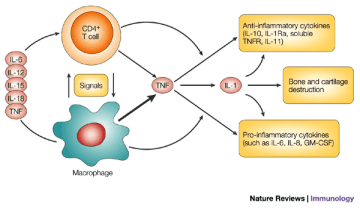
One of the most important health benefits of cannabinoids is their anti-inflammatory property. In this, they are strong modulators of the inflammatory cytokine cascade. Numerous disease states arise out of chronic inflammation; such as, depression, dementias including Alzheimer’s, cancer, arthritis and other autoimmune disorders, viral infection, HIV, brain injury, etc.

Inflammatory cytokines can be activated by oxidative stress and disease states. Cannabinoids, being immunomodulators interrupt the cytokine inflammatory cascade so that local inflammation does not result in tissue pathology. Thus we are spared morbid or terminal illnesses.4

If our own endocannabinoid system can maintain metabolic homeostasis and even cure seri- ous disease, why are we plagued by illness? We know that the body produces only small amounts of anandamide and 2-AG; enough to maintain the body but not enough to overcome chronic stress, illness, injury, or malnutrition. Cannabis is the only plant we know of that produces phyto-cannabinoids that mimic our own endocannabinoids. One of the great benefits of this mimetic medicine is that cannabinoids are essentially natural to our biology and do no harm to our tissues and systems.

It is well known that most diseases of aging are inflammatory in origin, thus making cannabis the best anti-aging supplement we could take to avoid arthritis, dementia, hypertension, diabetes, osteoporosis, and cancer. This is our key to good health and long life.

Since it is such an important attribute, as well as being independent of the cannabinoid receptor system, let’s look a little deeper into the ability of cannabinoids to inhibit the inflammatory cytokine cascade. Inflammation is good for us, a little here, a little there; it brings T-cells and macrophages to infection sites. This is good. However, chronic inflammation can cause serious illness and death. How do phytocannabinoids rescue us from dreaded infirmities? When the call comes in to the immune system to send troops, the first thing to happen is that the immune system signals glial cells to produce cytokines. Once this cat is out of the bag, the process can go one of two ways.

A) Killer cells clean up the infection and all is well.

B) Cytokines can stimulate more cytokine production and cause many more cytokine receptors to awaken. Unchecked, this becomes a cytokine storm showing symptoms of swelling, redness, fatigue, and nausea; even death.

Read the full in depth article-

via Inflammatory Cytokine Cascade | 420 InSight.

‘Placebo therapy’ ineffective for long-term chronic pain relief

December 11, 2014

Dr Andreas Goebel, from the University’s Institute of Translational Medicine, explains: We found that patients experienced significant pain relief minutes after a placebo therapy, such as salt water injections, but unexpectedly at a later time, and even with repeated placebo applications, there was minimal or no impact on reducing the symptoms of the condition.”

The results suggest that CRPS will not improve naturally over time, and there is little fluctuation in the pain intensity of the condition.

Read More-

via ‘Placebo therapy’ ineffective for long-term chronic pain relief.

Treating Pain That Won’t Go Away – Ithaca Times : Family And Health

Posted: Thursday, December 4, 2014 12:03 pm

By Bill Chaisson

“There are two types of CRPS. Type 1, which accounts for 90 percent of documented cases, according to the Mayo Clinic, is marked by nerve pain when no nerve damage was involved in the initial injury. Type 2 is a more explicable development of regional pain after damage to the nerves.”

Read more-

via Treating Pain That Won’t Go Away – Ithaca Times : Family And Health.

Spinal Modulation Completes Enrollment of Its Landmark U.S. Pivotal Trial Evaluating the Axium Neurostimulator System for Chronic Pain | Business Wire

The ACCURATE study enrolled 152 patients at 22 centers throughout the United States. This represents the largest neuromodulation study to be conducted in patients suffering from nerve injuries (peripheral causalgia) or complex regional pain syndrome (CRPS, also known as RSD) to date.

“Approximately 10-50% of patients who undergo common procedures like hernia repair, knee surgery, and other lower limb surgeries will suffer from chronic pain resulting from nerve injury2. These conditions have historically been difficult to treat with currently available technology,” said Dr. Timothy Deer, co-study lead and CEO and President of the Center for Pain Relief in Charleston, West Virginia. “The ACCURATE trial is a landmark study that could change the way we treat these chronic pain conditions. Results from prior European studies have been promising, and we are hopeful that the ACCURATE trial will continue to substantiate the effectiveness of this therapy for our patients.”

Read more-

via Spinal Modulation Completes Enrollment of Its Landmark U.S. Pivotal Trial Evaluating the Axium Neurostimulator System for Chronic Pain | Business Wire.

Stress-Related Inflammation May Increase Risk for Depression

Released: 20-Oct-2014 2:05 PM EDT 

“Inflammation is the immune system’s response to infection or disease, and has long been linked to stress. Previous studies have found depression and anxiety to be associated with elevated blood levels of inflammatory molecules and white blood cells after a confirmed diagnosis, but it has been unclear whether greater inflammation was present prior to the onset of disease or whether it is functionally related to depression symptomology.”

Read more-

via Stress-Related Inflammation May Increase Risk for Depression.