I don’t look sick, sound sick or act sick does that mean I’m in remission?

The question was asked this week in my Support Group-

What do you consider “remission“? 100% back to normal or being able to manage your pain around 2-3 (on the McGill pain scale)…Just curious.

The question was asked because a good friend of mine has a radio show and people are always asking her if she’s in remission because she sounds happy on the air. She often is. Her symptoms aren’t as nearly as bad as they once were but she continues to have issues all the same.

She’s not in remission but has found a way to cope. Namely it is her radio show that has given her back her life. The interviews, research, interaction and all that goes with it has given her purpose and reason to go on. The radio show is her medication. She is wrapped up in so much information that she learns by personally speaking to doctors, other health care personal, authors, herbalists, social workers, therapists and so many more that she is better able to cope with her pain at the time due to the Distraction!

It has nothing to do with remission.

Which begs the question— Just because we don’t look sick, sound sick or act sick does this mean we’re in remission? Answer? Not at all!

So many people have preconceived notions of what sick should be and often times those who make judgements however subtle are the same who become offended if another questioned them at all.

We shouldn’t have to put on a sad face, drag our leg, clench our fist, limp or show pain behaviors just for someone else to believe we’re in pain.

I am not sure h0w anyone could presume or assume one must be in remission if they are able to cope with their pain or because they do not show it.

The same could be said for me. To many it’s seems as though I am active. I have an online support group, I’m a chronic pain advocate, I’ve had an RSD/CRPS website since 2005, I’ve appeared on the radio show I mentioned above both as guest speaker and co host, I’m the California Ambassador for the Power of Pain Foundation, I represented the Power of Pain Foundation at the NAF (Neuropathy Action Foundation) with Barby Ingle earlier this year, I did the same at the Convoy of Hope in September, I worked as Leader for another Support Group for 3 years and so forth, I have this blog and I work hard to promote RSD/CRPS awareness, promote others and support their efforts to do the same.

All the while being in pain each and every day. Many days I cannot even get up. So many days and hours a week wasted because I can’t pull myself out of bed or wake enough to be coherent.

People don’t see this.

Offline I’m barely out in the public. My most often trips are to pain management once a month or to other doctor appointments. Some people assume because I have these titles or because I try so hard I’m better off than they are. Or that my pain isn’t half as bad. If only they knew!

Sadly, pain seems to be a competition. You must be better of than me, or I hurt more than you. If you can do that you must not be in that much pain, you’re smiling today, you must not hurt, you went on a trip? You must be in remission!

I went to the lake this summer with my husband, daughter, grandson, and close family friends whom I call daughters, would this mean I must not hurt or that I must be in remission?

Naww, all it meant was that I was invited and wanted to spend a day with my family. No one saw that I spent the day laying on a blanket. I couldn’t even enjoy the water because it was too cold and my legs wouldn’t carry me back and forth to test it out again.

Another good friend of mine, best selling author, executive director, who travels several times a year advocating, spreading awareness, speaking on behalf of RSD/CRPS also has received negative comments. And while she has been in remission due to in patient Ketamine treatments, what many don’t know is that during these trips and appearances (yes I do mean “during”) or immediately after, she has to check herself into the hospital for a Ketamine booster in order to go on.

No one likes to be judged or ridiculed..

But remember…

Remission is Possible – (-Barby Ingle, Remission Possible)

RSD itself is forever.

—–


Learning Glia

There’s been a lot of discussion lately about Glia, Micro Glia, Glial Cells and Glia Cell Activation. It’s been noted that these cells play a role in RSD/CRPS.

The Living with HOPE Radio Show http://www.blogtalkradio.com/thebodymindandspiritnetwork with Host Trudy Thomas ran a weekly live feature on the topic titled “Glia, what is it?” with Guest Chris Greulich Writer and Editor of the Patient Awareness Blog http://www.patientawareness.org hosted by the Power of Pain Foundation.

The episodes are now in the shows archives for listening to either directly from the site for by downloading.

I myself find this fascinating and continue to learn all that I can. I encourage each of you to research what you can too. Some key words are listed above, you can also add RSD/CRPS to it. Other articles are located in my pages section and there will be more to come. We all need to take an active role in our own illness, read, research, talk with others who understand, listen and learn.

Remove all to as many possible stresses and triggers from your lives as these only cause the pain to escalate with Flare-Ups. Practice calm and appreciation.

From what we’ve learned so far the closest thing to deactivating the glia cell activation is Ketamine. Low dose Naltraxone is working to minimize the pain of some of those who’ve had the opportunity to try it, but not to the point of remission that Ketamine offers many.

I myself am no longer taking Morphine, or any of the Vicodin family, but instead Suboxone. I take it as my main pain reducer not to fight addiction.

I could return to one of the others, but I choose not to. As long as the Suboxone continues to work well enough, I’ll remain on it. I got to the point that my other pain relievers failed to ease me or take the edge off.

Many suffer from Opioid Induced Hyperalgesia and don’t even realize it. Yet are fearful to wean off their medications to find out. Trust me, I would be scared too, but sometimes we have to take that hard step forward even if it’s no longer literal to find out what’s best for us.

Time to learn much more about Glia and what else shuts down it’s activation.

I pray that if a cure doesn’t make it to us in my lifetime it will for certain in my children’s for who knows how many more million will be affected by then.

Nervous System with Glia


Nervous tissue consists of neurons, which are the cells that conduct signals, and supporting neuroglial cells such as microglial cells, astrocytes and oligodendrocytes.

Nerve – Bundle of nerve fibers outside the central nervous system.

Neuron – Nerve cell that characteristically has three parts: dendrites, cell body, and axon.

Neuroglial Cell – One of several types of cells found in nervous tissue that supports, protects, and nourishes neurons.

Microglia- A Promising Target for Treating Neuropathic Pain

Modulation of microglia can attenuate neuropathic pain symptoms and enhance morphine effectiveness.

Abstract

Microglia play a crucial role in the maintenance of neuronal homeostasis in the central nervous system, and microglia production of immune factors is believed to play an important role in nociceptive transmission. There is increasing evidence that uncontrolled activation of microglial cells under neuropathic pain conditions induces the release of proinflammatory cytokines (interleukin – IL-1beta, IL-6, tumor necrosis factor – TNF-alpha), complement components (C1q, C3, C4, C5, C5a) and other substances that facilitate pain transmission. Additionally, microglia activation can lead to altered activity of opioid systems and neuropathic pain is characterized by resistance to morphine. Pharmacological attenuation of glial activation represents a novel approach for controlling neuropathic pain. It has been found that propentofylline, pentoxifylline, fluorocitrate and minocycline decrease microglial activation and inhibit proinflammatory cytokines, thereby suppressing the development of neuropathic pain. The results of many studies support the idea that modulation of glial and neuroimmune activation may be a potential therapeutic mechanism for enhancement of morphine analgesia. Researchers and pharmacological companies have embarked on a new approach to the control of microglial activity, which is to search for substances that activate anti-inflammatory cytokines like IL-10. IL-10 is very interesting since it reduces allodynia and hyperalgesia by suppressing the production and activity of TNF-alpha, IL-1beta and IL-6. Some glial inhibitors, which are safe and clinically well tolerated, are potential useful agents for treatment of neuropathic pain and for the prevention of tolerance to morphine analgesia. Targeting glial activation is a clinically promising method for treatment of neuropathic pain.

Microglia: a promising target for treating neuropathic and postoperative pain, and morphine tolerance.

Source

Department of Anesthesiology, Brigham and Women’s Hospital and Harvard Medical School, Boston, MA, USA.

Abstract

Management of chronic pain, such as nerve-injury-induced neuropathic pain associated with diabetic neuropathy, viral infection, and cancer, is a real clinical challenge. Major surgeries, such as breast and thoracic surgery, leg amputation, and coronary artery bypass surgery, also lead to chronic pain in 10-50% of individuals after acute postoperative pain, partly due to surgery-induced nerve injury. Current treatments mainly focus on blocking neurotransmission in the pain pathway and have only resulted in limited success. Ironically, chronic opioid exposure might lead to paradoxical pain. Development of effective therapeutic strategies requires a better understanding of cellular mechanisms underlying the pathogenesis of neuropathic pain. Progress in pain research points to an important role of microglial cells in the development of chronic pain. Spinal cord microglia are strongly activated after nerve injury, surgical incision, and chronic opioid exposure. Increasing evidence suggests that, under all these conditions, the activated microglia not only exhibit increased expression of microglial markers CD 11 b and Iba 1, but also display elevated phosphorylation of p38 mitogen-activated protein kinase. Inhibition of spinal cord p38 has been shown to attenuate neuropathic and postoperative pain, as well as morphine-induced antinociceptive tolerance. Activation of p38 in spinal microglia results in increased synthesis and release of the neurotrophin brain-derived neurotrophic factor and the proinflammatory cytokines interleukin-1β, interleukin-6, and tumor necrosis factor-α. These microglia-released mediators can powerfully modulate spinal cord synaptic transmission, leading to increased excitability of dorsal horn neurons, that is, central sensitization, partly via suppressing inhibitory synaptic transmission. Here, we review studies that support the pronociceptive role of microglia in conditions of neuropathic and postoperative pain and opioid tolerance. We conclude that targeting microglial signaling might lead to more effective treatments for devastating chronic pain after diabetic neuropathy, viral infection, cancer, and major surgeries, partly via improving the analgesic efficacy of opioids.

Action Alert: Physicians for Responsible Opioid Prescribing (PROP) We must stop this Petition!

October 11, 2012
Greetings!The RSDSA would like to make you aware of a petition currently before the Food and Drug Administration (FDA) that requests labeling changes for opioid analgesics (narcotic pain medications). Since many individuals with CRPS rely on opioids as part of their medication regimen, we wanted to bring this petition to your attention.

The petition, submitted by Physicians for Responsible Opioid Prescribing (PROP), requests three specific changes to opioid analgesic labels:

1- That they no longer be prescribed for “moderate” noncancer pain, but only for “severe” noncancer pain

2- That the maximum allowable dosage per day be equivalent to 100 mg of morphine for noncancer pain

3- That this medication can only be used for a maximum duration of 90 DAYS.

What this petition appears to mandate is a “one size fits all” prescribing mentality which DOES NOT benefit the chronic pain patients in general and CRPS patients in particular.

The RSDSA has chosen to oppose the PROP petition on behalf of you, our members. On Wednesday, October 10th, The RSDSA sent this opposition letter to the FDA.  Cick Here to read RSDSA letter . 

For those of you who would like to send your own individual response regarding PROP to the FDA, we encourage you to stress the specific details that your medication enables you to do that without it you would be unable to do. We suggest you use the following language to keep the message clear: My name is  _______. As a person  who suffers with the chronic and  yet incurable pain of  CRPS,  I ask the FDA to deny the PROP petition. I use opioids as prescribed by my physician allowing me to function better and partake in life in ways I would be unable to do without this prescribed care.

To send your comments to the FDA click here.
The category to use for your response is Individual Consumer.

Your immediate action to this issue will make a difference. To read the PROP petition,
Please forward this email along to your friends and loved ones.
Should you have any questions or would like to receive further information, please email or give me a call.
Sincerely,
JB Signature
Jim Broatch
Executive Vice President and Director
RSDSA
877-662-7737
203-877-3790
 Original Article- http://myemail.constantcontact.com/Urgent-Action-Requested–CRPS-Treatment.html?soid=1101383336163&aid=UTz5u591sNA

A Review with Photos of Convoy of Hope Sept 15, 2012

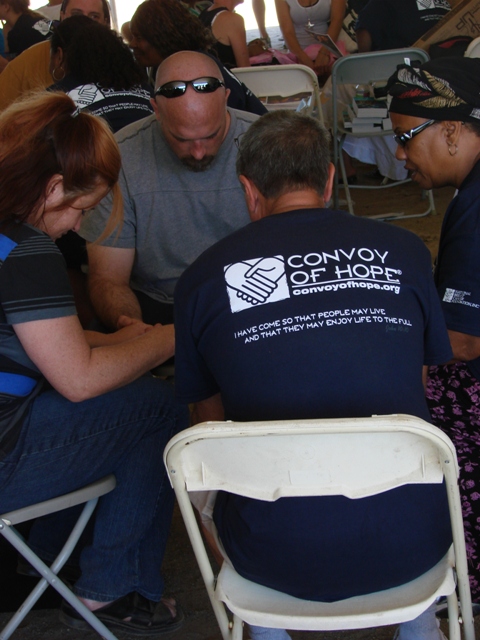
Having represented the Power of Pain Foundation as California Ambassador at the Convoy of Hope held at Cal Expo September 15th, 2012 in Sacramento California I’d like to thank the Power of Pain Foundation (POPF), Barby Ingle, Ken Taylor, POPF Board of Directors, Trudy Thomas, Chris Greulich, Convoy of Hope, Susan Gosselin, Jackie Jurek Miss Folsom Cali USA, Kurtis VanFleet POPF Jr. Ambassador and Volunteers of the day Erik, Kharisma and Erykah VanFleet for all their hard work and commitment.

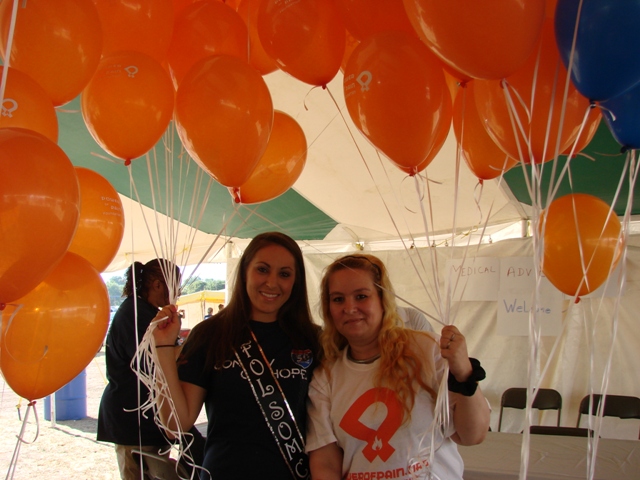
I was and still am thrilled to have been able to promote awareness, distribute information, and answer questions related to Reflex Sympathetic Dystrophy Syndrome, Complex Regional Pain Syndrome/Causalgia and other neuropathic conditions. I also did a balloon release in the name of the Power of Pain Foundation, RSD/CRPS/Causalgia/Neuro Inflammatory Disease, Cure and Hope!

Cure is barely heard on the video as someone was hugging me at the time, but all other words are heard clearly even though I stuttered some. I’m putting together a slide show video of the event and hope to have it ready this month. It will consist of more photos an information of the event not just of the Power of Pain Foundation but of the entire day. All photos were taken by POPF Jr. Ambassador Kurtis VanFleet. A video of the balloon release will also be uploaded soon.

It was such a wonderful day, so many people were given free groceries, clothing, shoes, vision, dental and medical screenings, hair cuts, portraits, breakfast, lunch and so much more. This years turn out of a bit over 5,000 attendees was much lower than the previous years. The economy hurt this event from being even greater. Not enough donations to the Convoy of Hope, people couldn’t afford gas or public transportation to get there. People come from areas outside of Sacramento and weren’t able to this year.

People were camped out the night before the event to get in early, so gates were opened early, but also closed an hour early to accommodate for timing.

Total Guest Attendance- 5,832

Total Family Portraits- 955

Total Guests Prayed with- 4,698

Total Haircuts- 1,000

Total Women Served- (NBCF Tent)- 678

Total Shoes- 800+

Total Participating Organizations- 30

Total Volunteers- 1,763

1,400 Guests Served in the Clothing Tent

95 Dental Exams

50 Vision Exams

300 Received $500 Gift Certificates for follow-Up Vision Care

24 Pregnancy Exams

400 Served in the Job Tent

All these services were Free!

In addition thousands of pounds of food, water, and juice was distributed.

Medical, dental and vision supplies are costly.

Power of Pain foundation Table at Convoy of Hope

Jackie Jurek Miss Folsom Cali USA and Power and Pain CA Ambassador Twinkle VanFleet

Yesterday we received a Thank You Card from the Convoy of Hope. While the card was sent to me it very much belongs to the Power of Pain Foundation as a whole.


It is a shame that our economy is in such bad shape that even a good thing, an all free collaborative event was cut in half by those who were able to attend when we know the 1000’s who couldn’t be there needed the free groceries, medical exams and freebies that were offered and given away.

I pray for all those faces I seen. Those I spoke to and those I didn’t.

Let us all pray… for one another..

and let us TURN PAIN TO POWER… (powerofpain.org)

Enhanced by Zemanta